
Walnut family, Juglandaceae
Origin: the east of North America
Habitat in the original area: forest edges, areas around watercourses
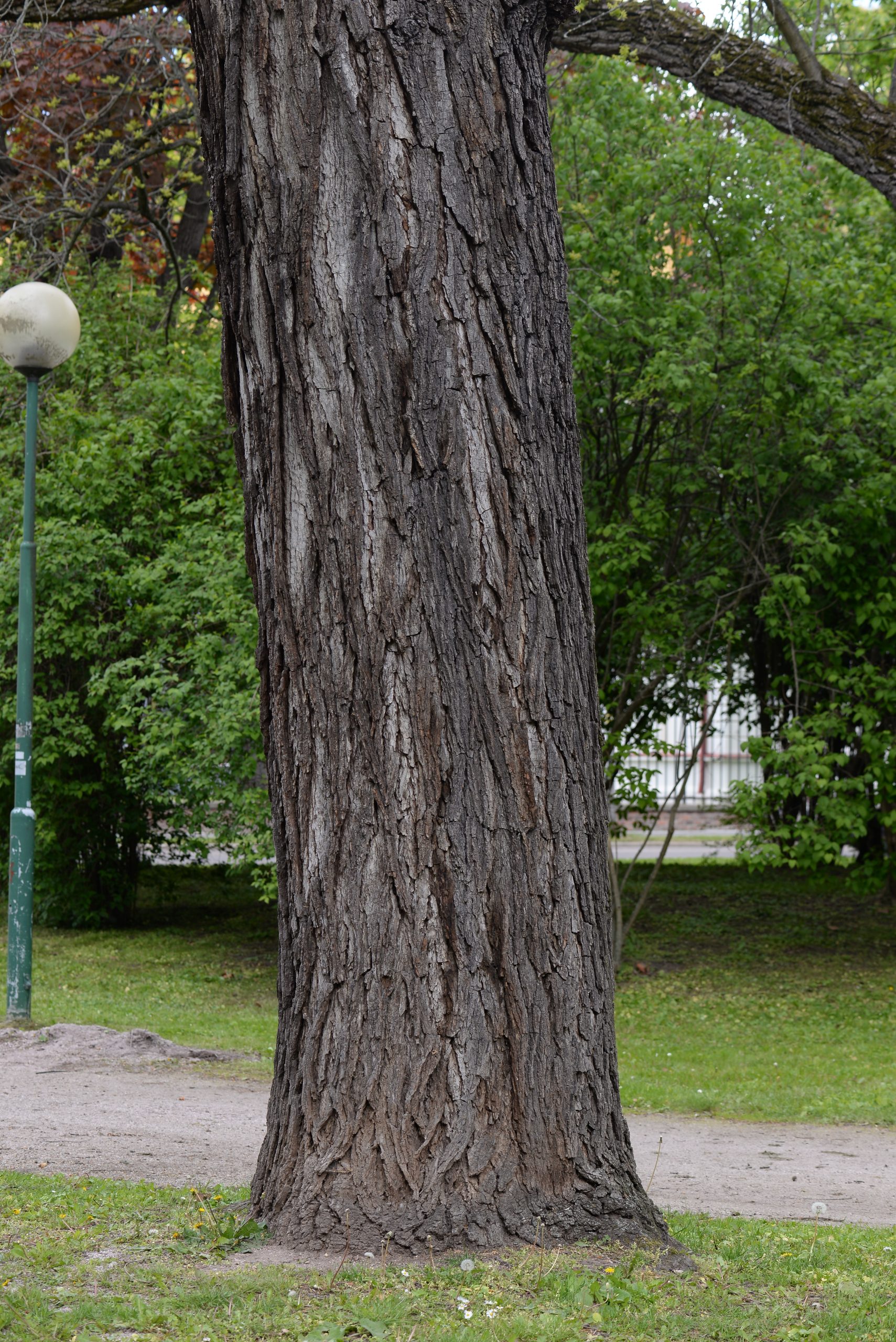
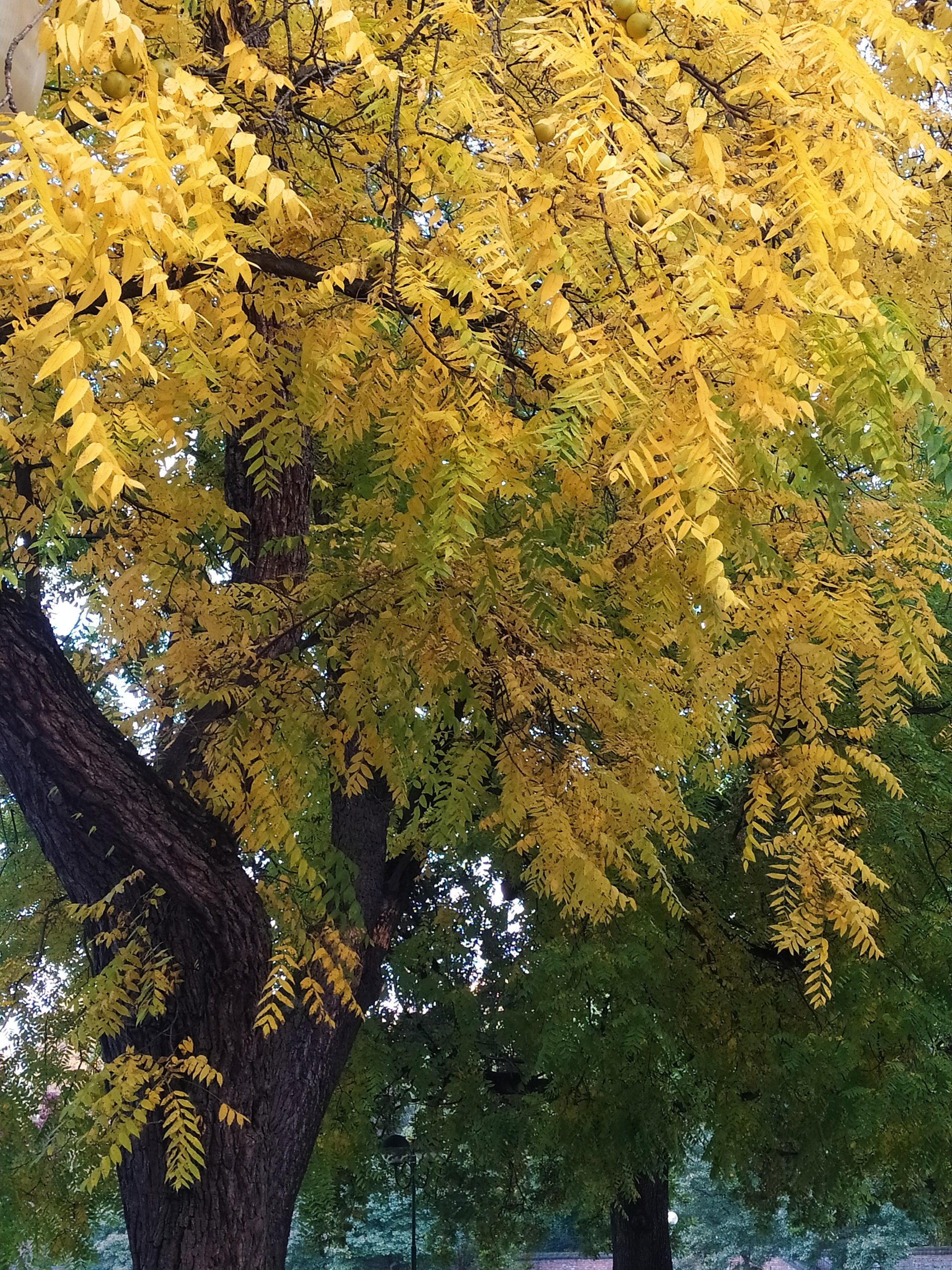
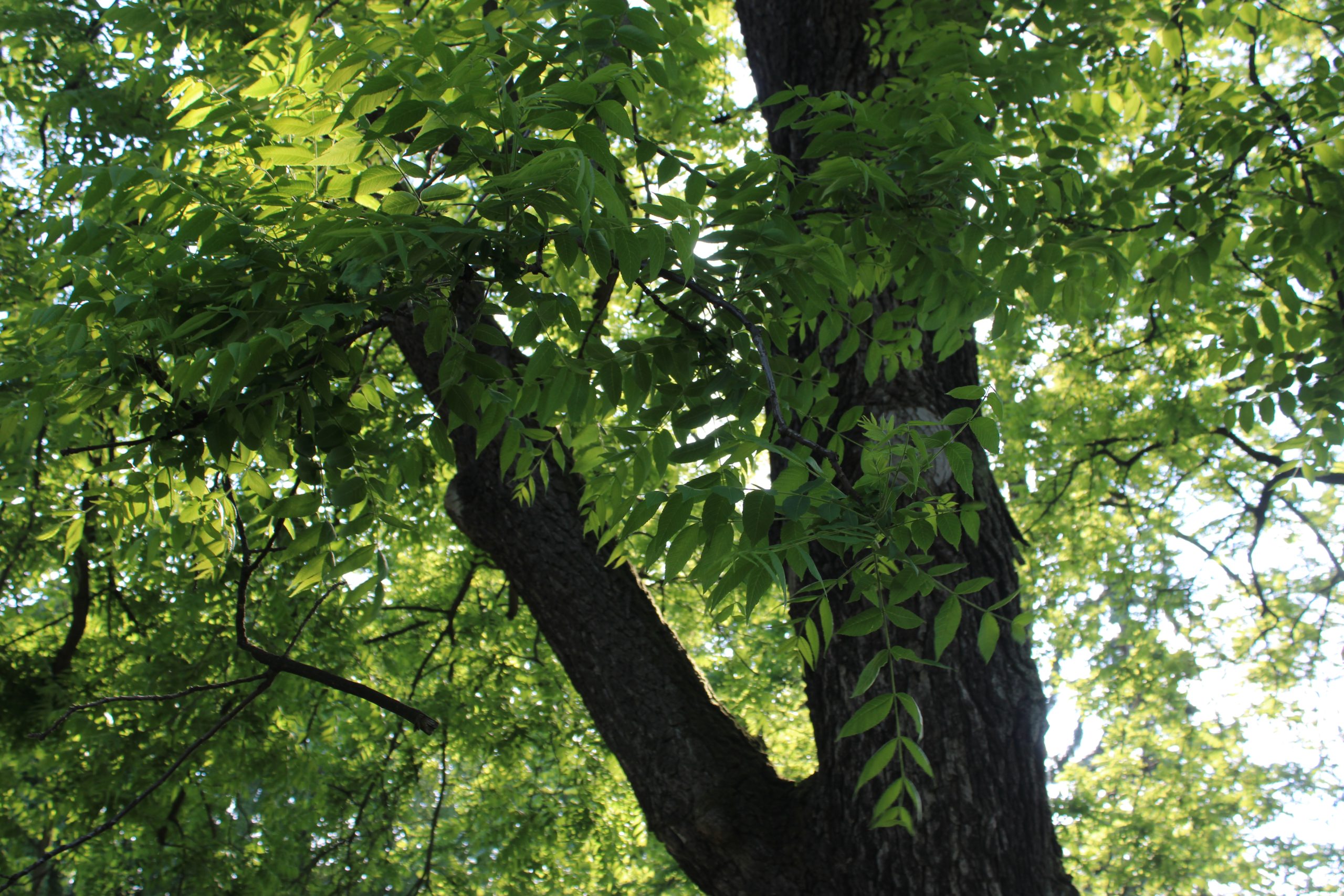
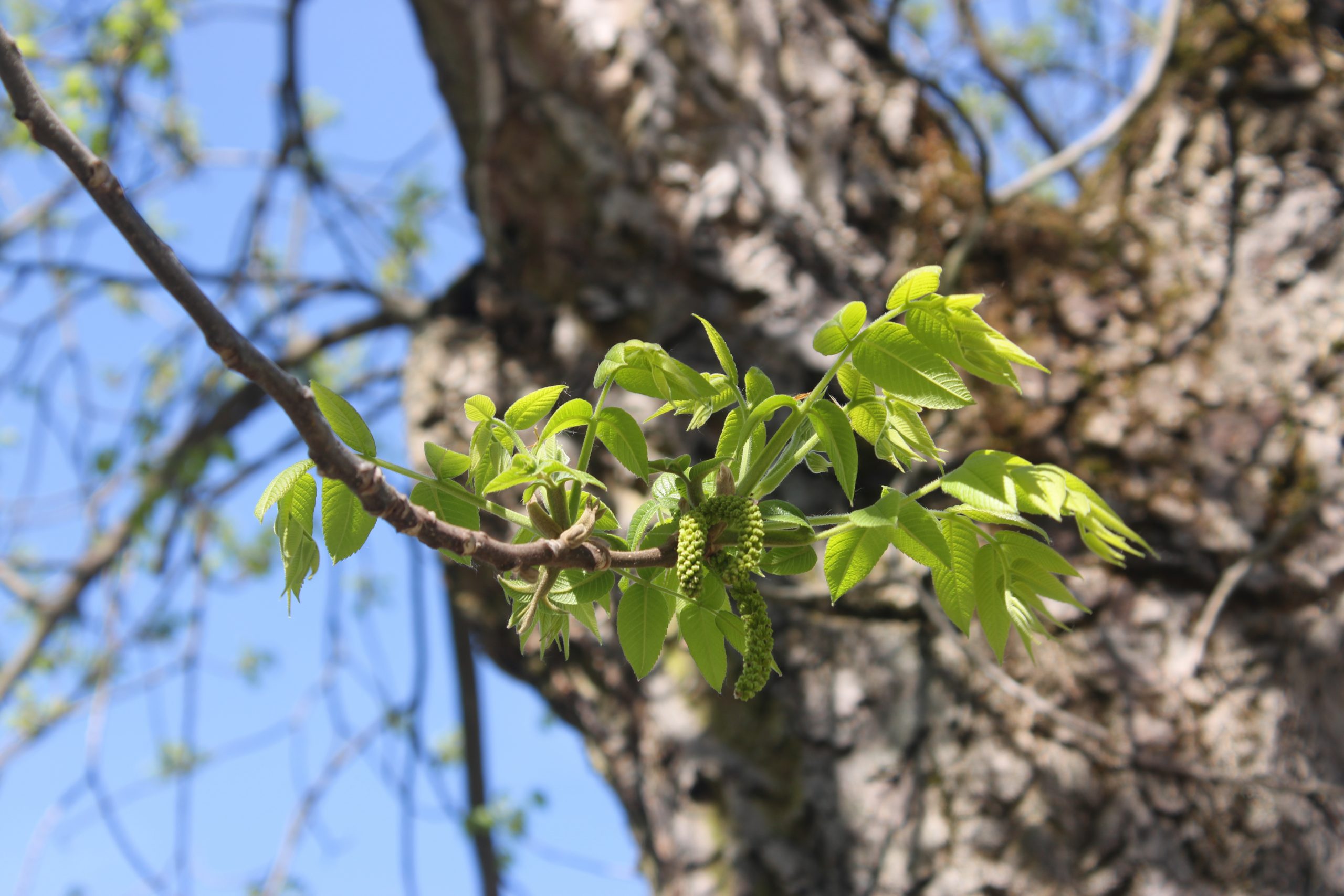
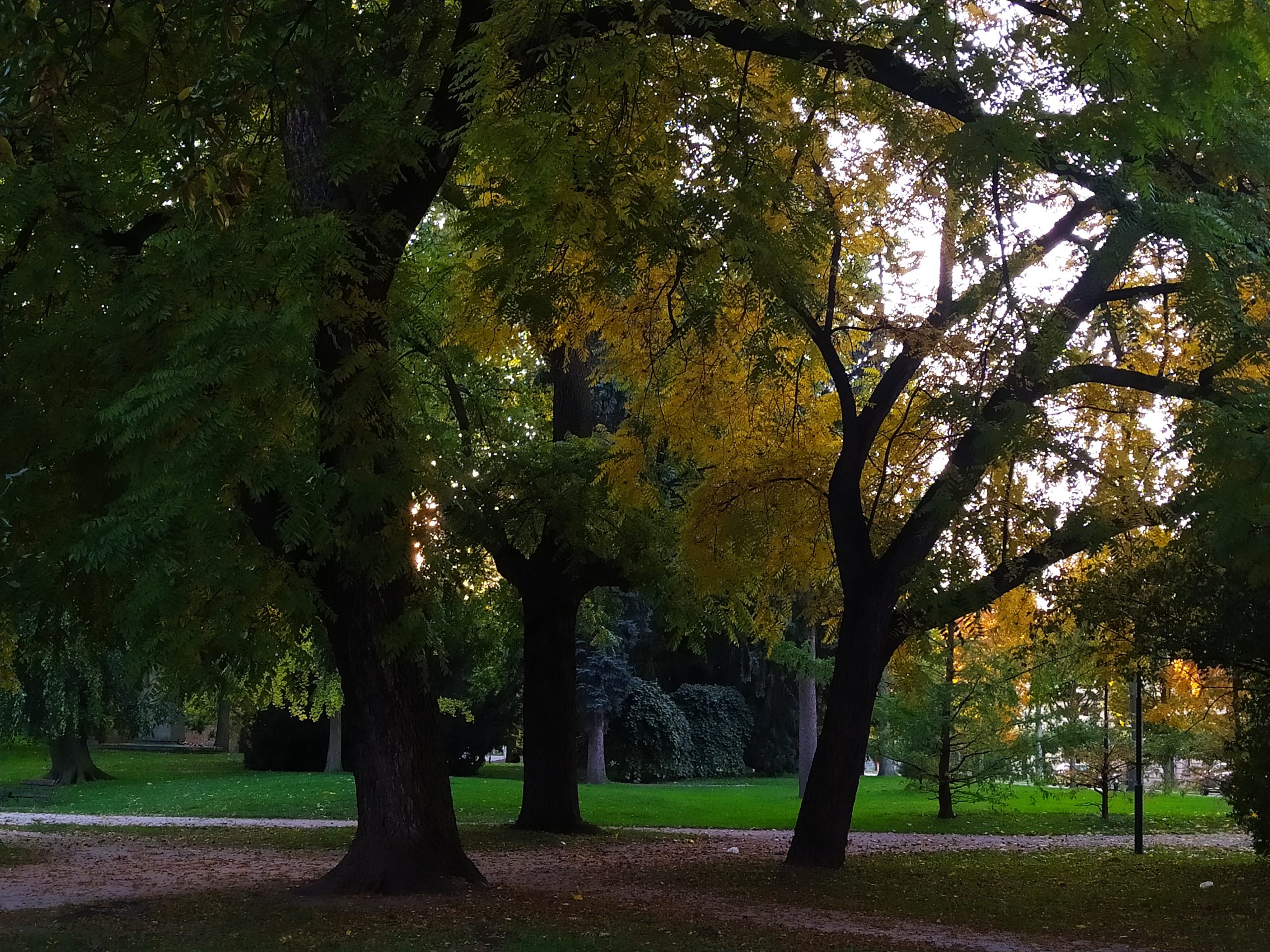
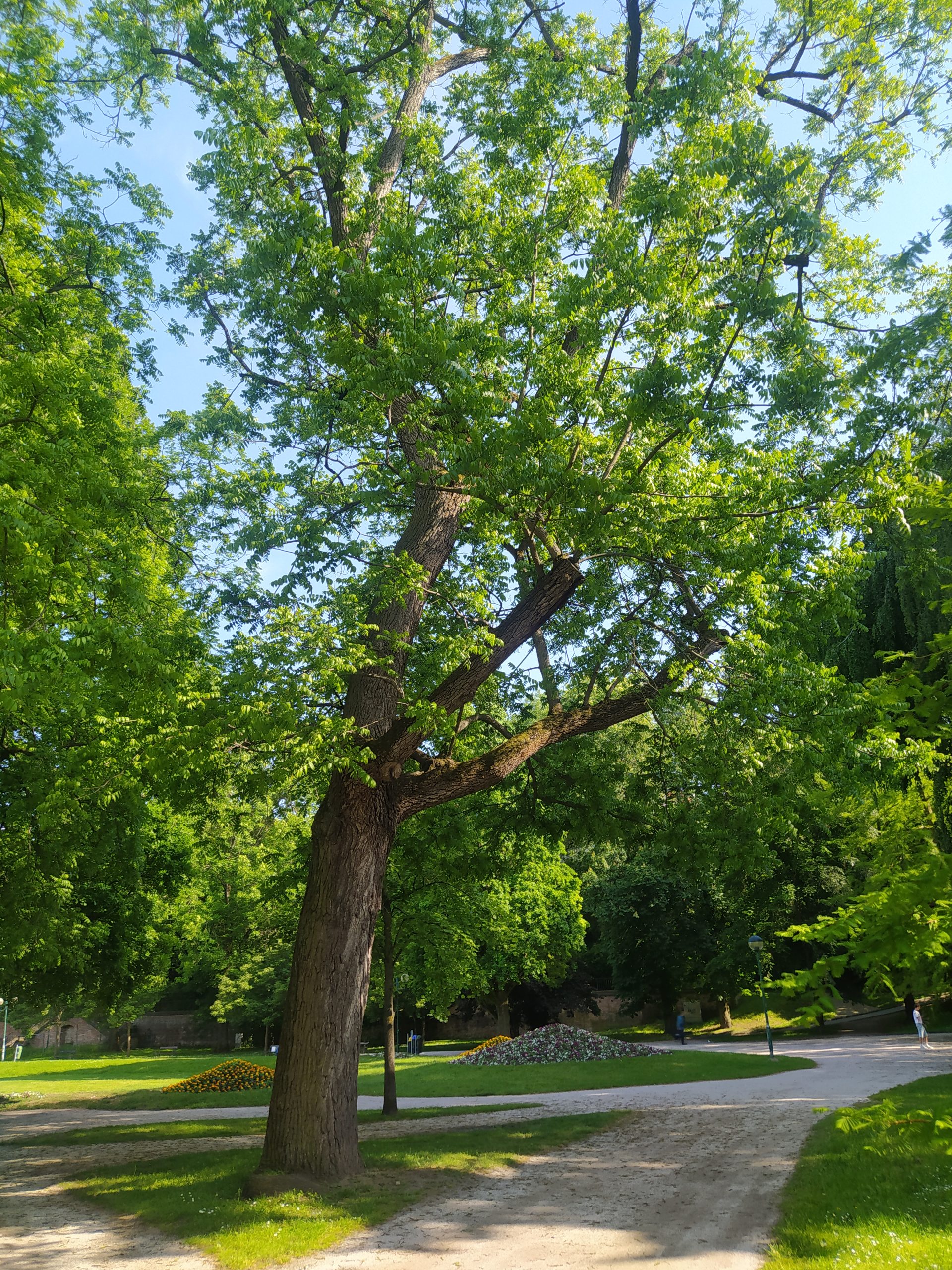
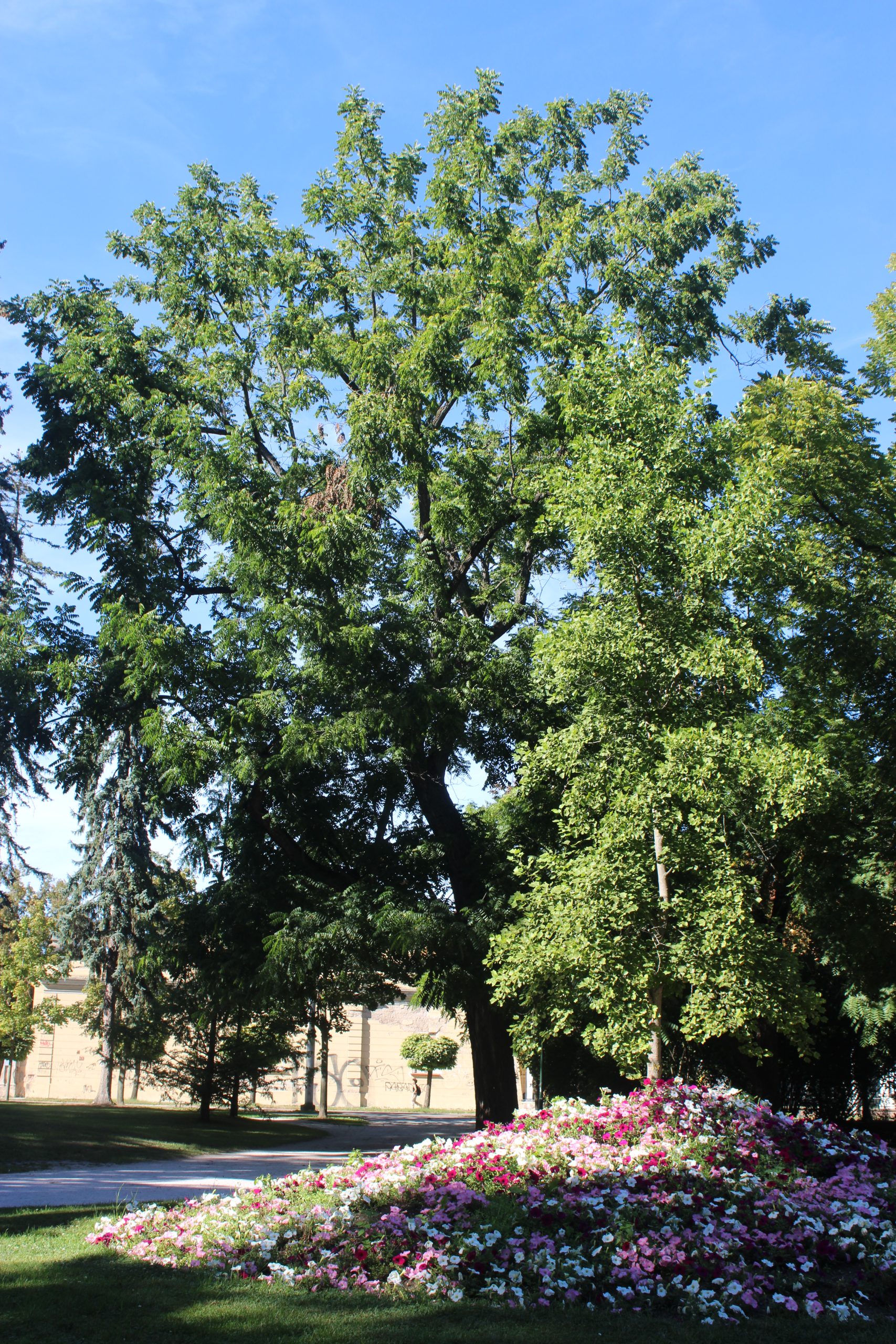
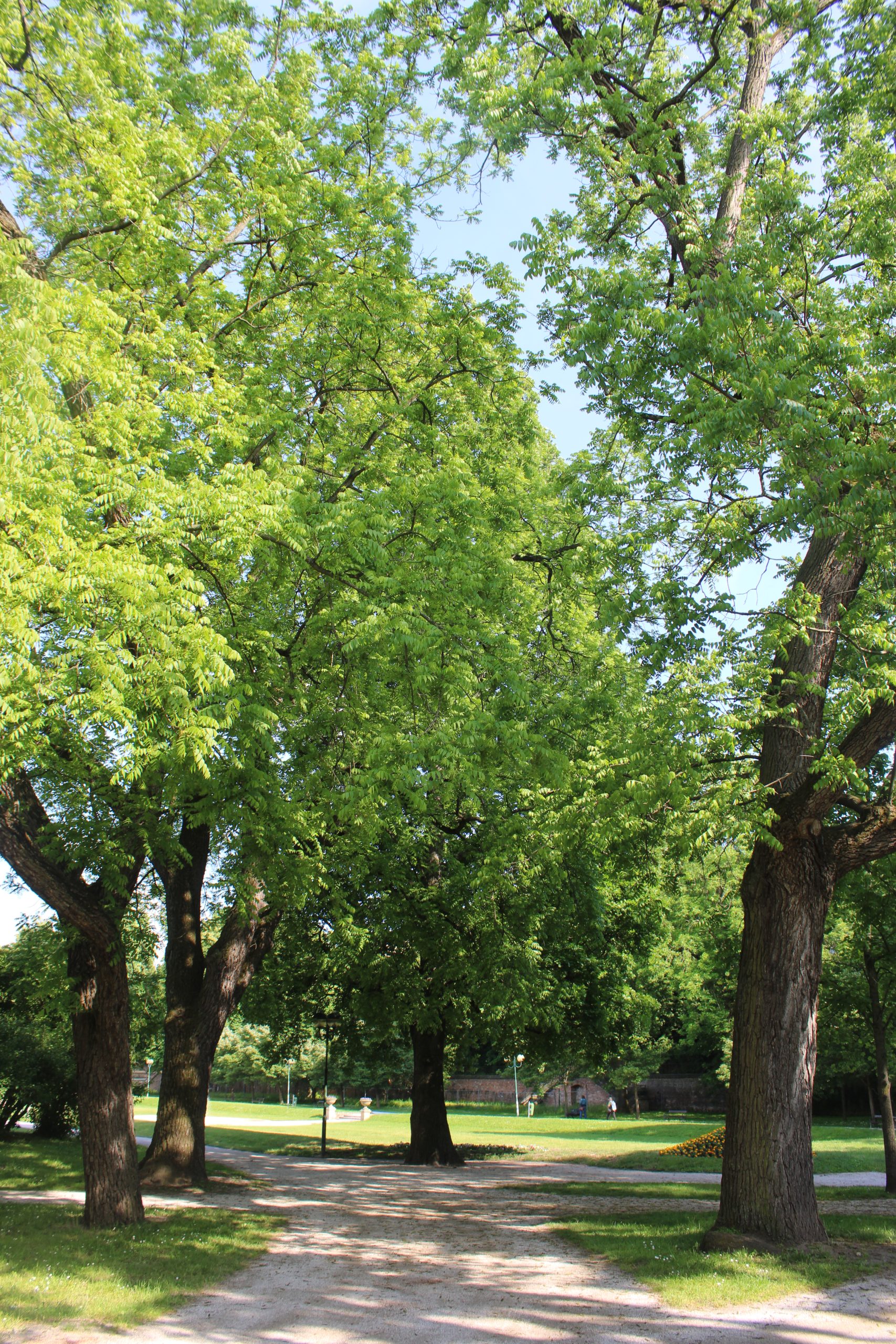
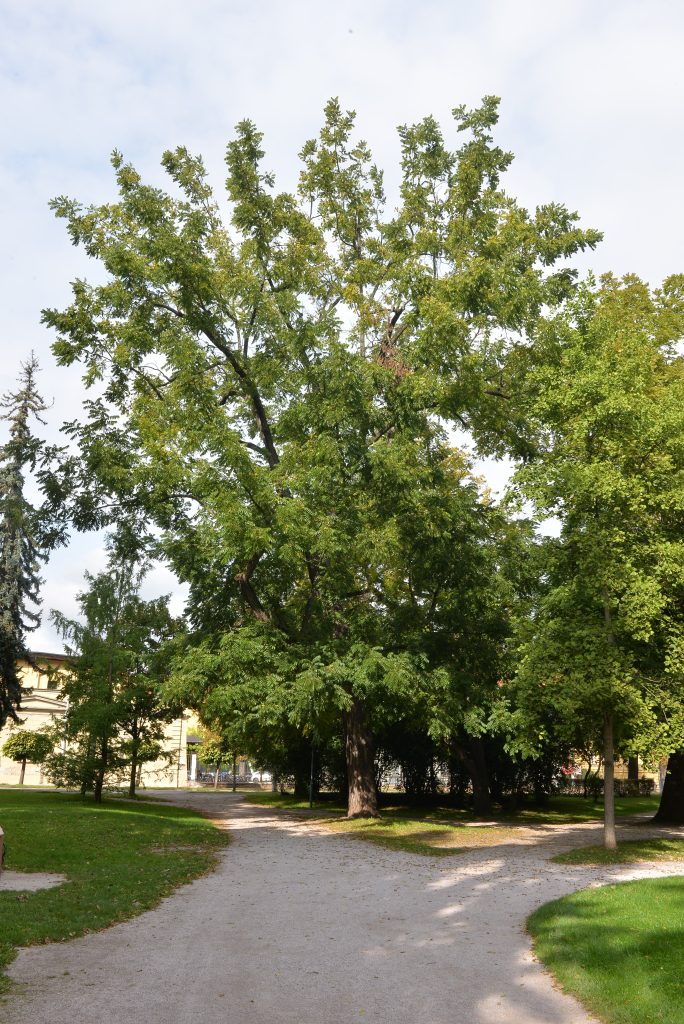
Habitus: A tree with a broad crown growing to the height of up to 30 metres. The grey-brown bark is deeply furrowed.
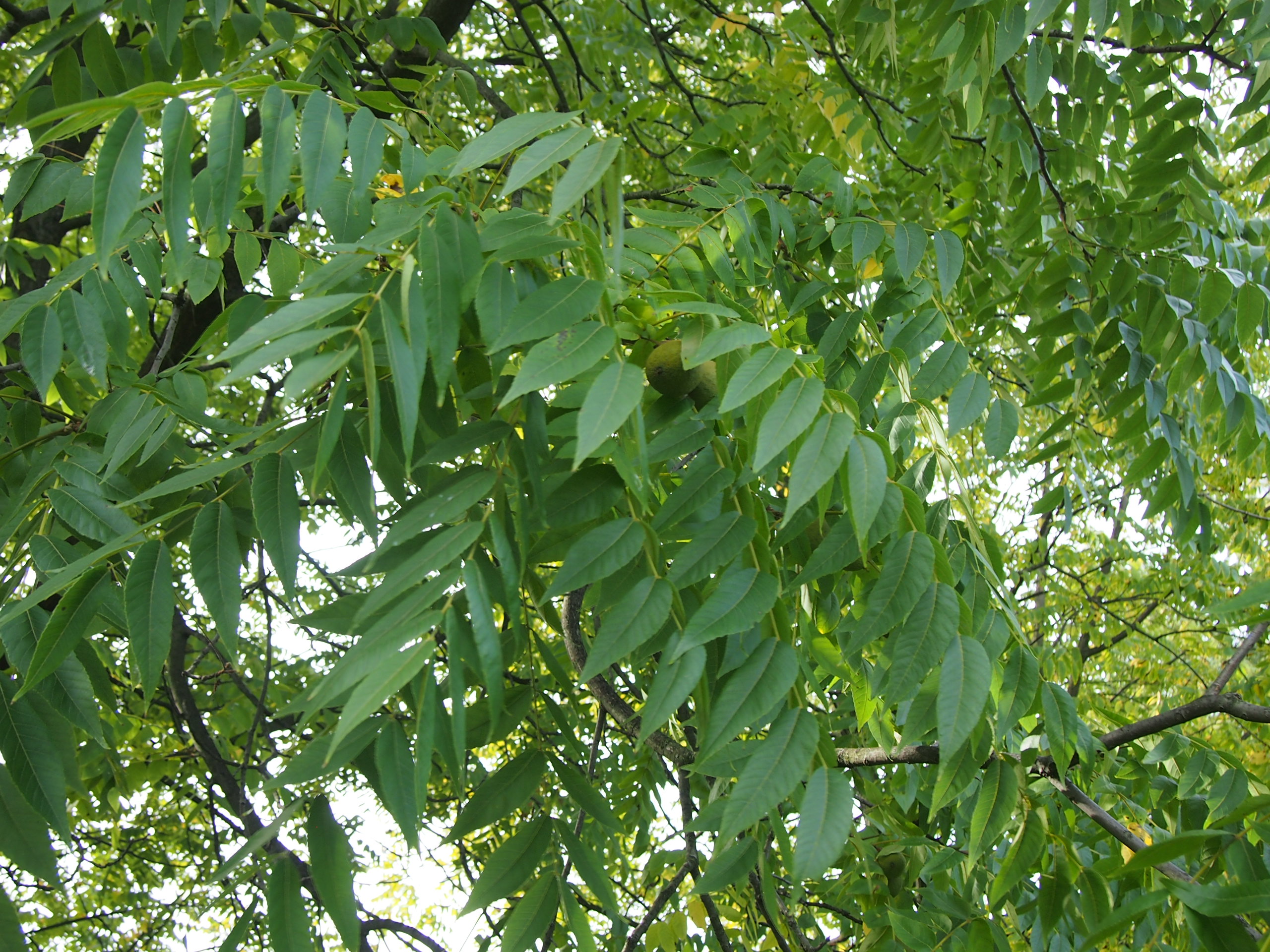
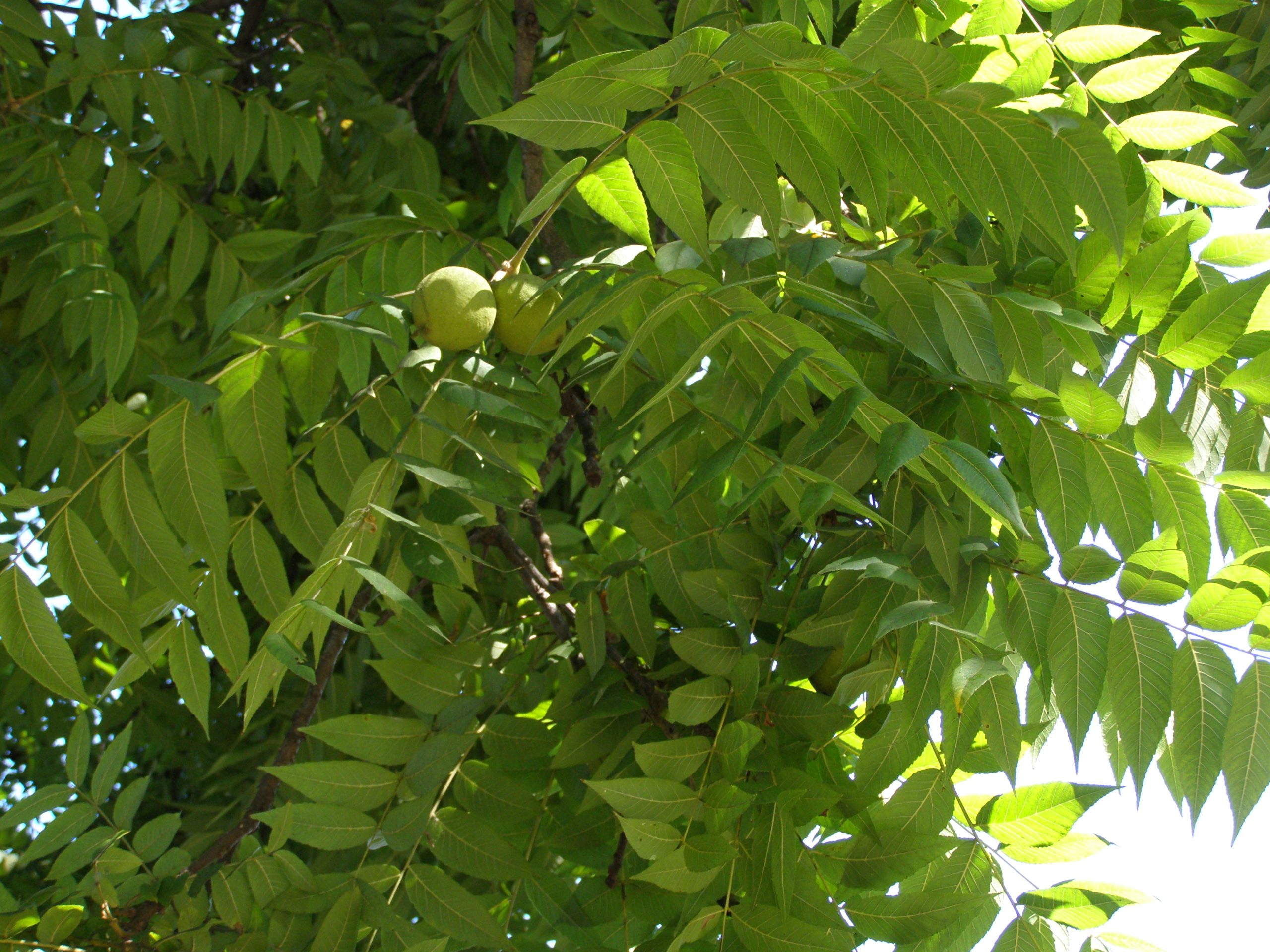
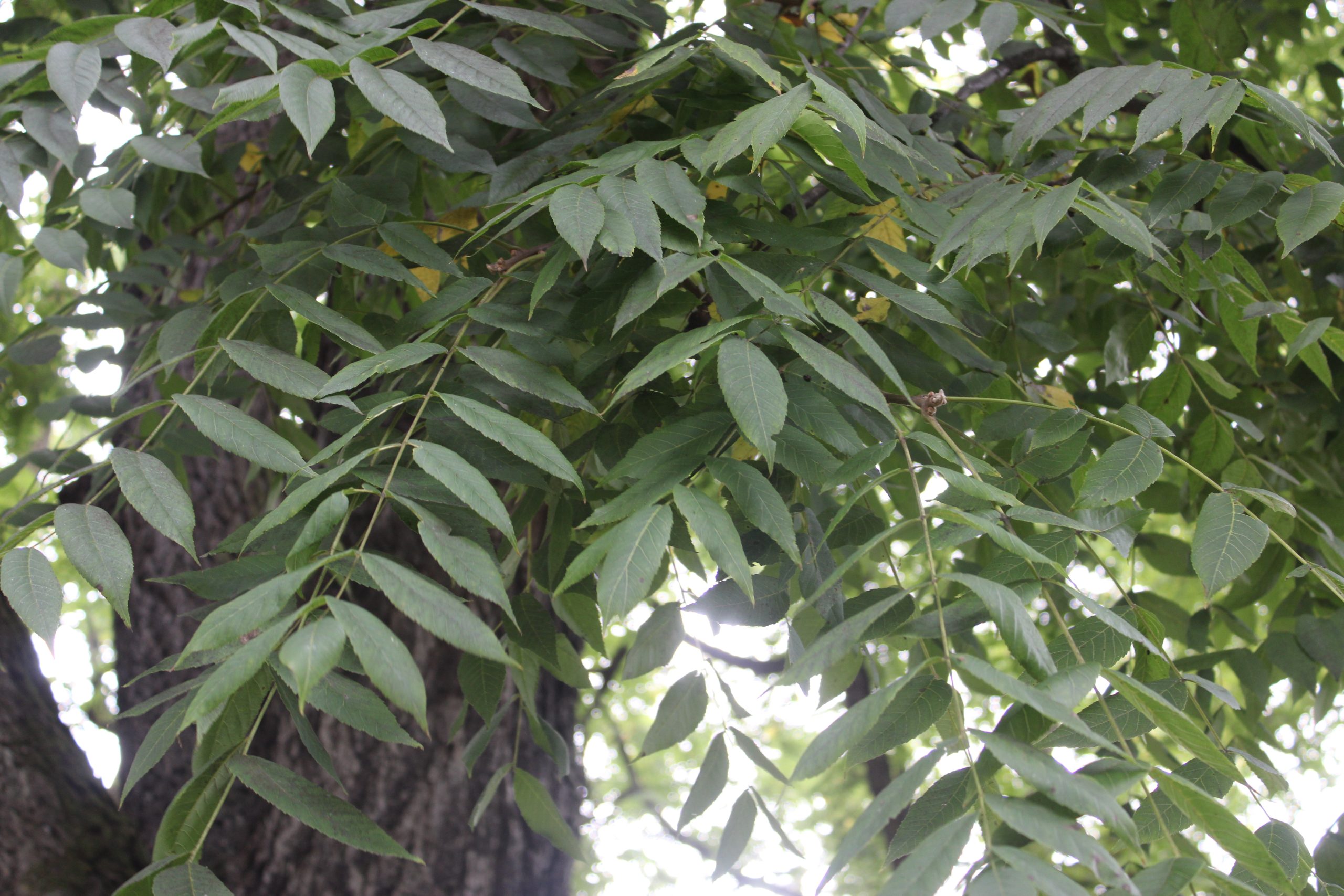
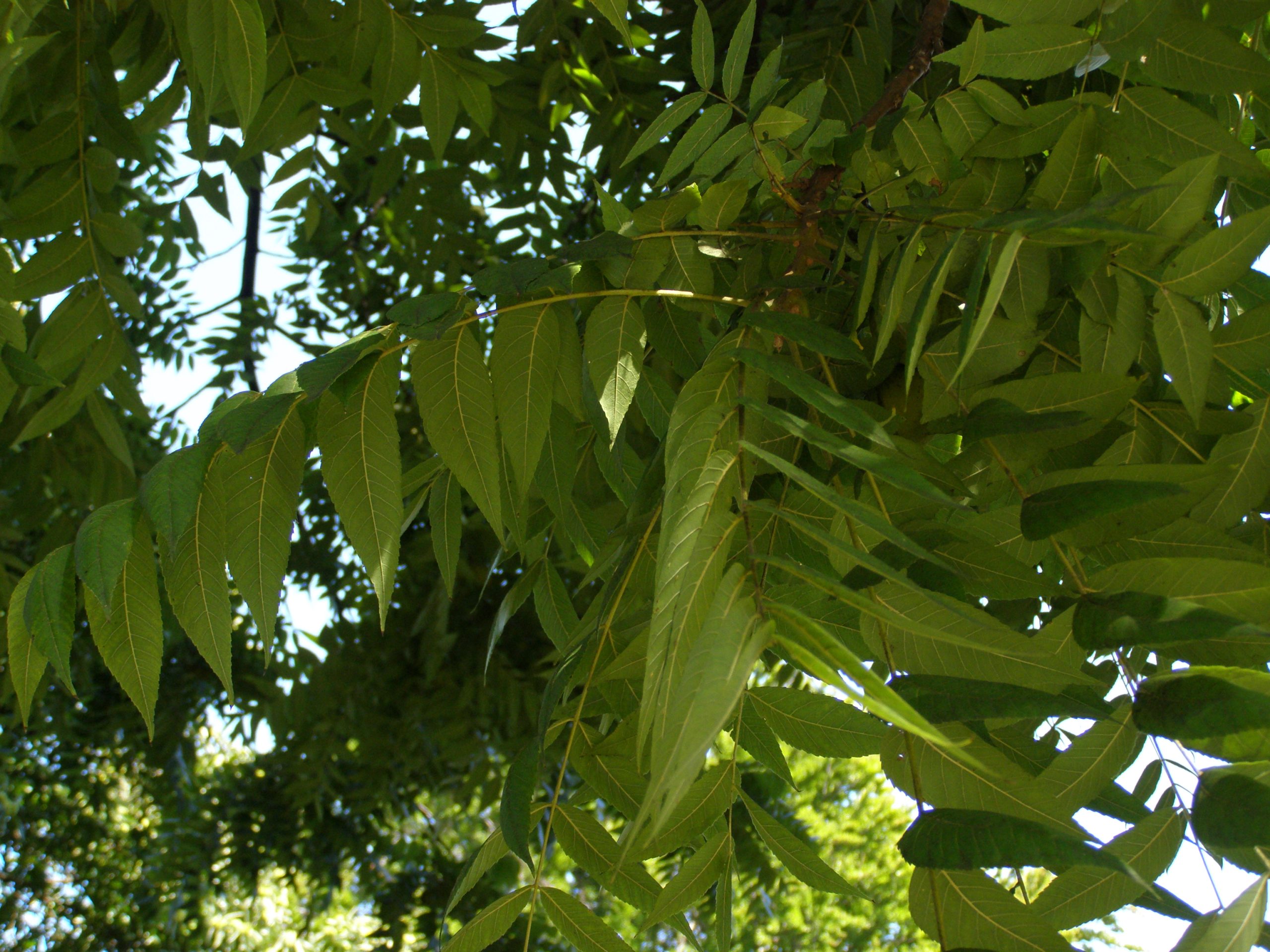
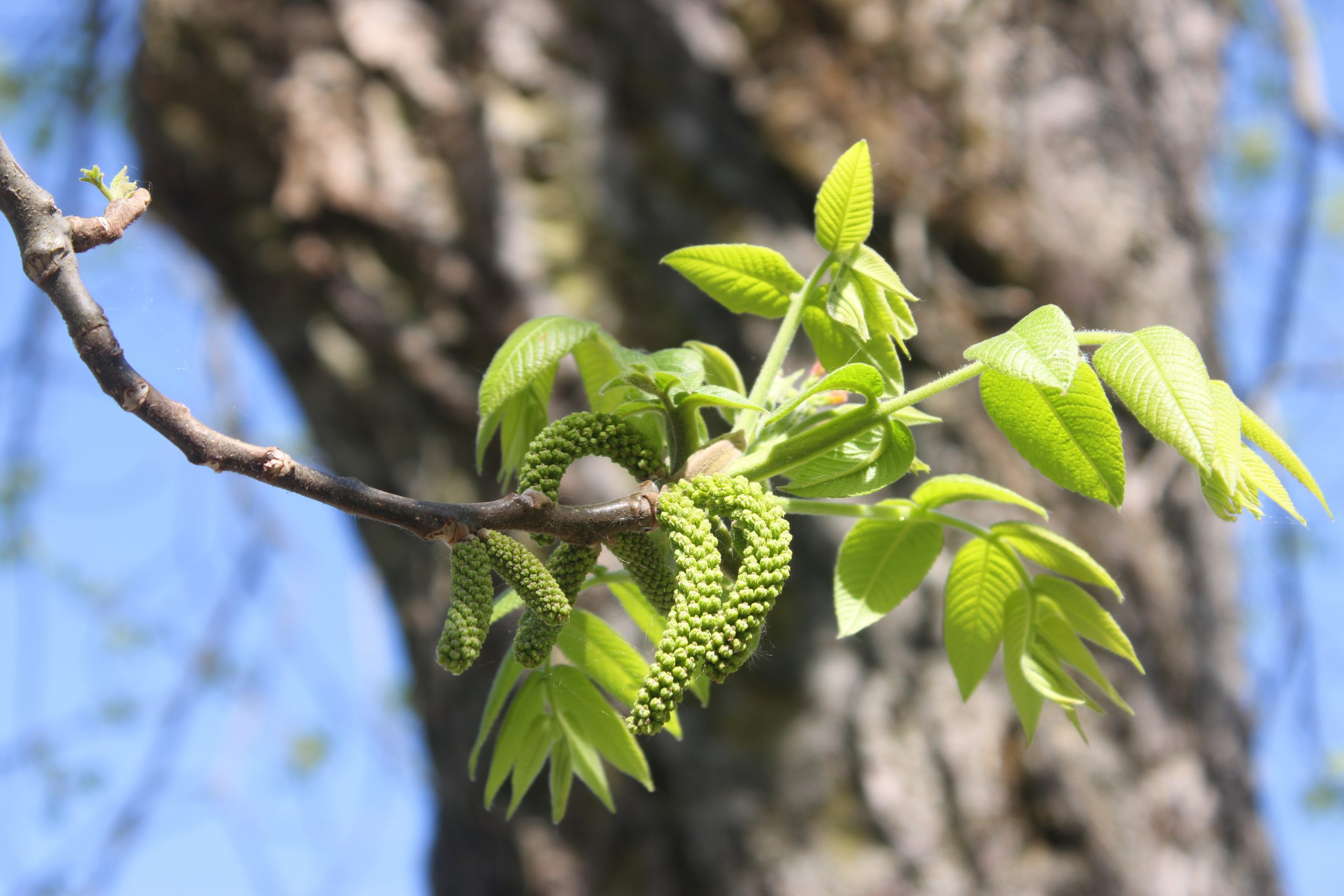
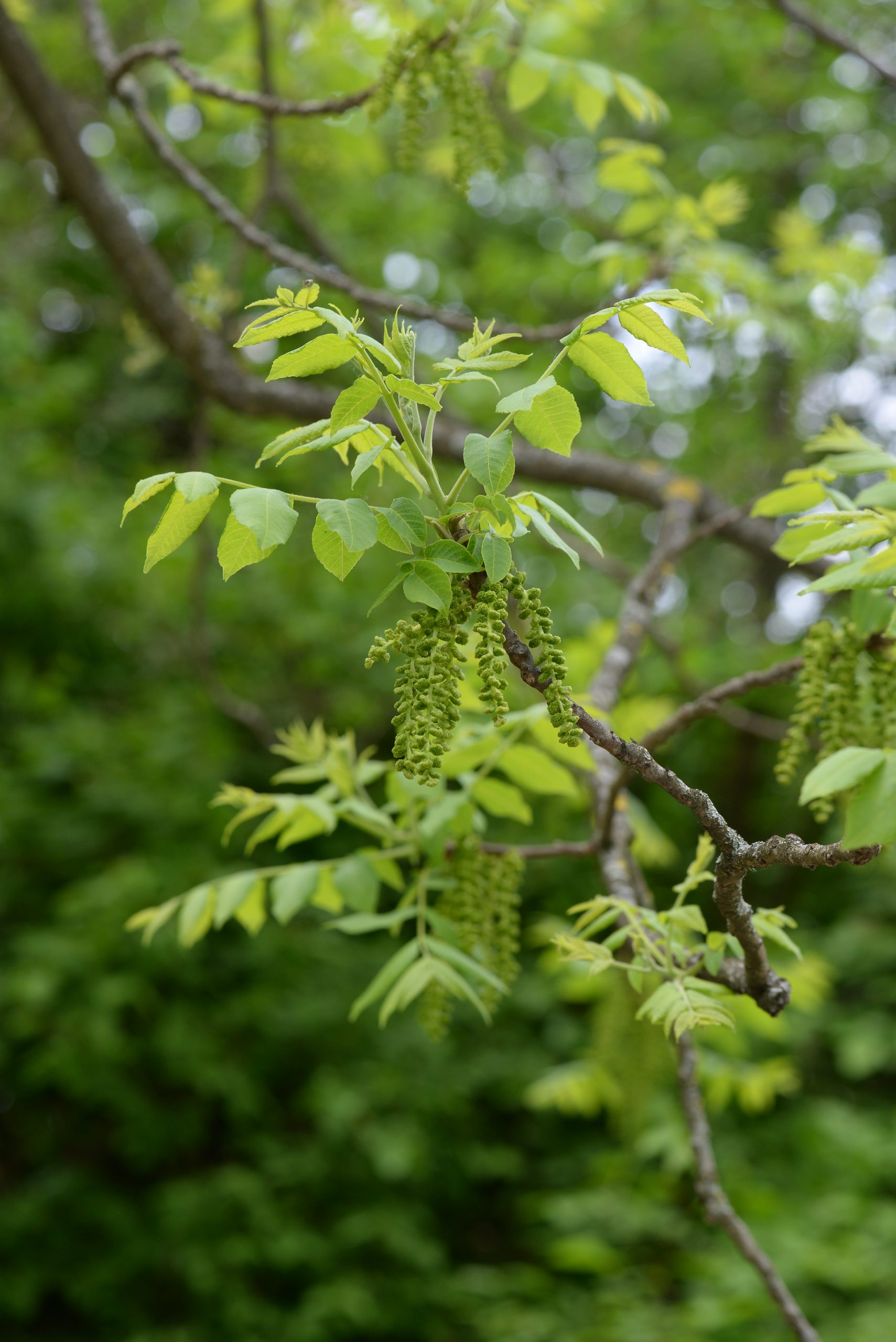
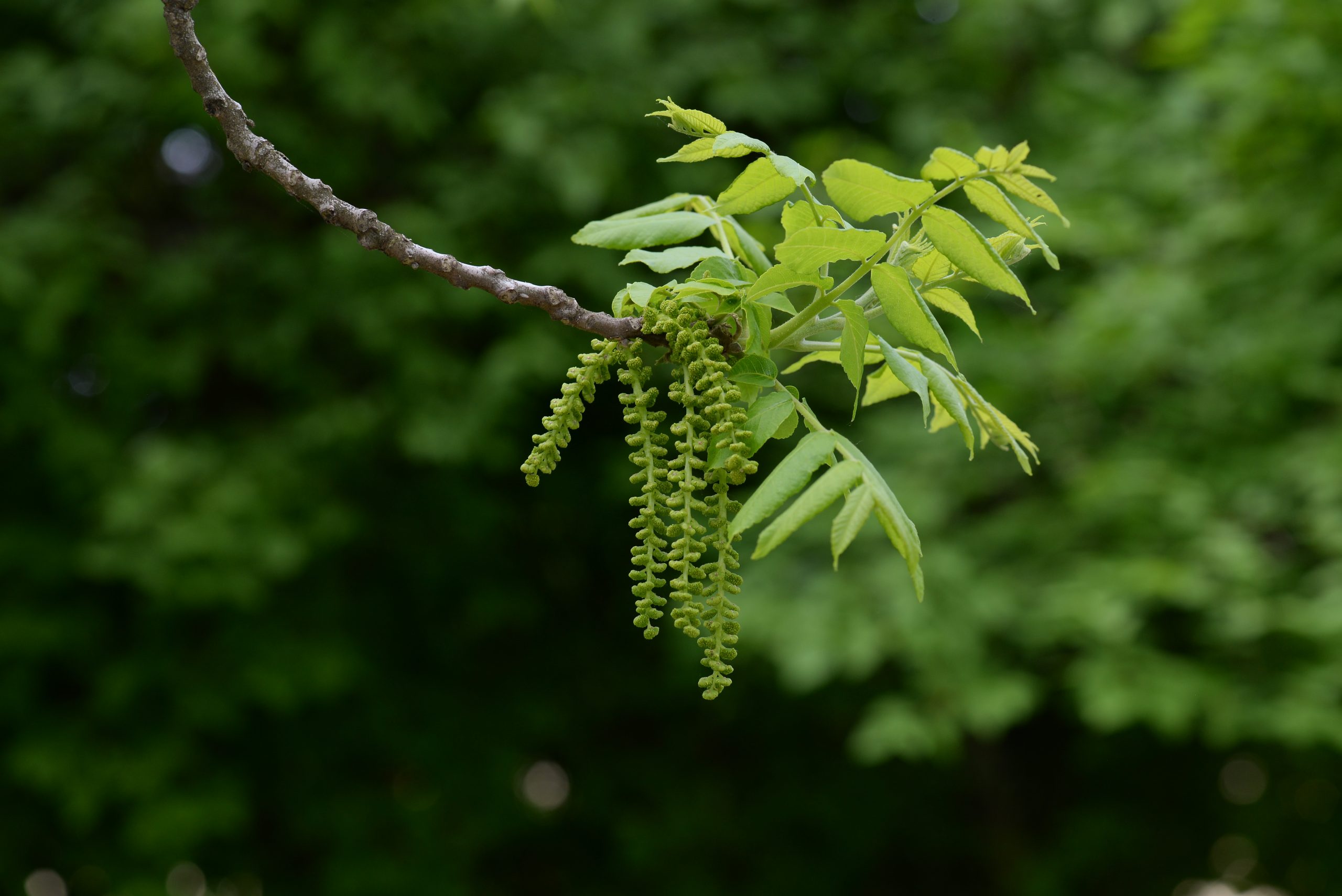
Leaf: Compound odd-pinnate leaves, which are up to 50 centimetres long consist of 15–19 lanceolate leaflets with an elongated tip and a serrated edge. The last leaflet is often missing, which is why the leaves appear to be pinnate. They are glabrous on the face, there are sparse trichomes in the reverse side.
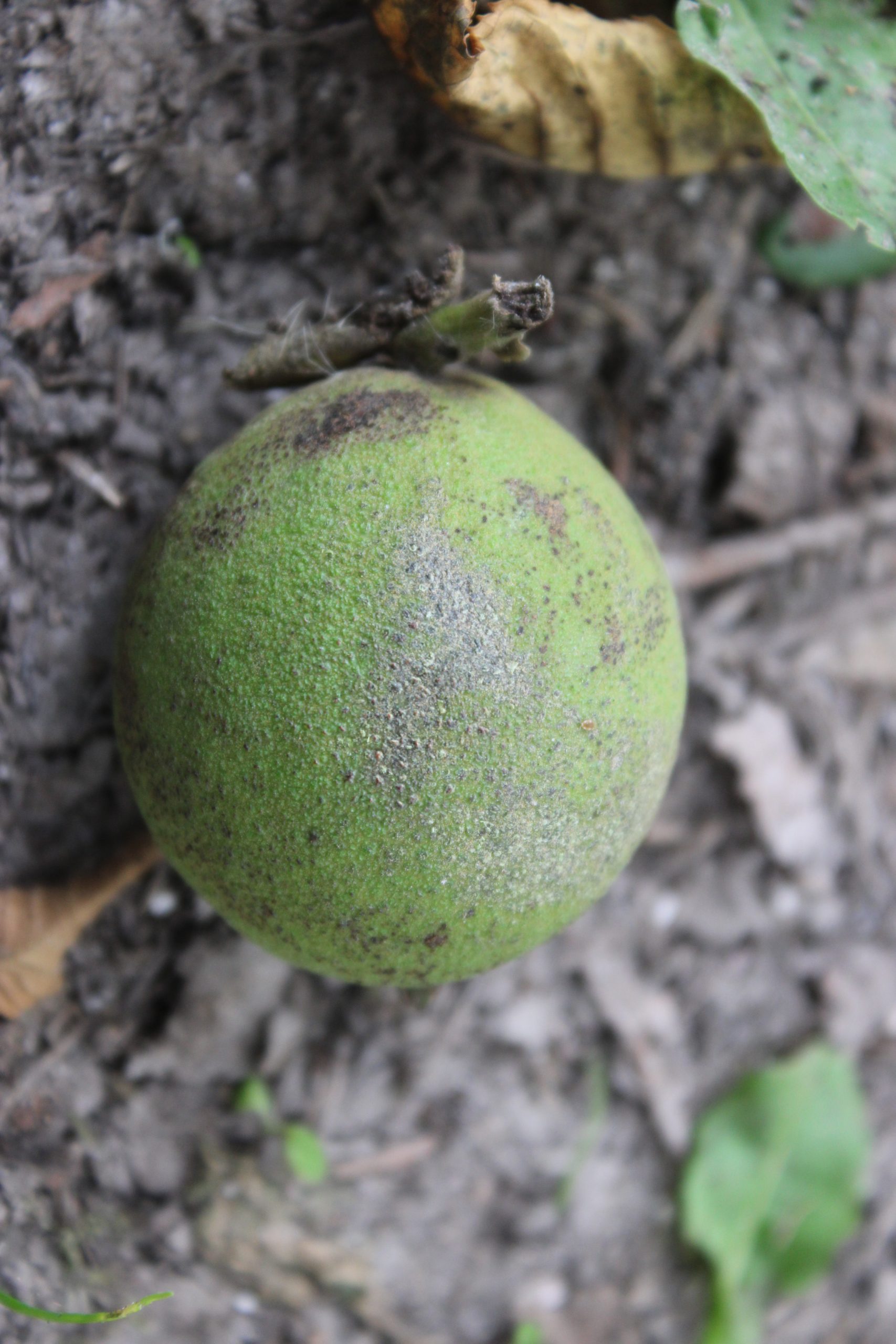
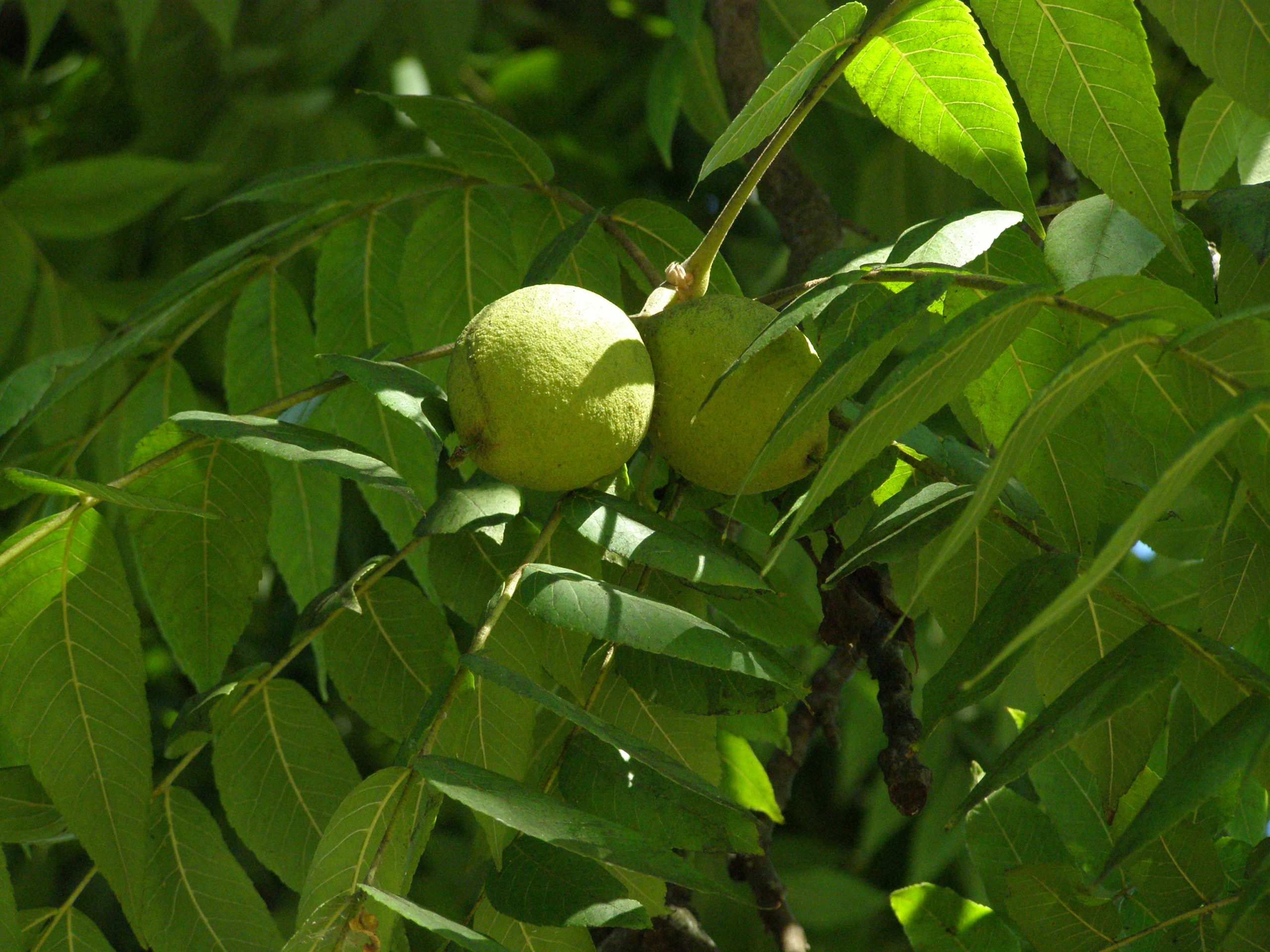
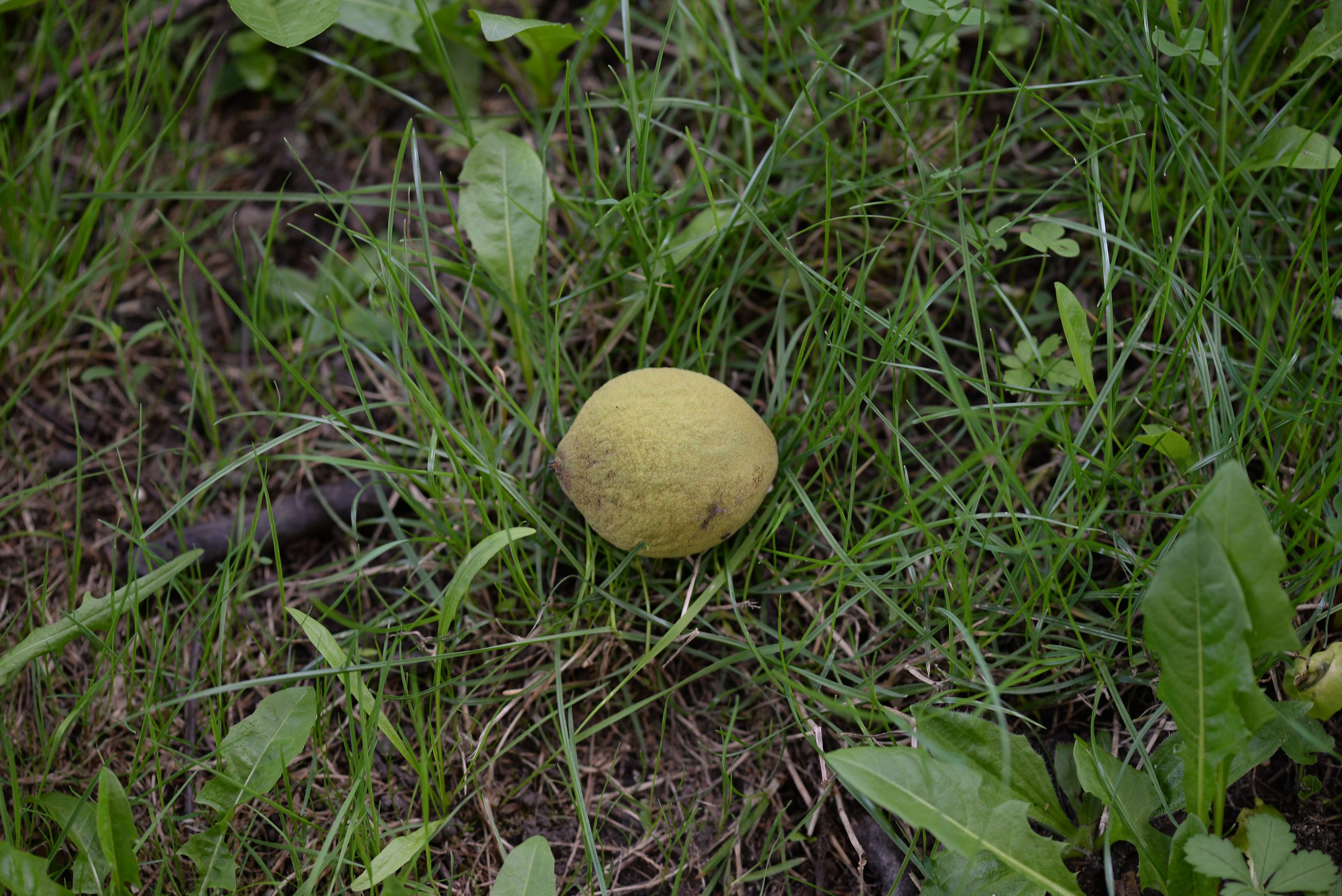
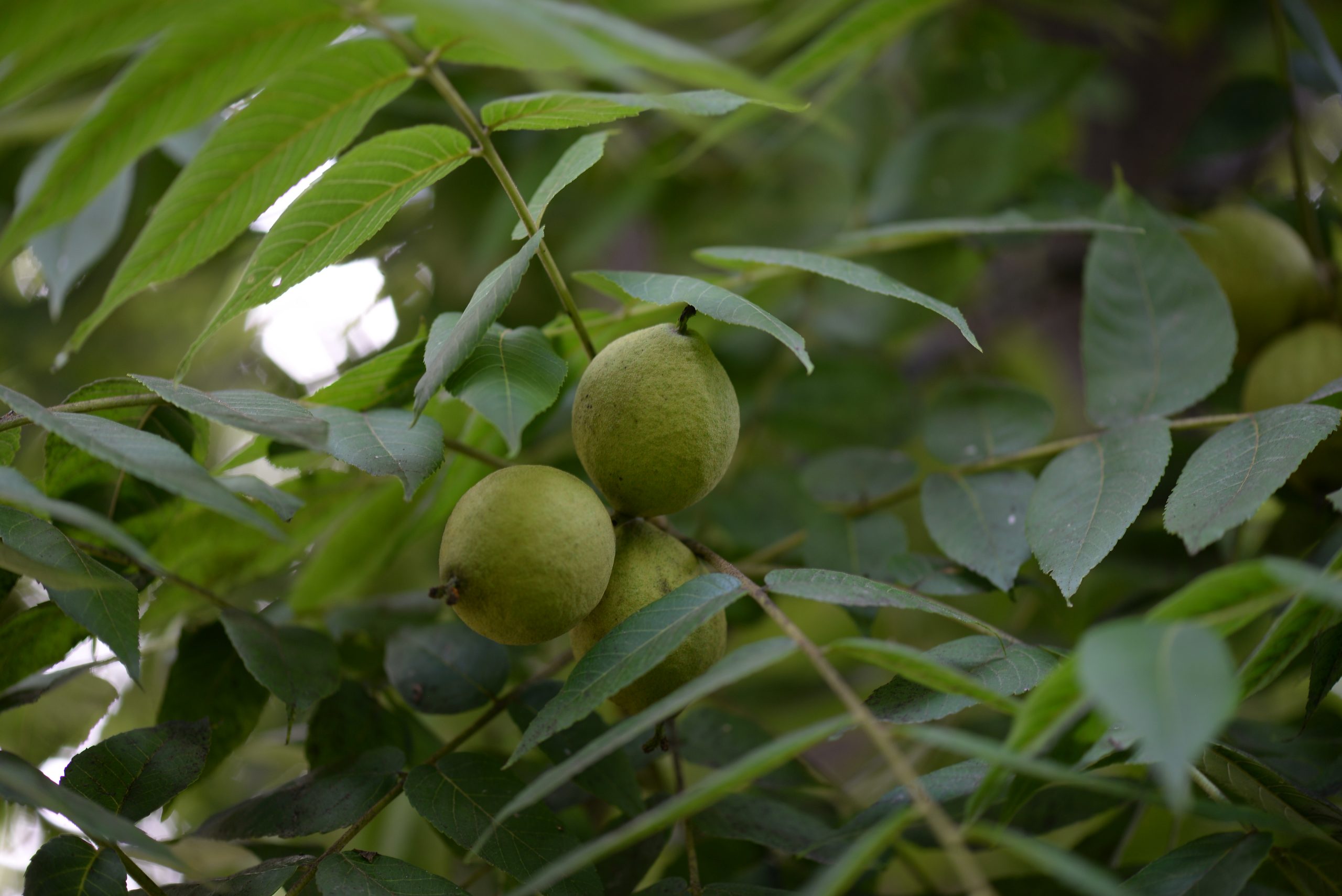
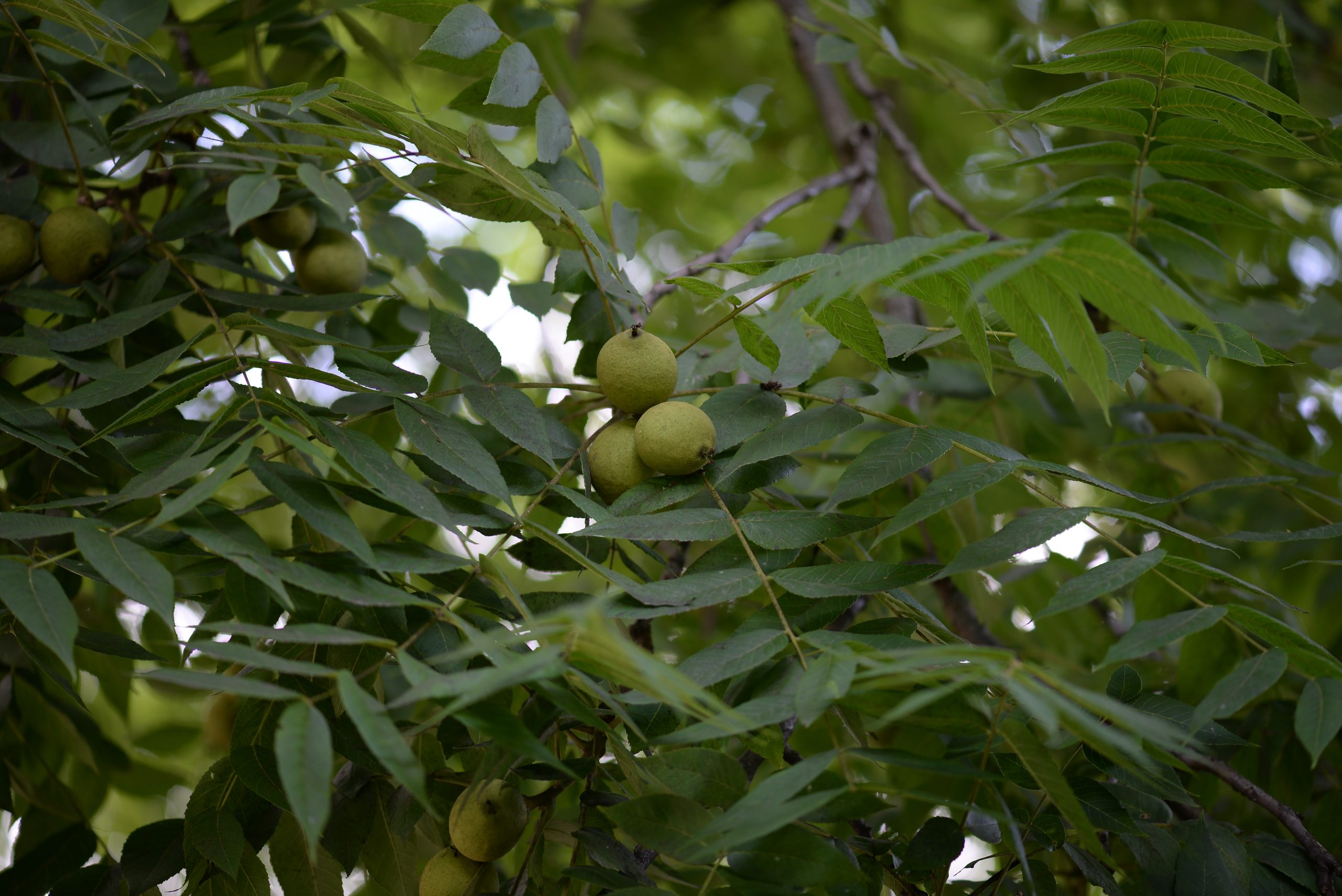
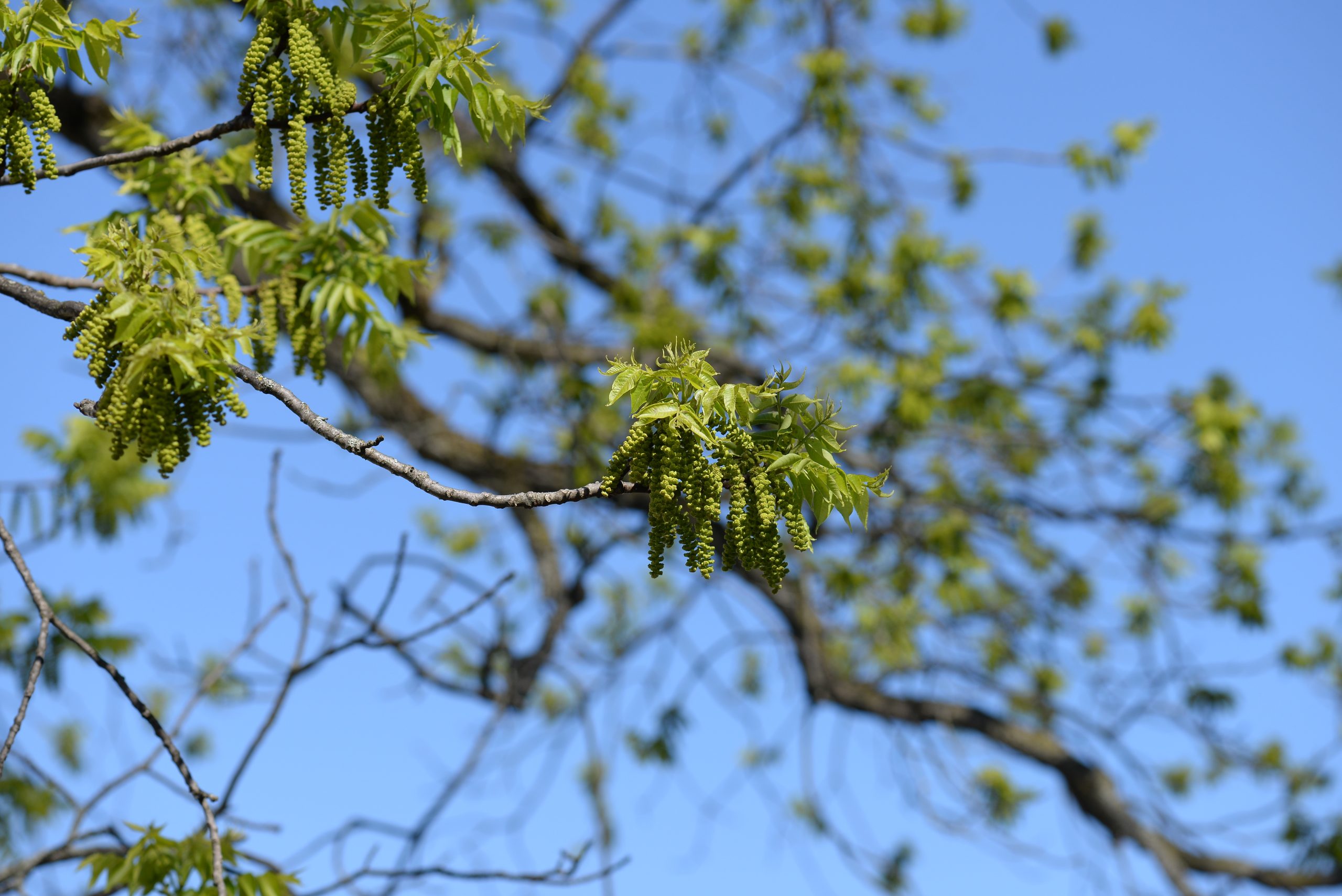
Bloom, fruit: The species is monoecious. It blooms from May to June with small green blossoms – male ones are arranged in up to 14 centimetres long catkins, female ones grow in spikes. The fruit is a yellow-green, downy drupe, the shell of which turns black and bald when ripe. The hard part of the fruit, the so-called “nut”, is spherical, with a diameter of up to 4 centimetres and a hard, furrowed shell. There is an edible, but bitter-tasting seed inside.
Interesting fact: For its interesting leaves and overall appearance, this tree is often planted as a solitary tree in parks. The wood is solid, its colour is dark brown to purple, which is why it is often used in furniture manufacturing. The fruits are used in pharmacy. Cultivars with non-bitter seeds have been cultivated. The tree produces juglone – an allelopathic substance released from the roots, bark, leaves and shells, which is capable of suppressing species growing in its vicinity. The species thus ensures greater competitiveness through this chemical way.