
Cypress family, Cupressaceae
Origin: western North America
Habitat in the original area: moist swampy forest habitats, ravines
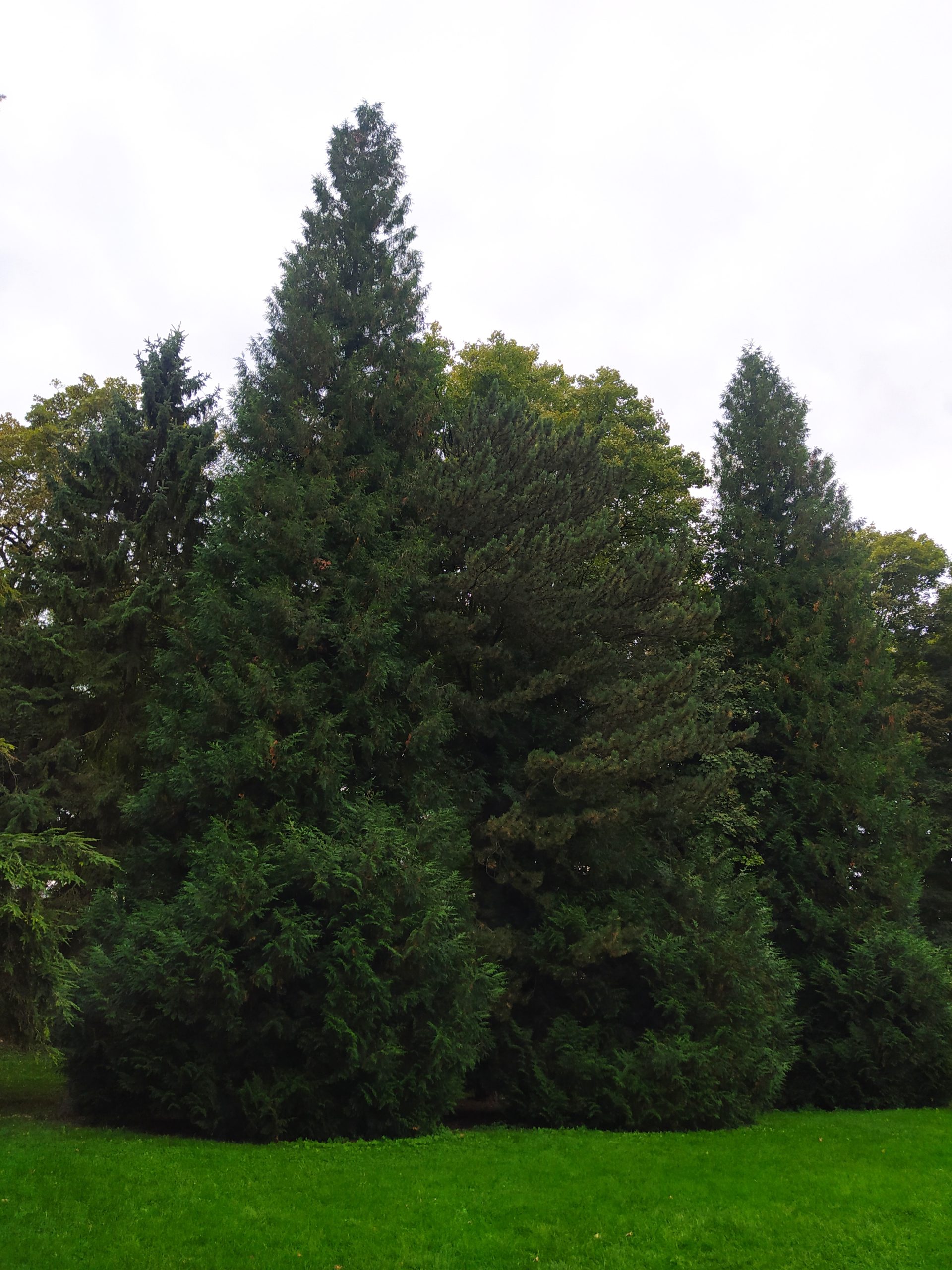
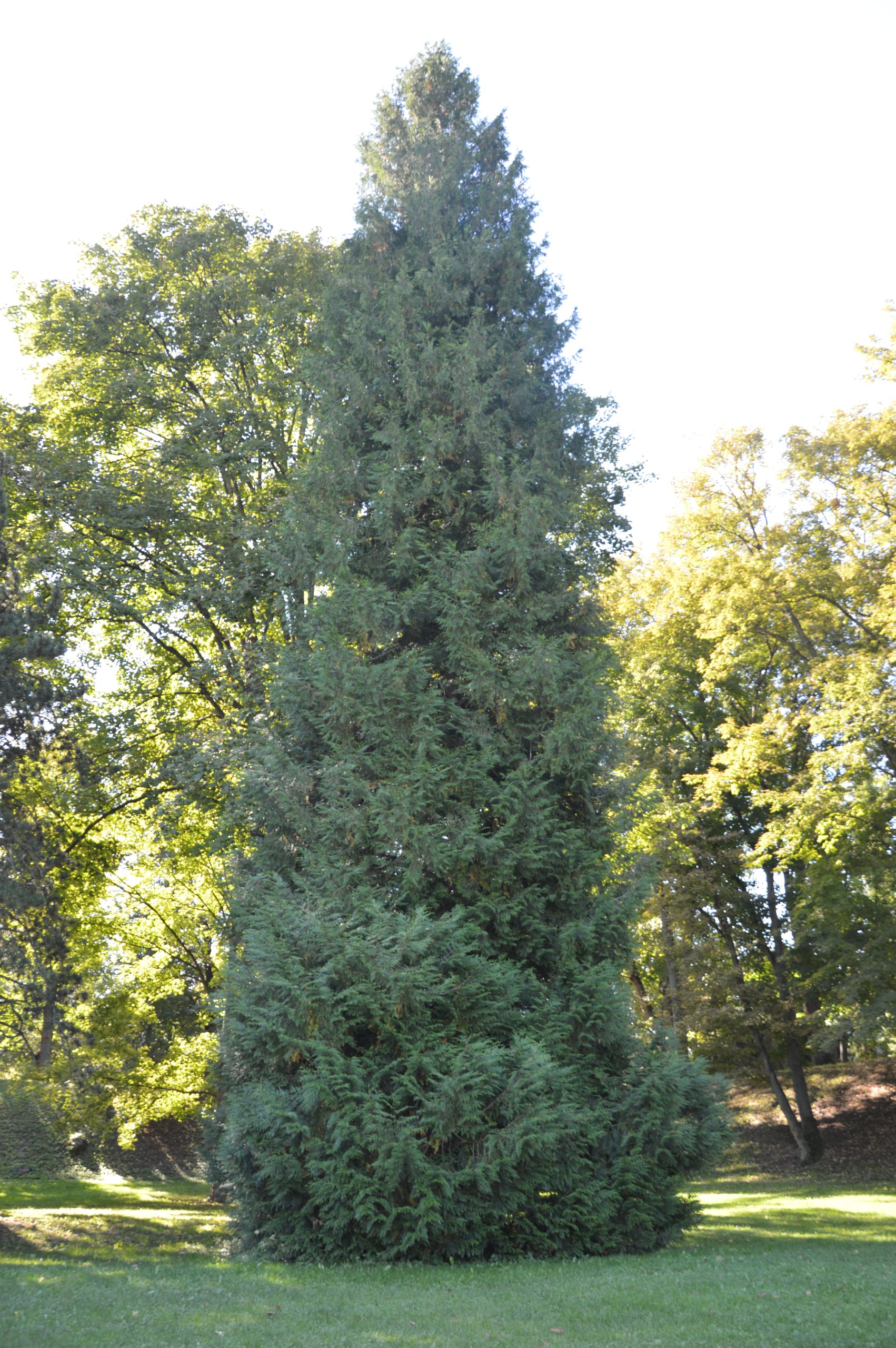
Habitus: A tree growing to the height of 30–60 metres with a narrow crown and erect branches. The bark is reddish-brown, smooth, peeling in long strips.
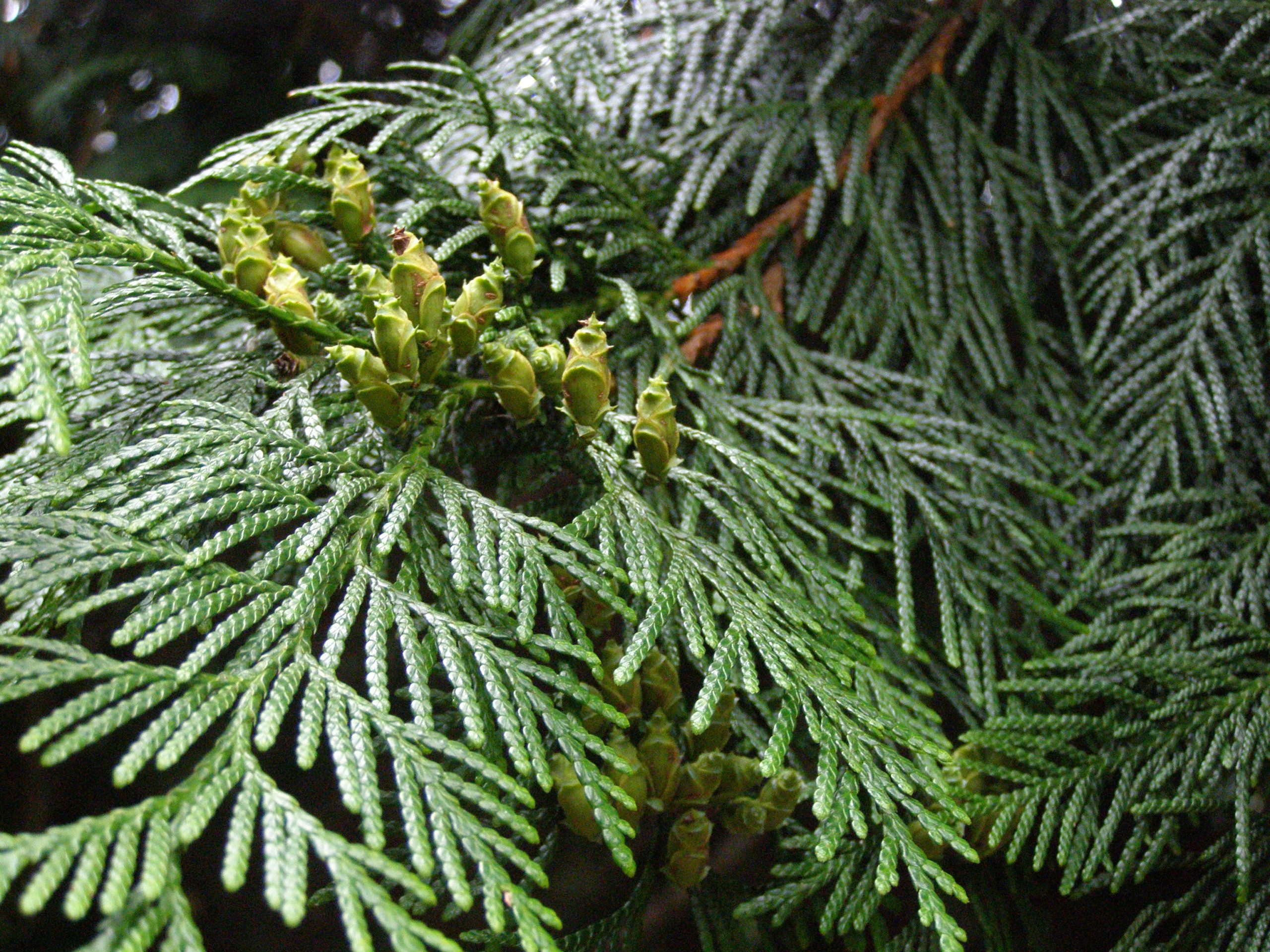
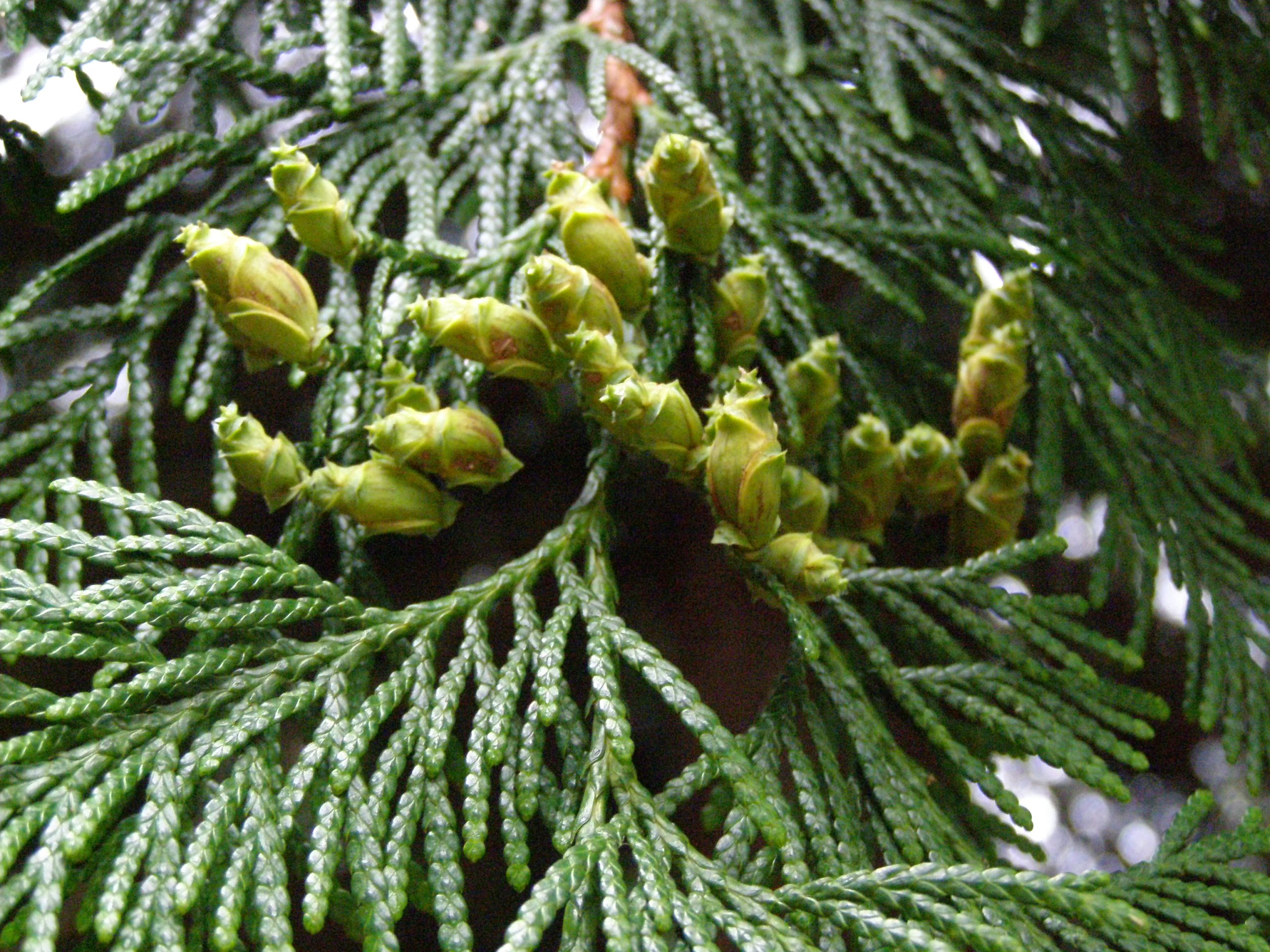
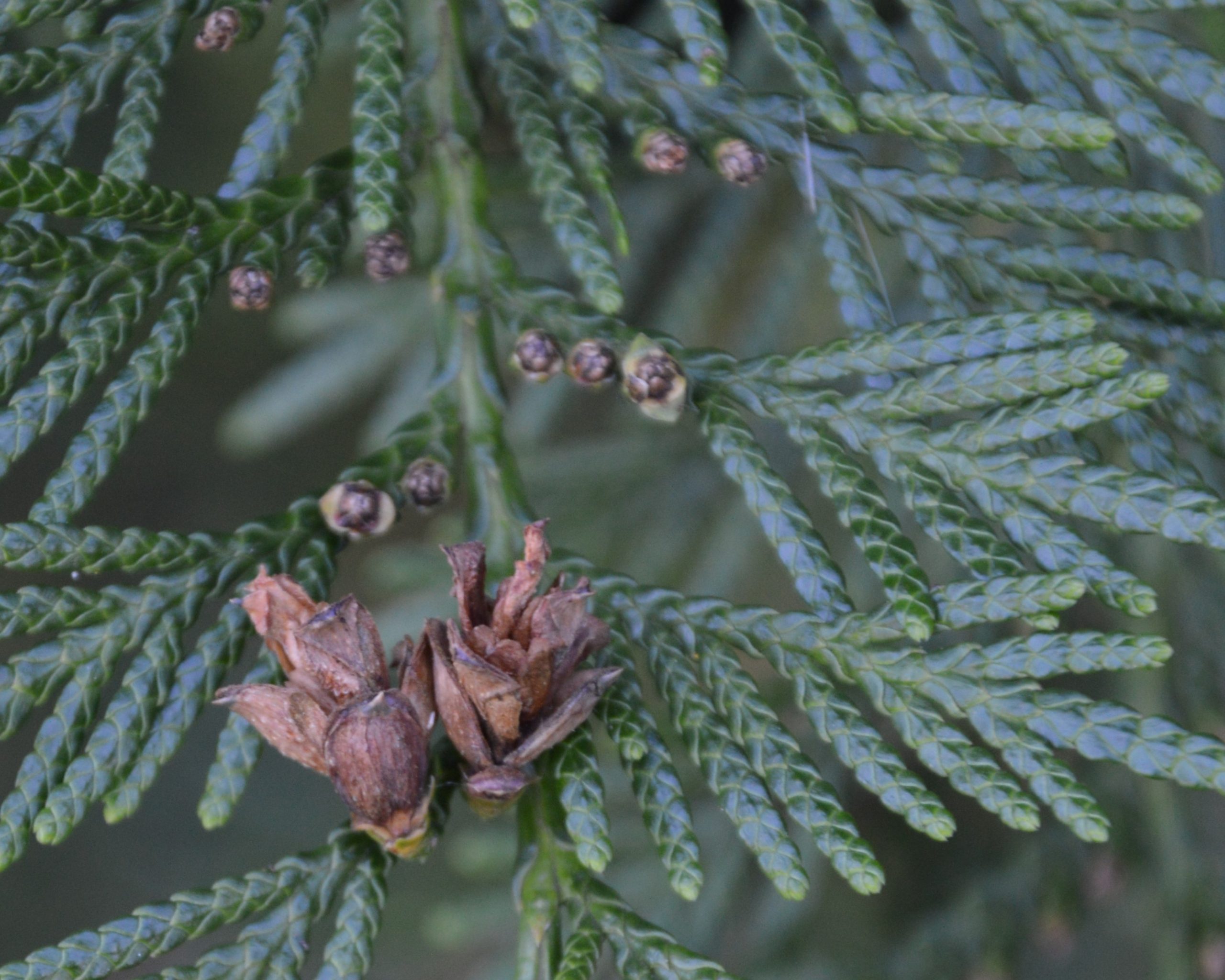
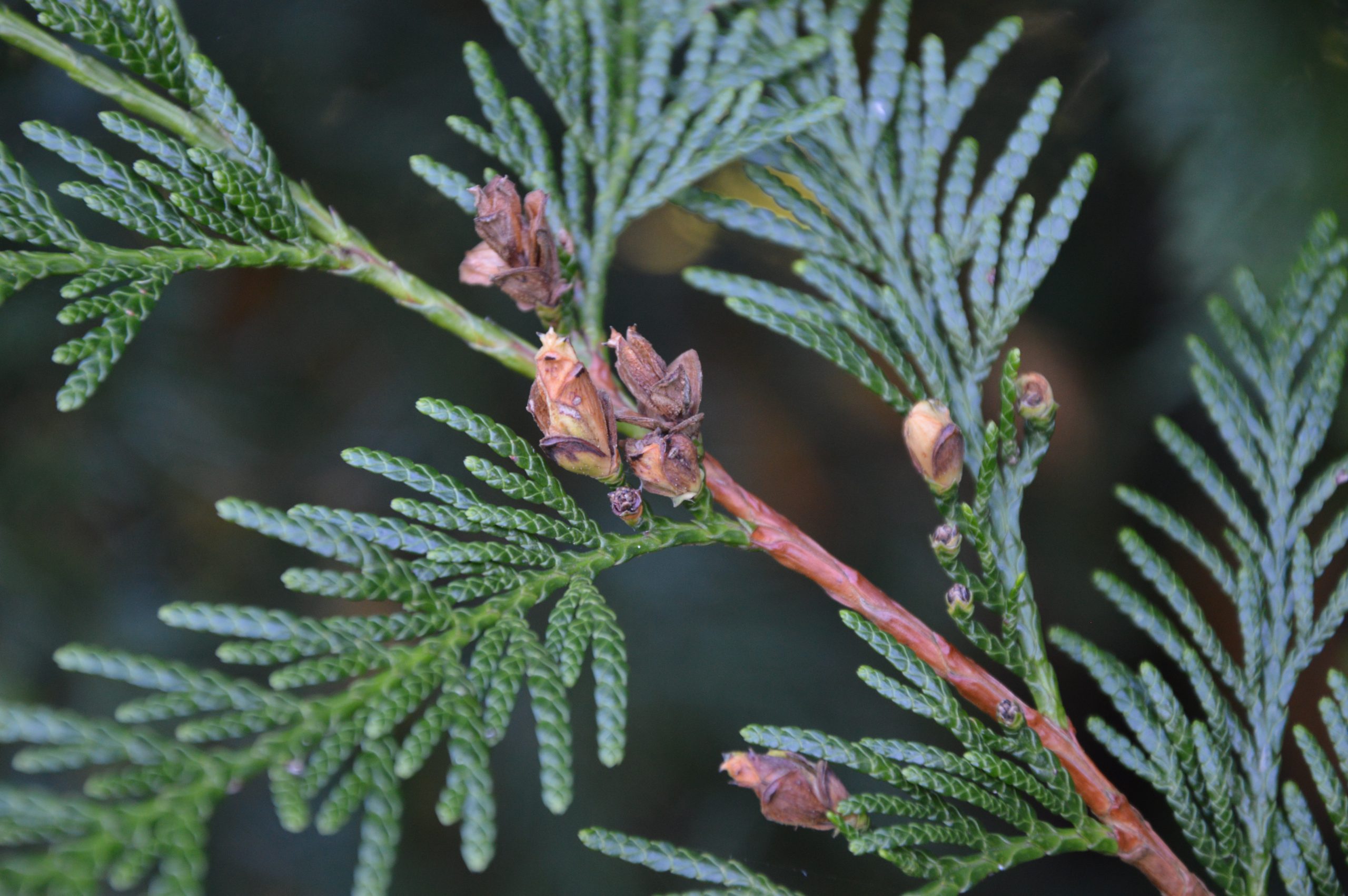
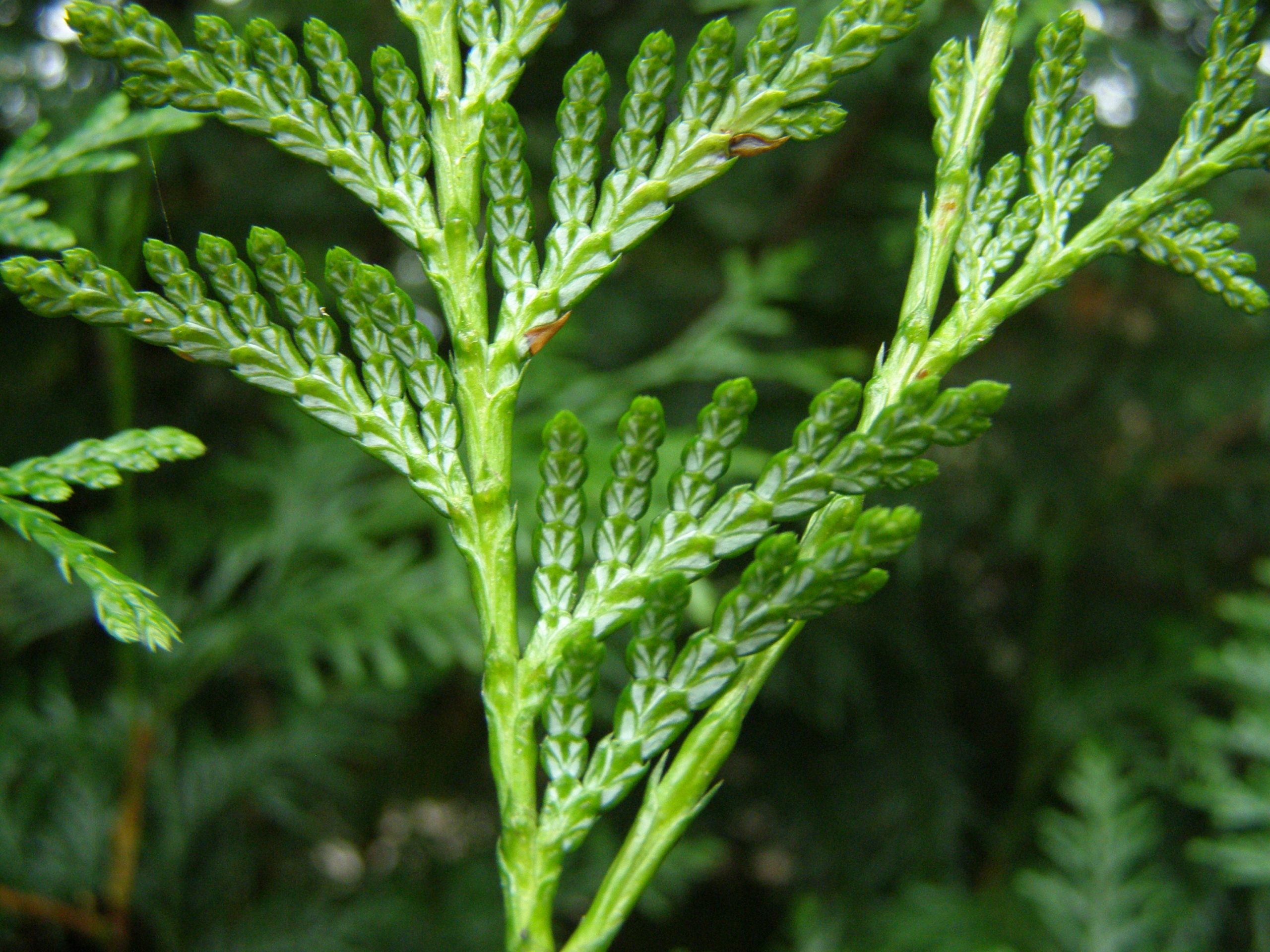
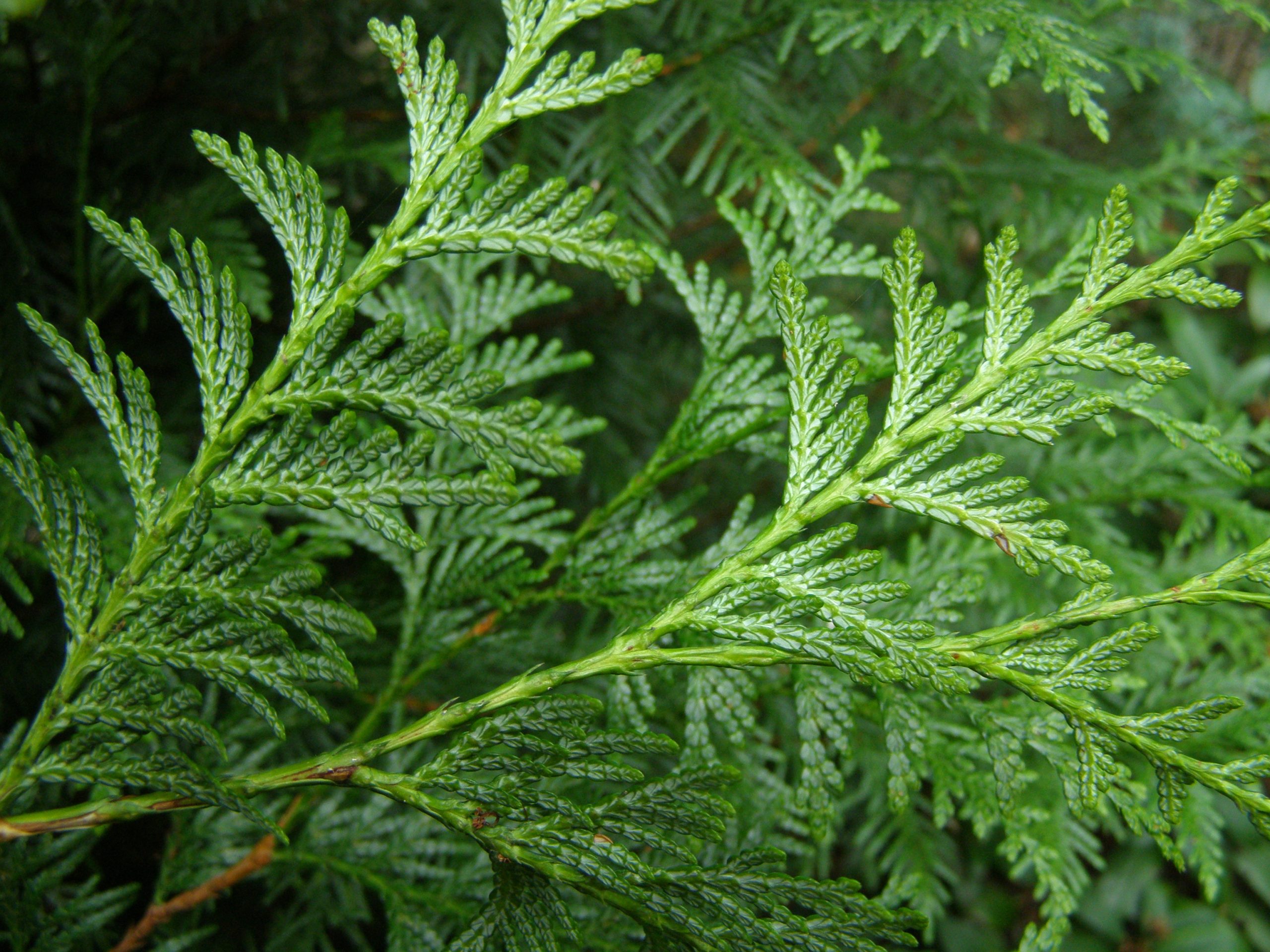
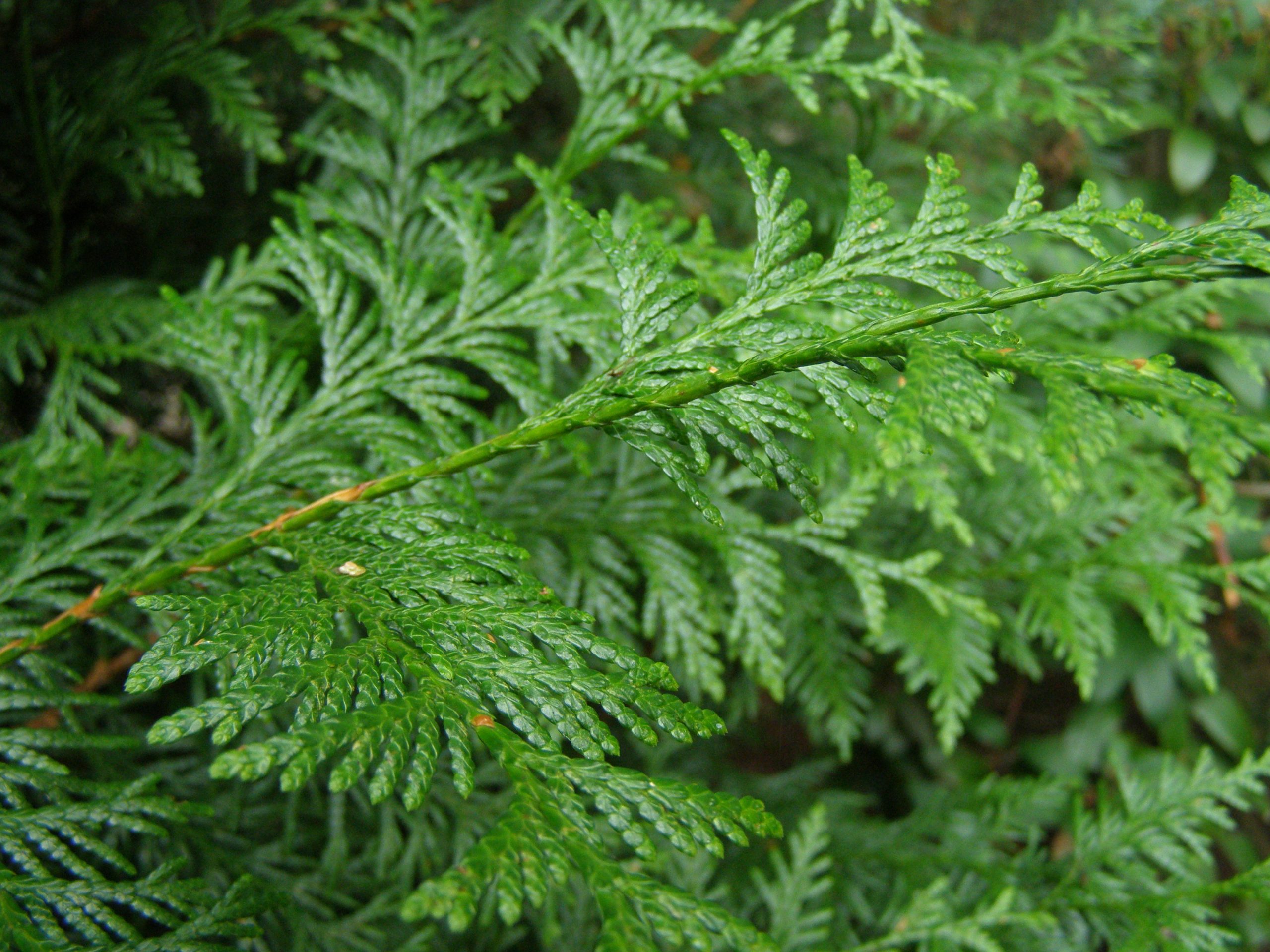
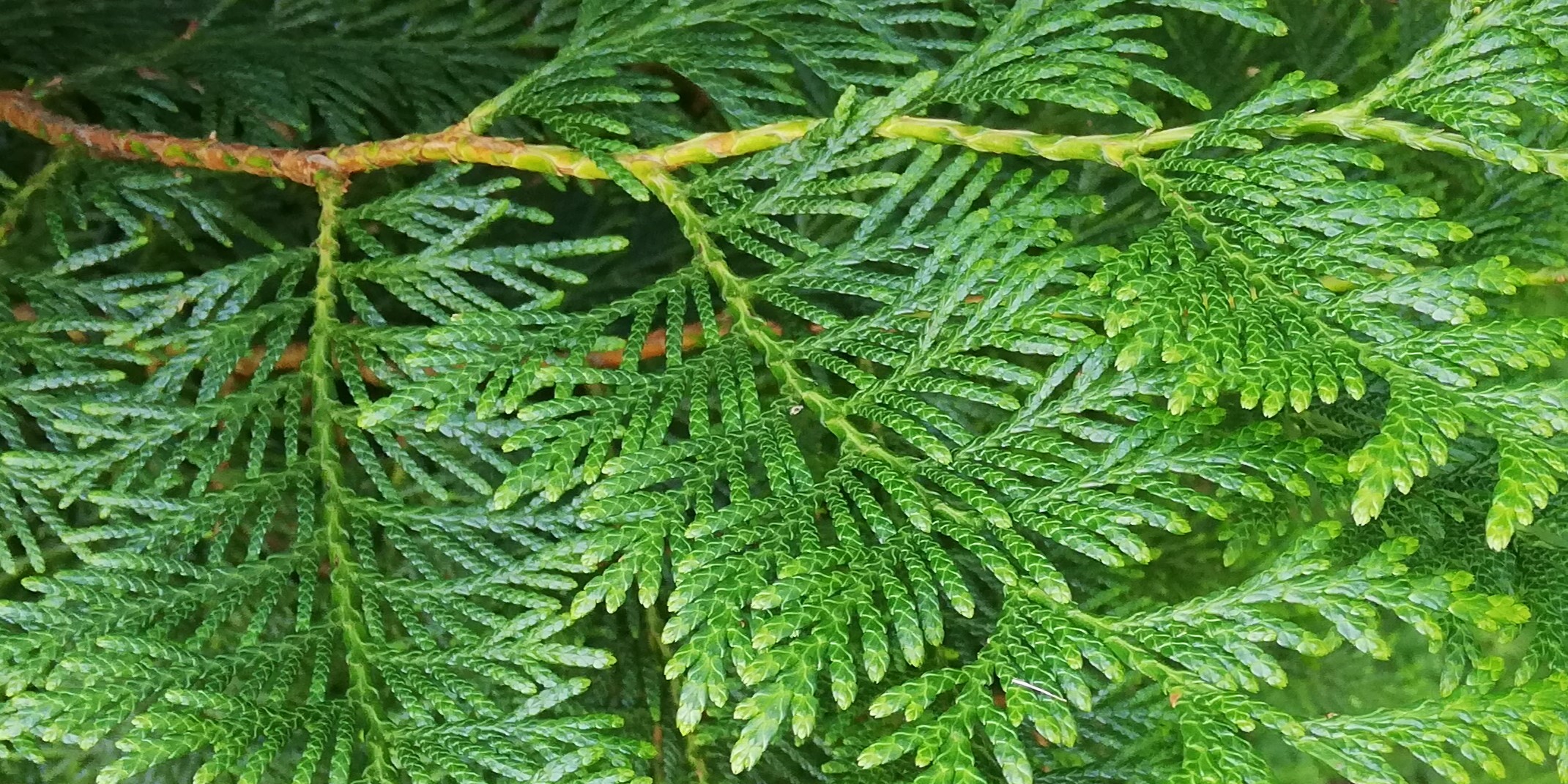
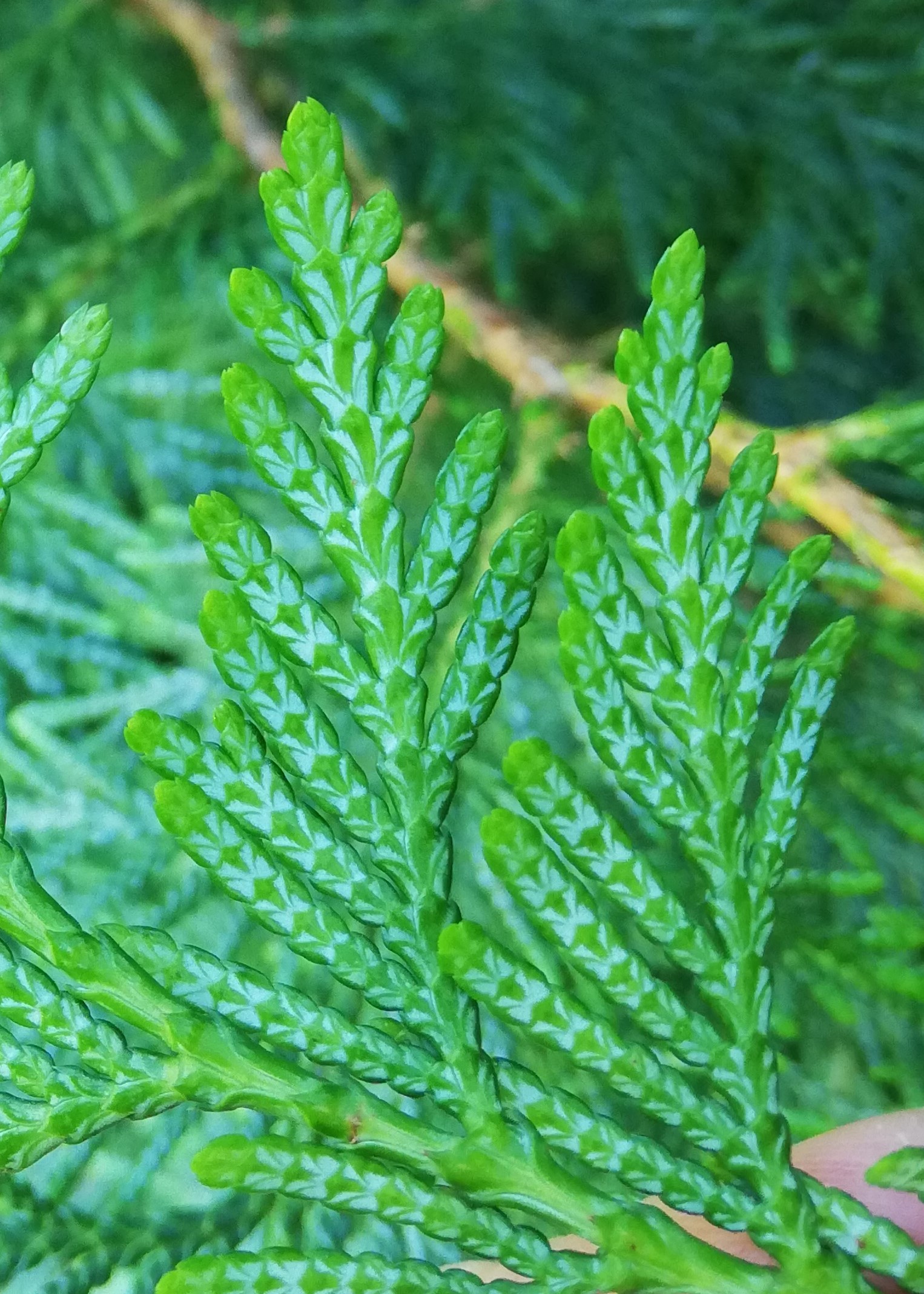
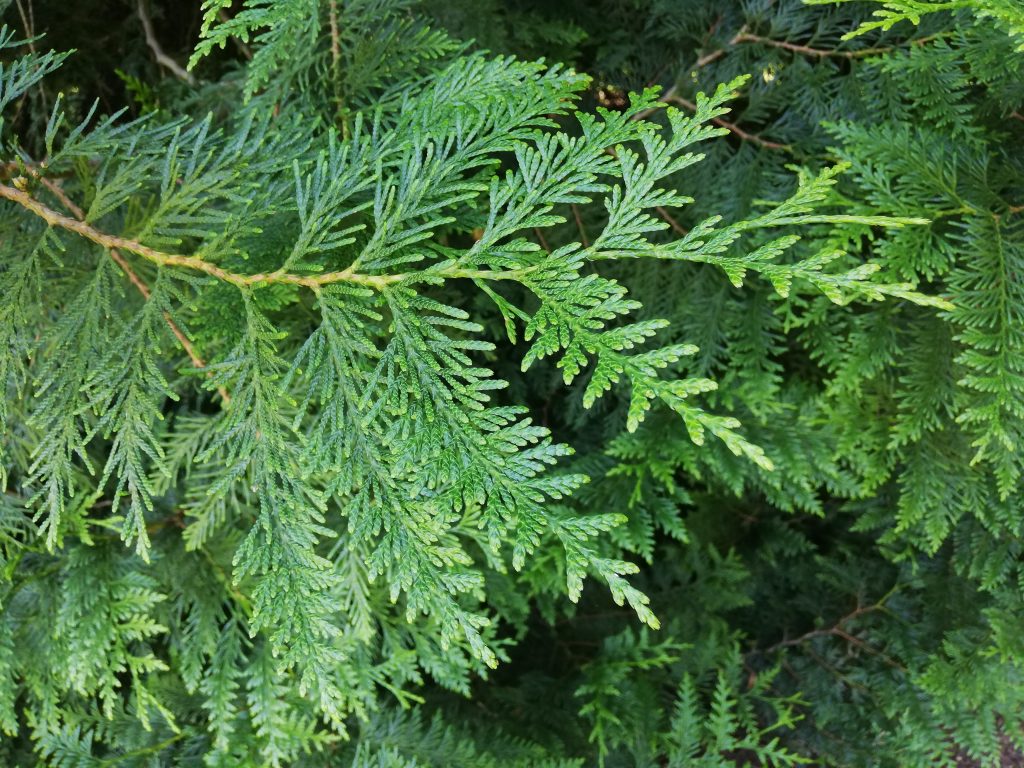
List: Juvenile leaves are needle-like. Adult scale-like and cross-shaped leaves are pointed at the top. The upper side is glossy, dark green. The lower side has a distinctive white pattern. On older branches, the leaves turn brown.
Bloom, fruit: Small male cones grow at the ends of the twigs, female ones grow in the middle part of the twigs. The cones are green first, then they turn brown. The seeds are oval and flattened, with a winged edge.
Interesting fact: It has sacred significance in Indian culture. The natives were able to use all parts of the tree. The wood was used to build huts, canoes, totems and ritual objects. The bark was used to weave baskets, and its soft inner parts were used to make ropes or blankets. Young twigs and leaves were used in medicine for toothache, coughs and colds.