
Taxaceae family, Taxaceae
Origin: most of Europe outside the Nordic region, native to the Czech Republic, Asia Minor, Caucasus
Habitat in the original area: mixed and scree forests
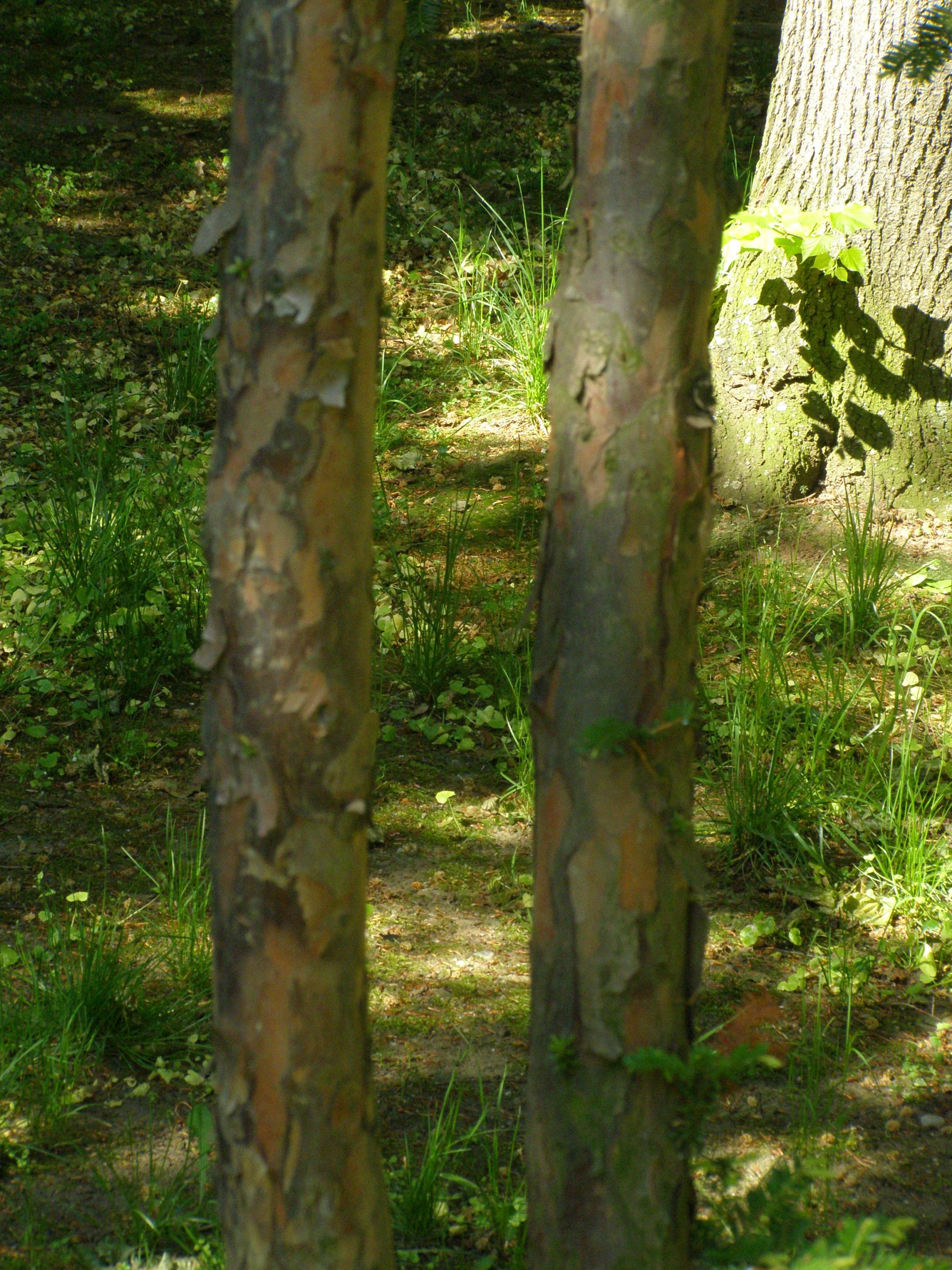
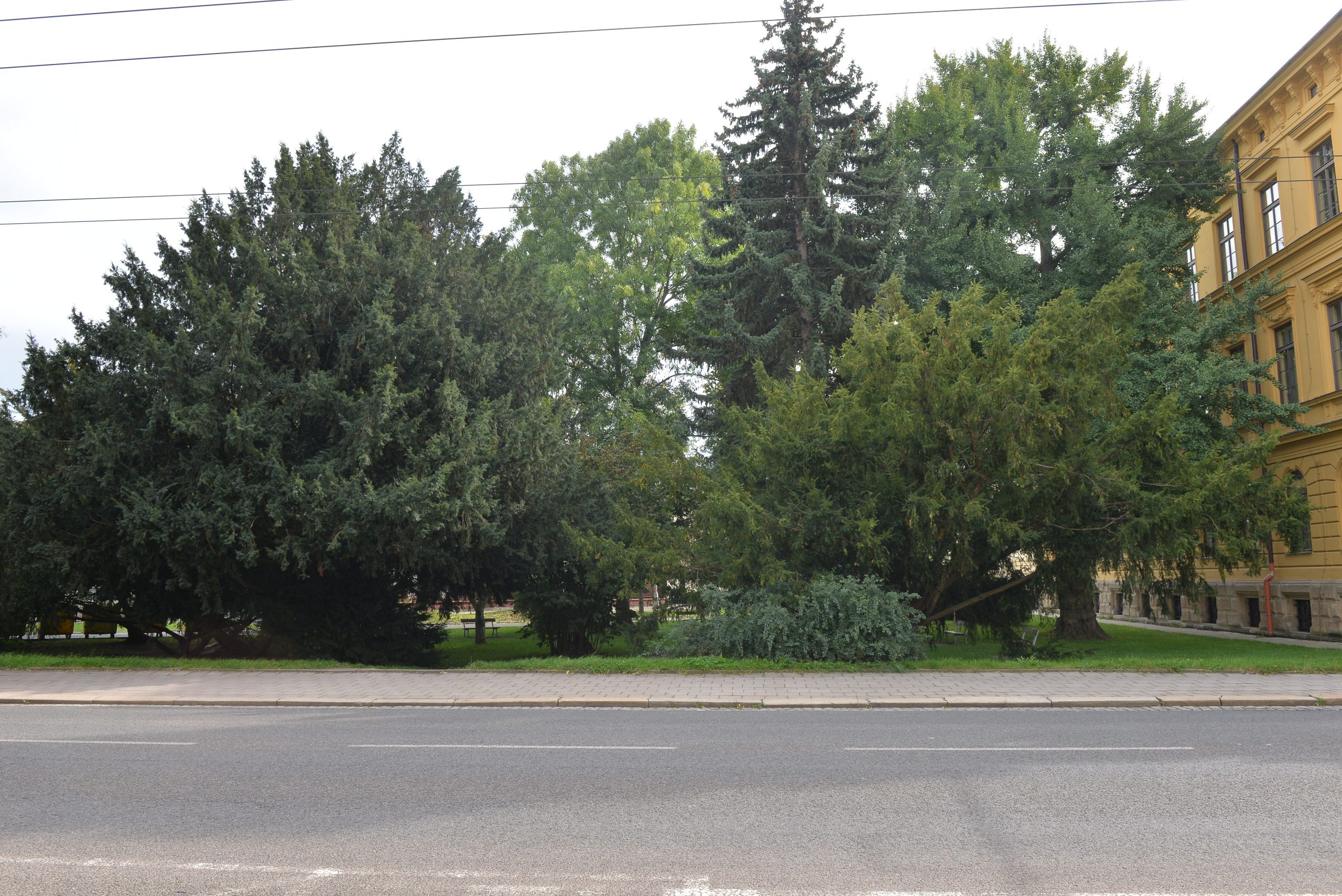
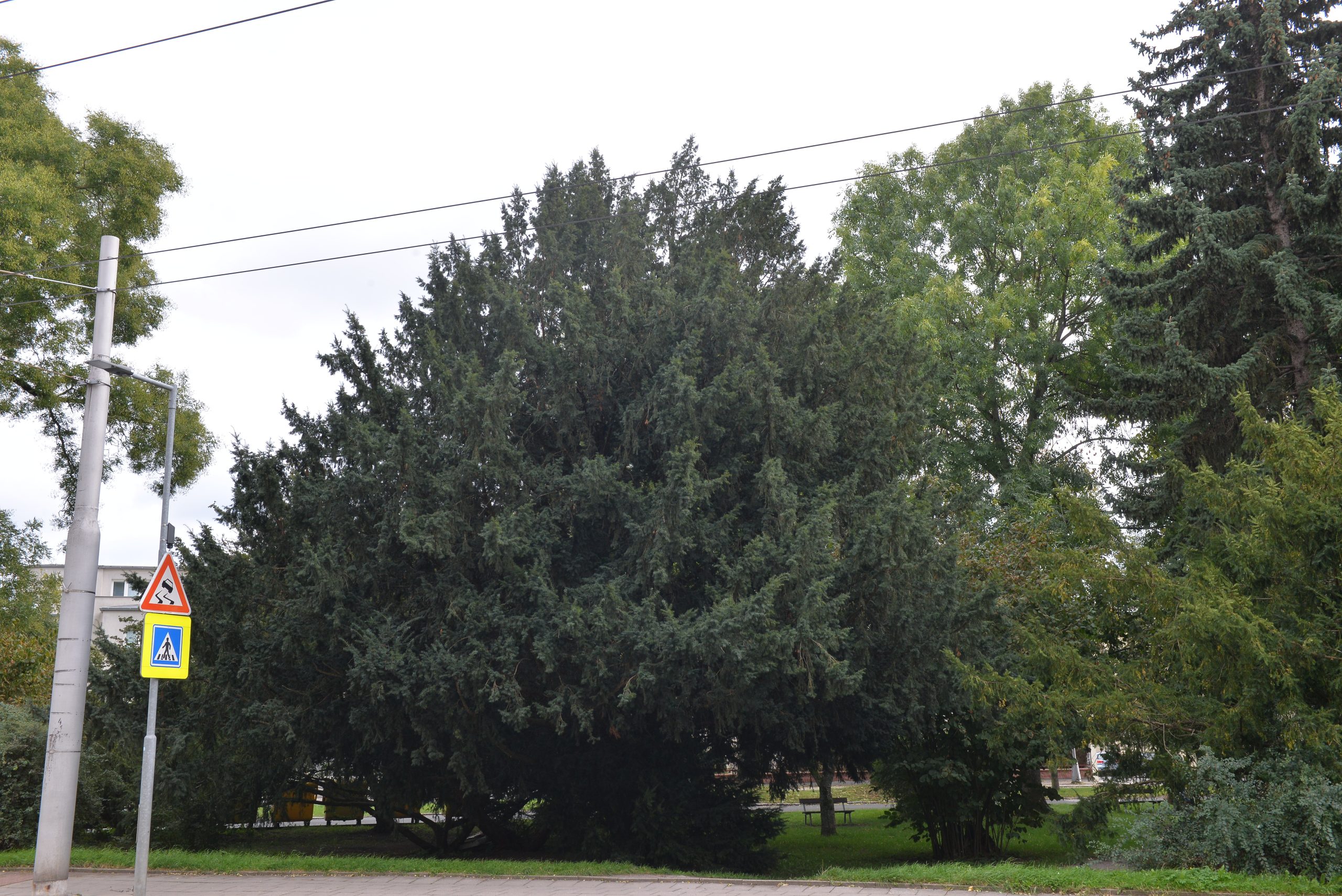
Habitus: A very slow-growing shrub or multi-stemmed tree with a conical crown growing to the height of 20 metres. The bark is smooth brownish-red; it peels off in sheets.
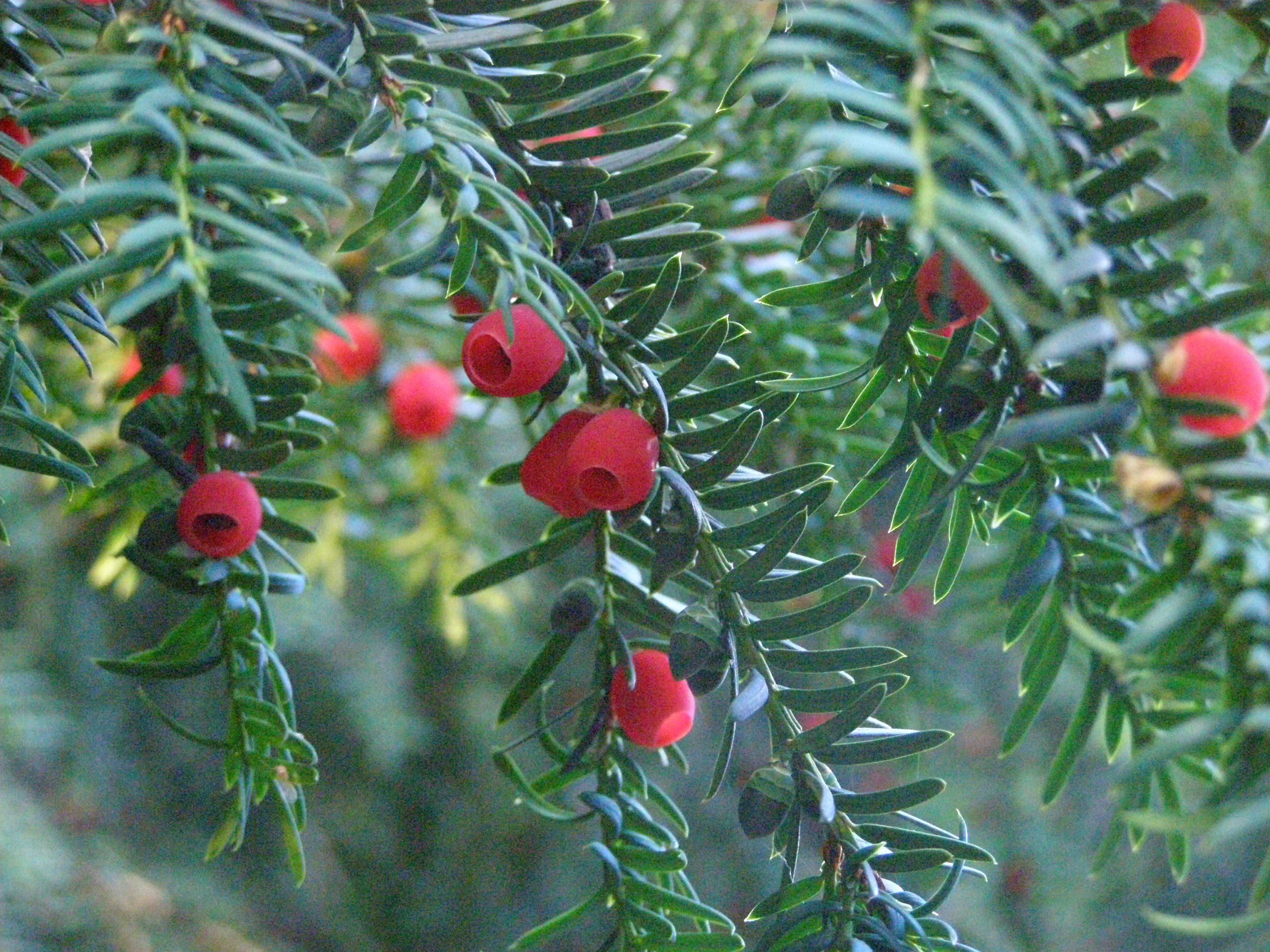
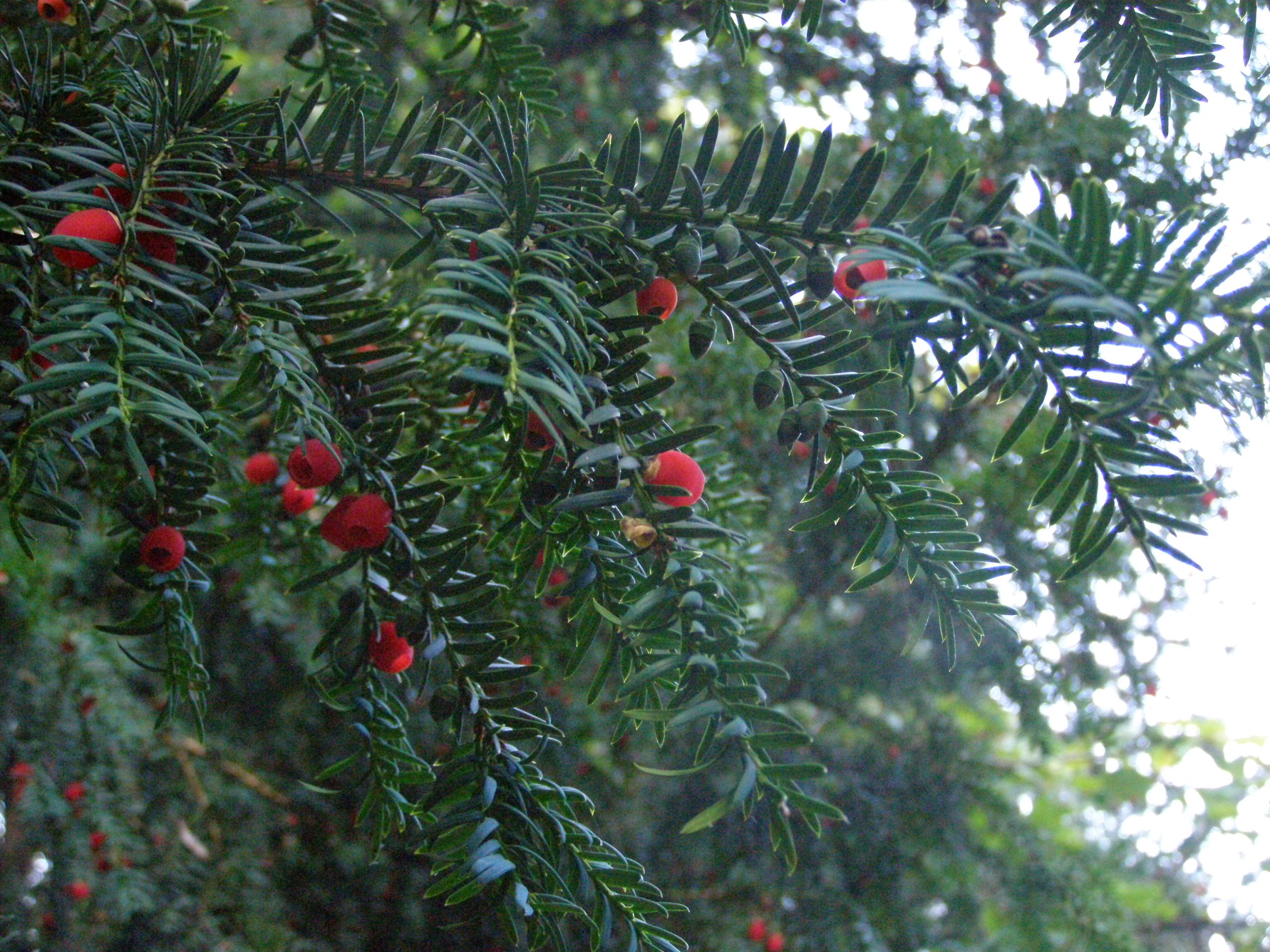
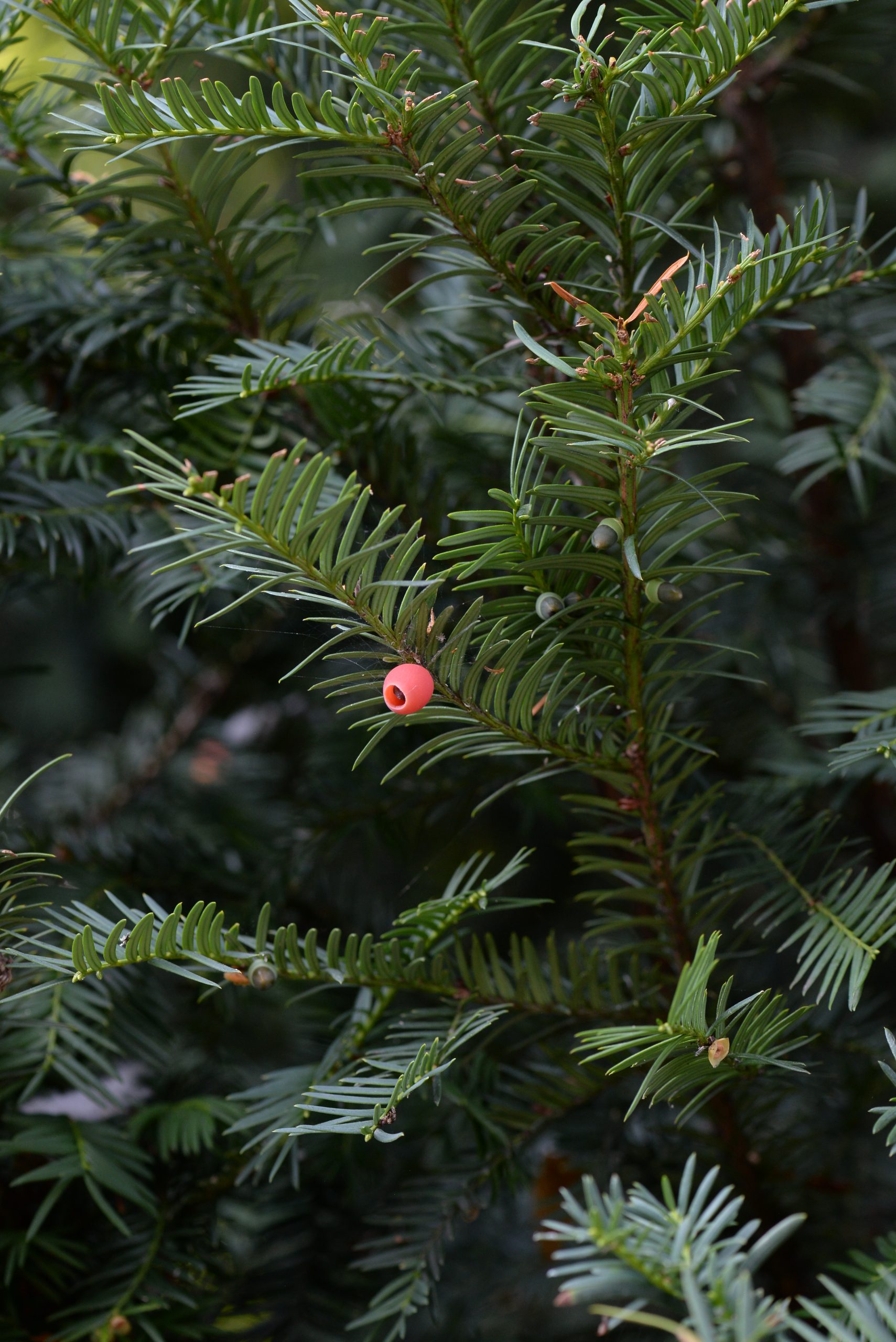
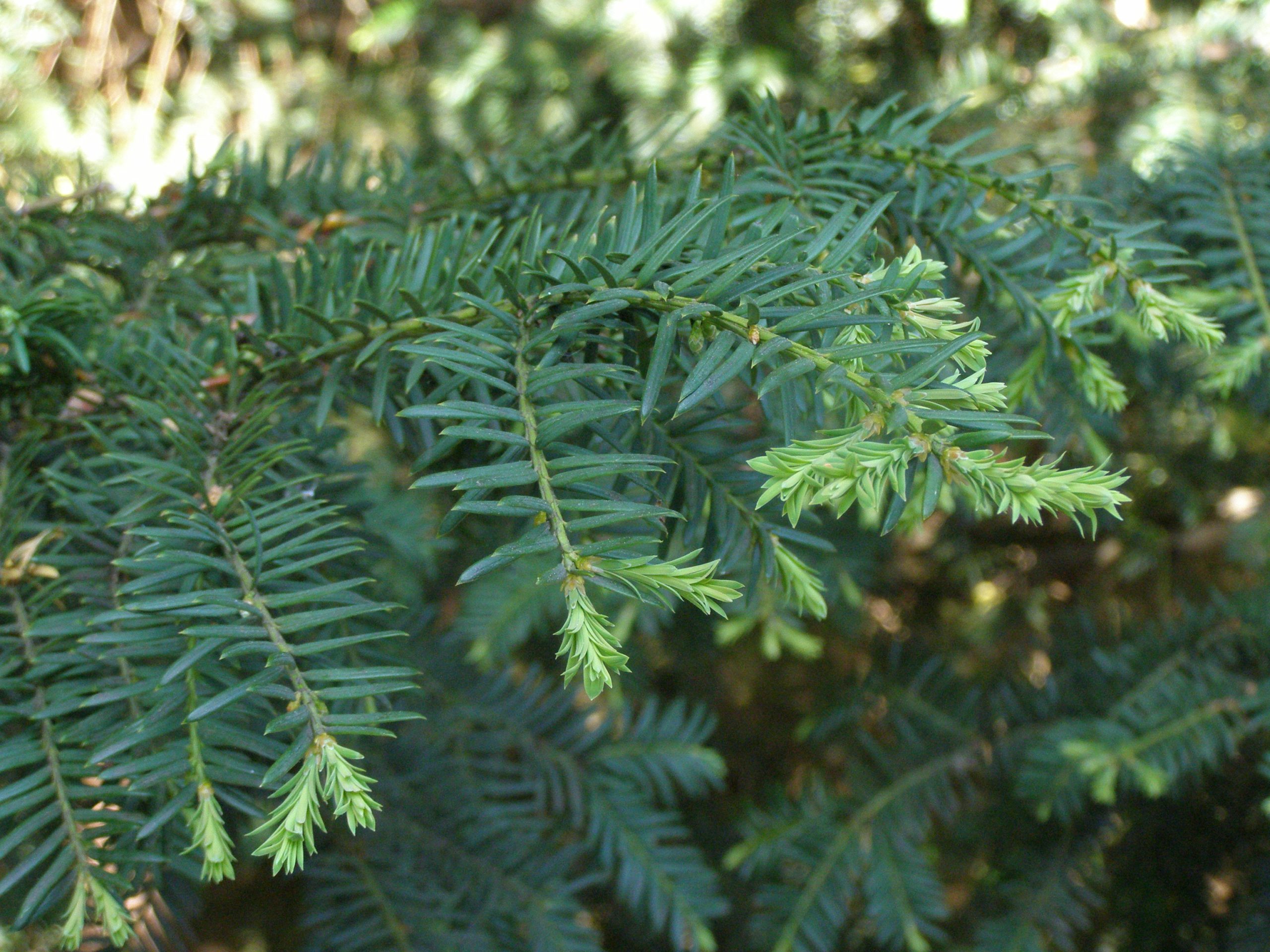
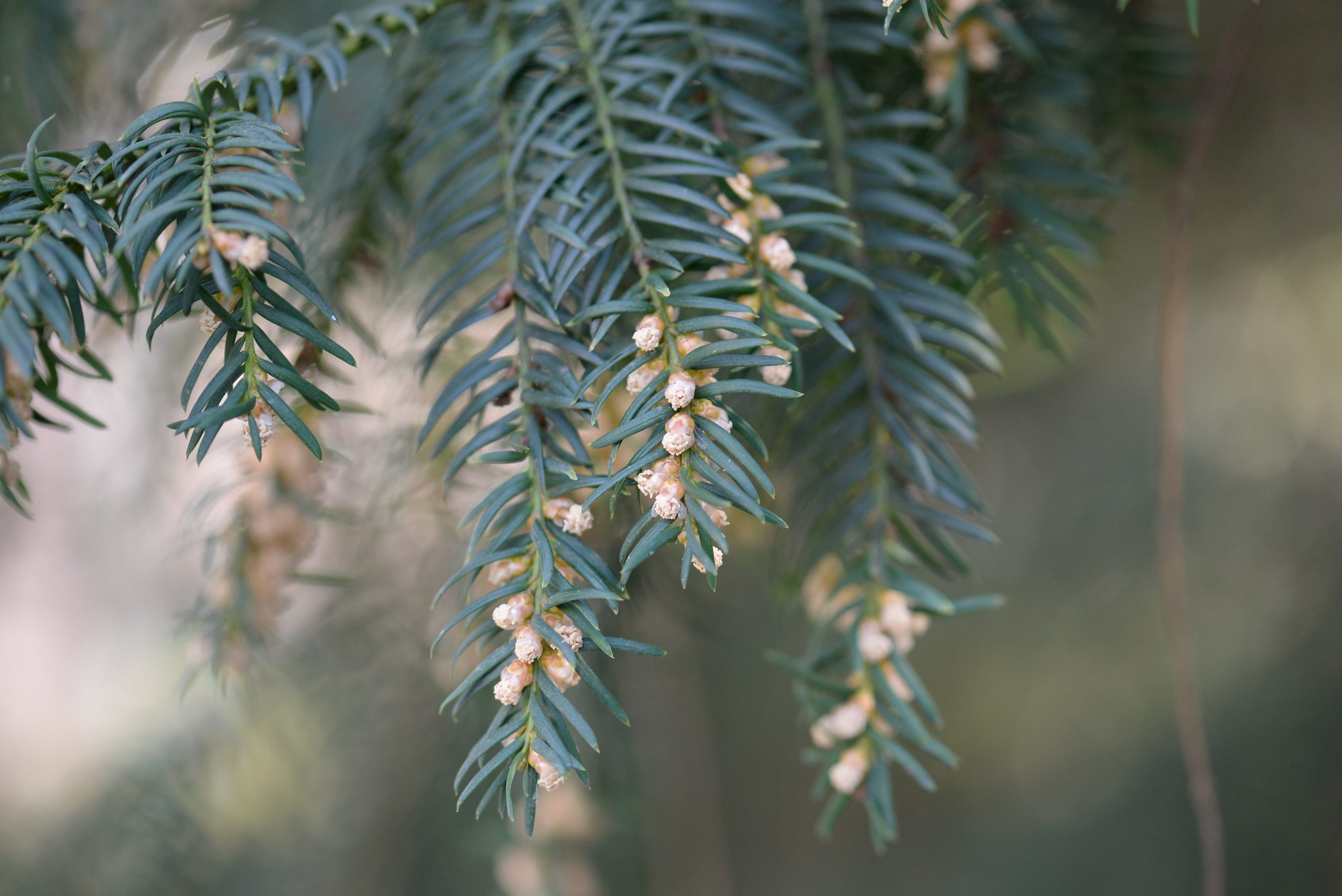
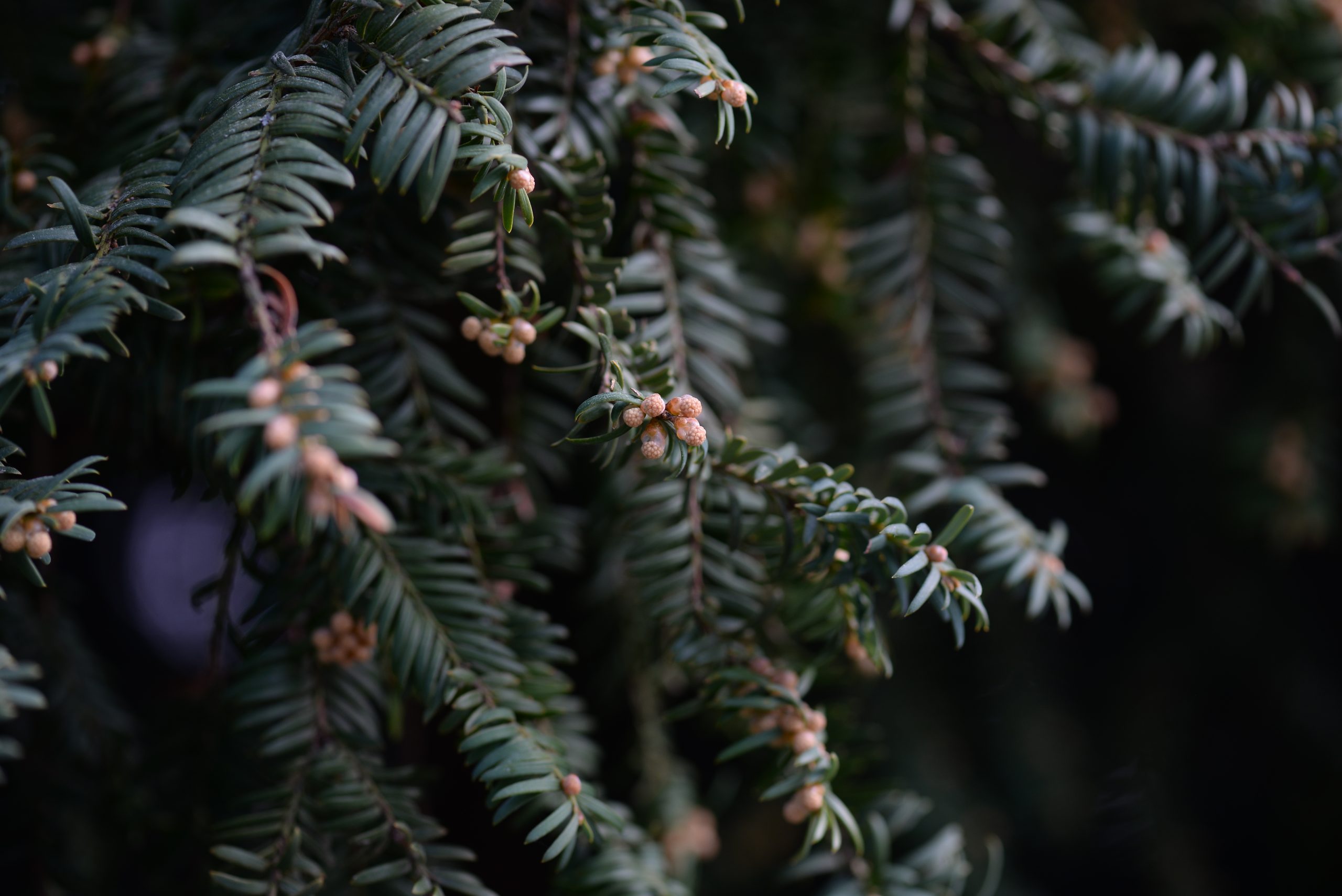
Leaf: Up to 3.5 centimetres long, soft, pointed needles grow on horizontal branches in two rows. On vertical shoots, they grow all around the twig. They are dark green on the upper side, yellow-green on the lower side. At the base, they turn into a short petiole. They lack resin ducts.
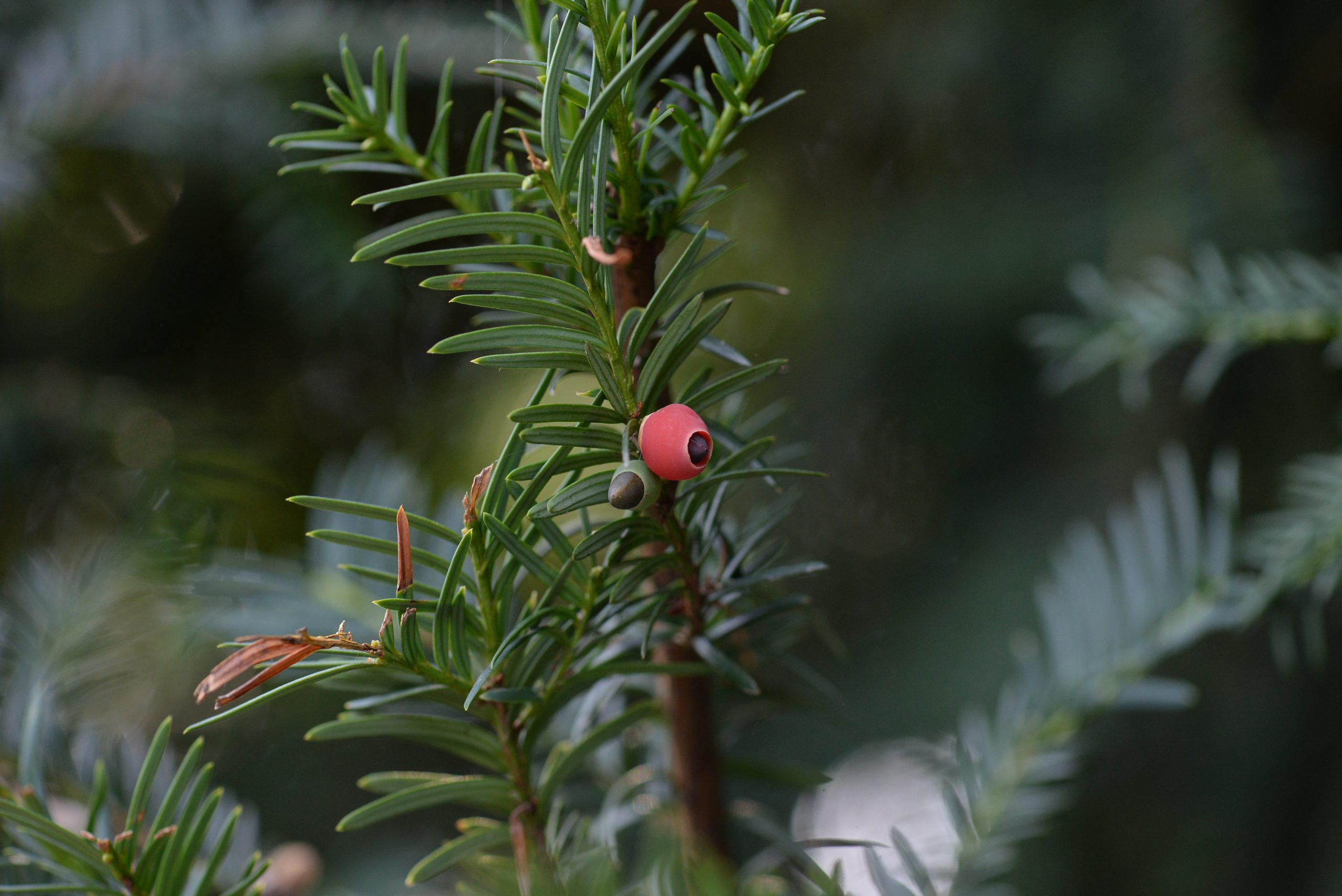
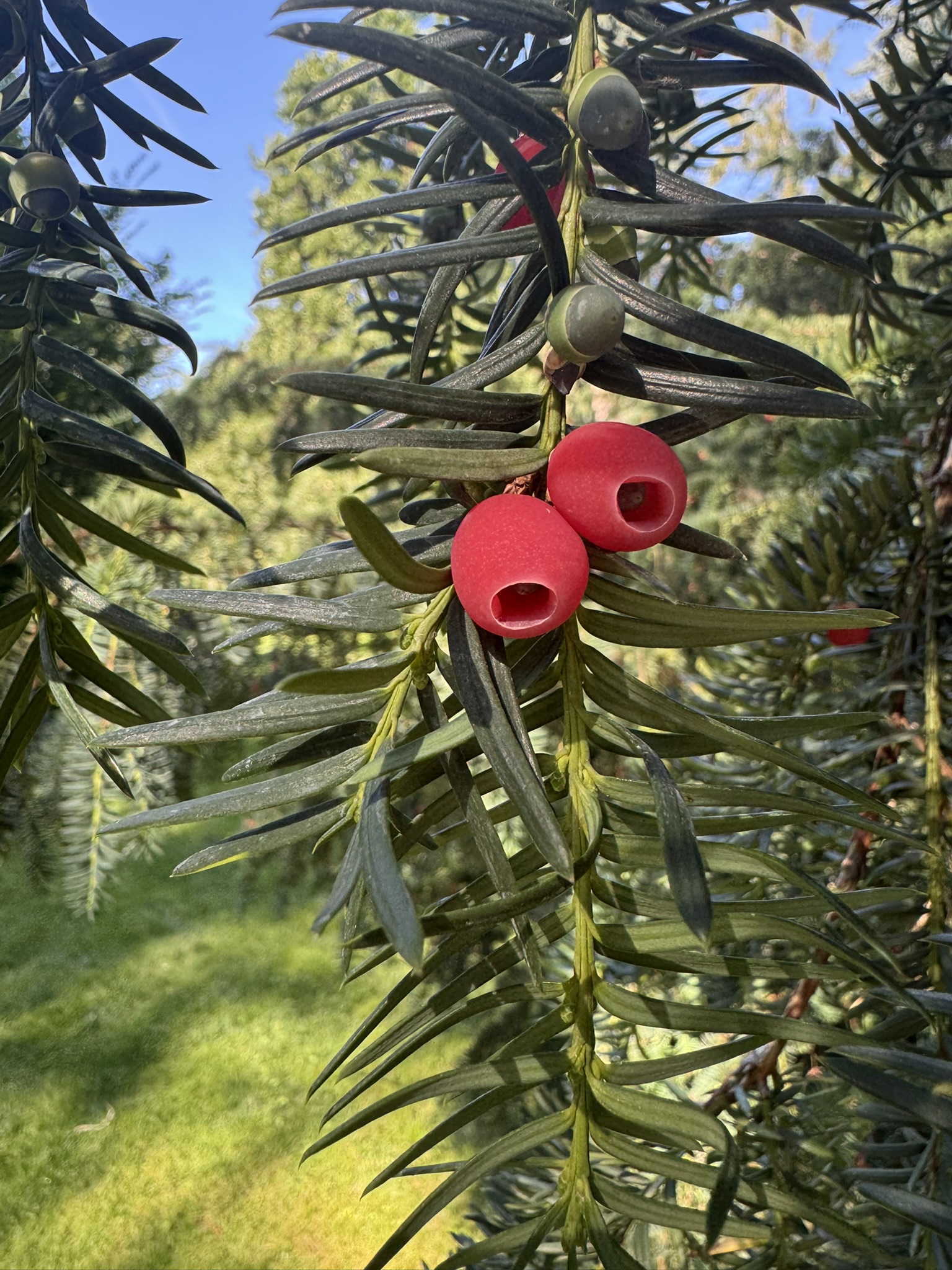
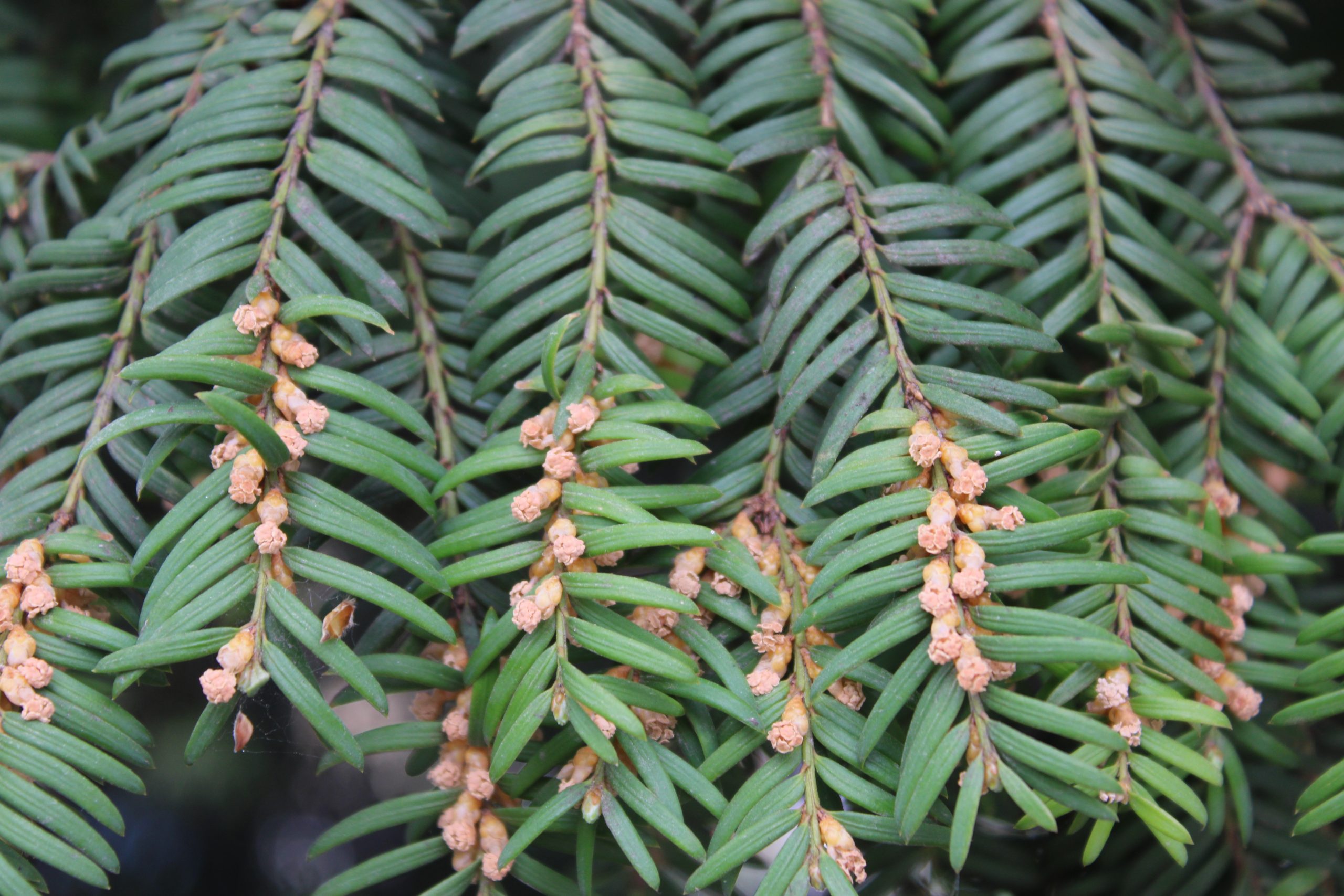
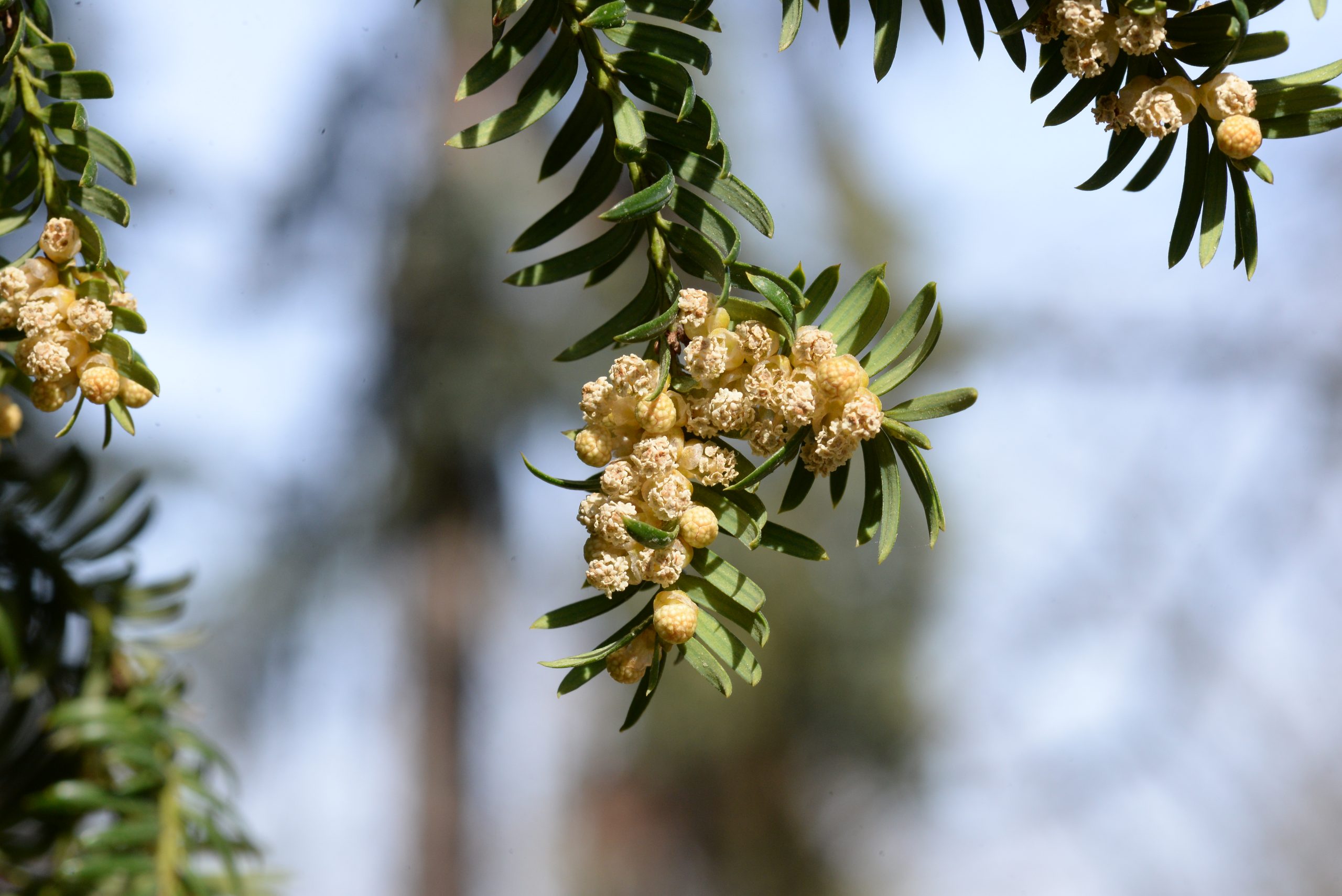
Bloom, fruit: From March to April, round male cones grow at the bottom of the twigs which occurred in the previous year. Female cones are very reduced, they resemble buds. The brown seeds are hidden in a fleshy red false sac. They are eaten by birds, which thus help spread the seeds.
Interesting fact: Since prehistoric times, bows have been made from yew wood. They were very popular, for example, in medieval England, to which tree trunks were imported from distant corners of Europe, and bows were made from them. Already in ancient times, the yew was known as the tree of warriors, and later the Celts referred to it in the same way. It is considered to be a tree of eternal life and death, which is why it is often planted in cemeteries. The whole plant is poisonous, except for the sac. The active substance is taxine (a mixture of cardiotoxic alkaloids). In the Czech Republic, it belongs to the endangered plant species (C3).