
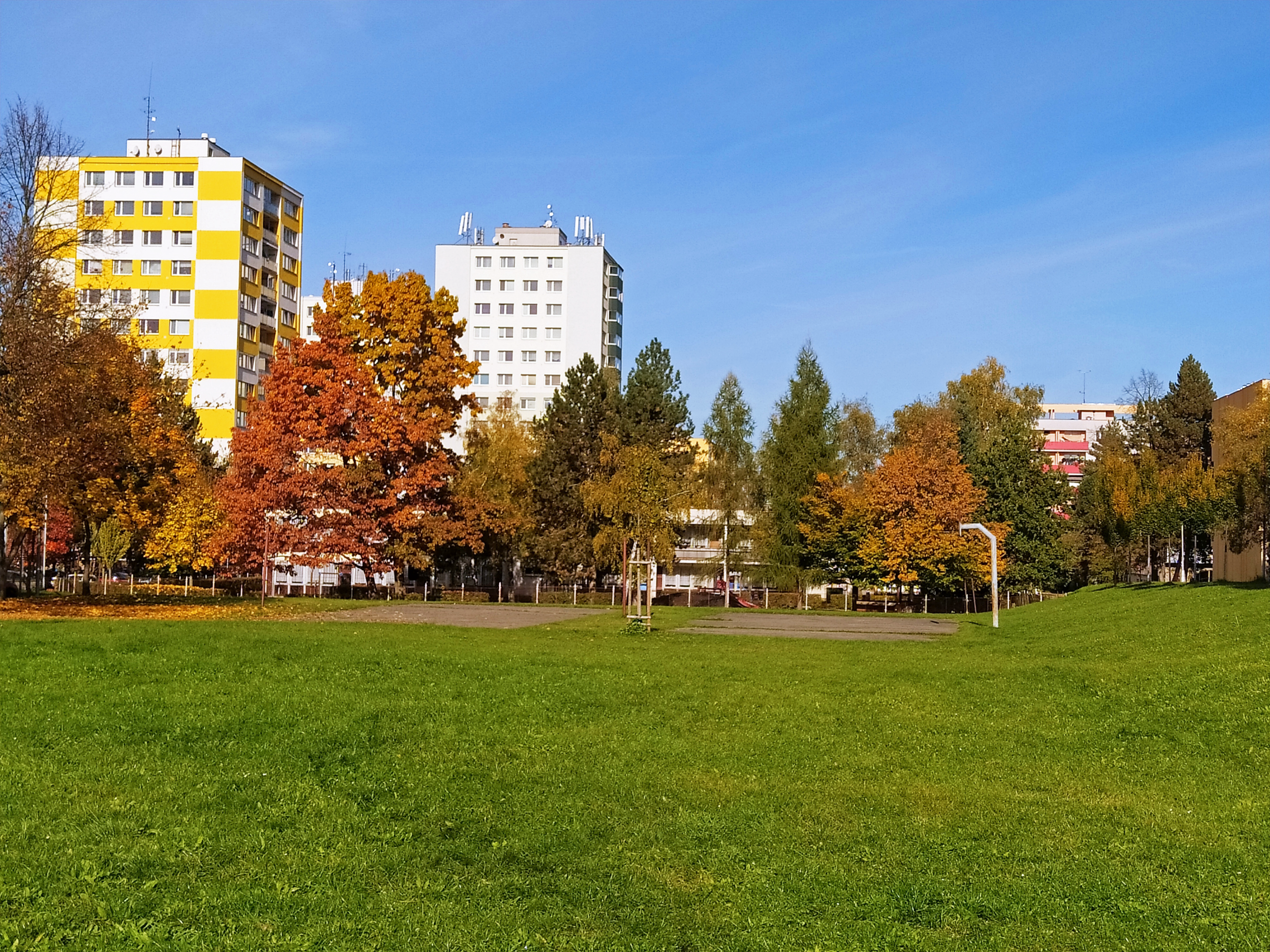
Moravské Předměstí is a part of Hradec Králové situated south of the city centre. It is located partly in the cadastral territory of the local district called Nový Hradec Králové and partly in the cadastral territory of the local district called Třebeš. At the beginning of the 20th century, there was only a meadow on the site of today’s housing estate; the first houses and blocks of flats were built in 1908. A design for the building development of the entire area was made in 1919. However, no steps to implement this design were taken until the end of the 1950s. In 1960 the design was revived by architects Břetislav Petránek and Jan Zídka. In the period of 1967–1968, a national urban planning competition was announced calling for designs of Moravské Předměstí. A detailed master plan was drawn up between 1969 and 1971 based both on the winning design and on new requirements for civic amenities. The requirement for more apartments prompted the architects to make the housing estate denser with buildings and to reduce the green areas during the project processing.
The building development of the Moravské Předměstí housing estate began in 1971. The entire housing estate was divided into six districts. The design of each district included basic civic amenities, such as a grocery store, a nursery school and a primary school. The main axis of the housing estate was Marx´s Street, later renamed into Edvard Beneš´s Street. The architects oriented the new city avenue towards the historical centre of Hradec Králové so that it opened up a view of the Cathedral of the Holy Spirit and the White Tower. In this way, they developed the architectural idea of the already existing Gočár´s street and Pospíšil´s Street. A majority of the civic amenities were concentrated in the main avenue of the housing estate. The building development of the housing estate was completed in 1993.
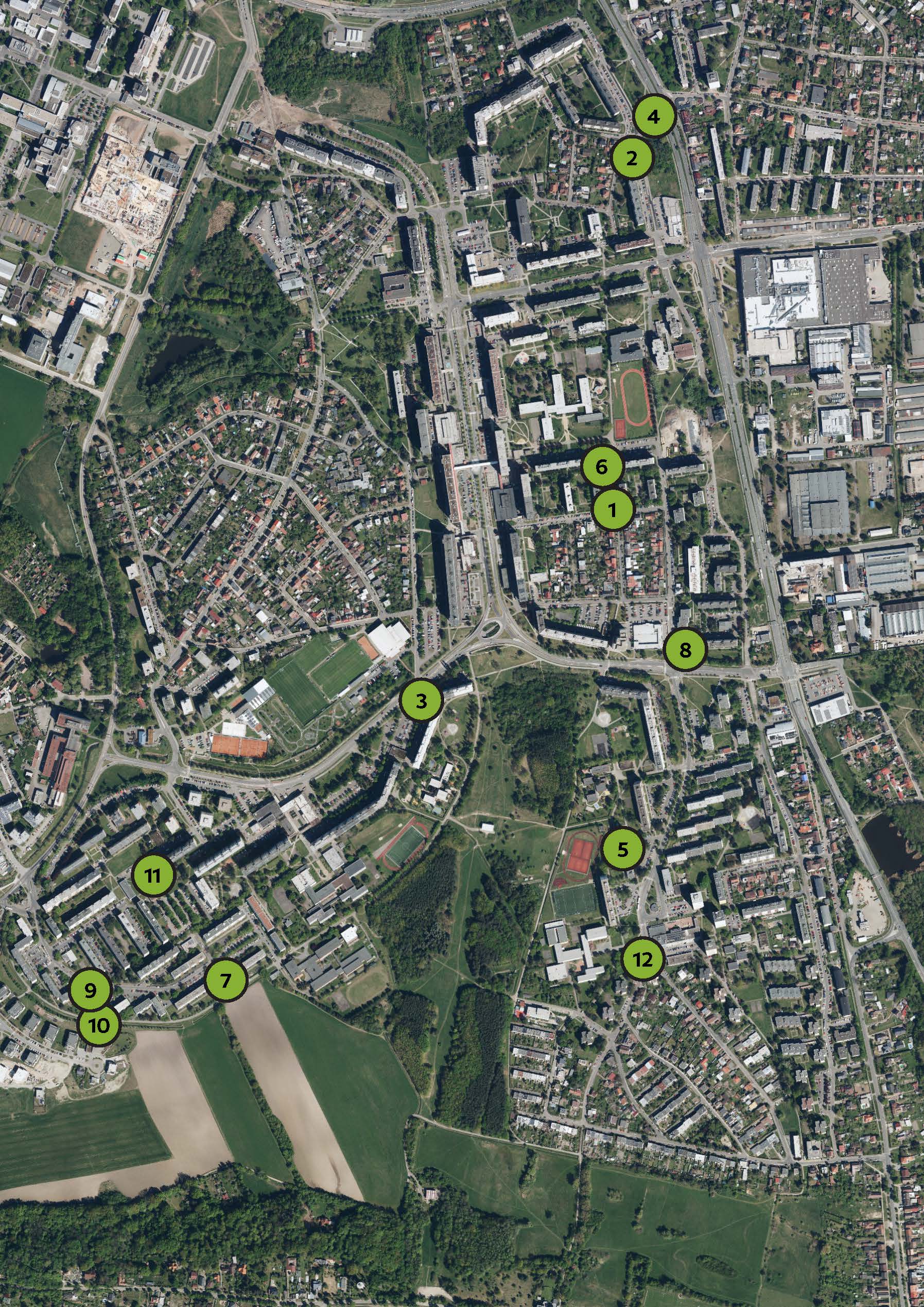
1 – Red Oak (Quercus rubra)
2 – Russian Olive (Elaeagnus angustifolia)
3 – Horse Chestnut (Aesculus hippocastanum)
4 – Red Horse-Chestnut (Aesculus ×carnea)
5 – European Bladdernut (Staphylea pinnata)
6 – Tree of Heaven (Ailanthus altissima)
7 – Sweet Mock-Orange (Philadelphus coronarius)
8 – Smoketree (Cotinus coggygria)
9 – Rugosa Rose (Rosa rugosa)
10 – Staghorn Sumac (Rhus typhina)
11 – Smallflower Tamarisk (Tamarix parviflora)
12 – Eastern White-Cedar (Thuja occidentalis)