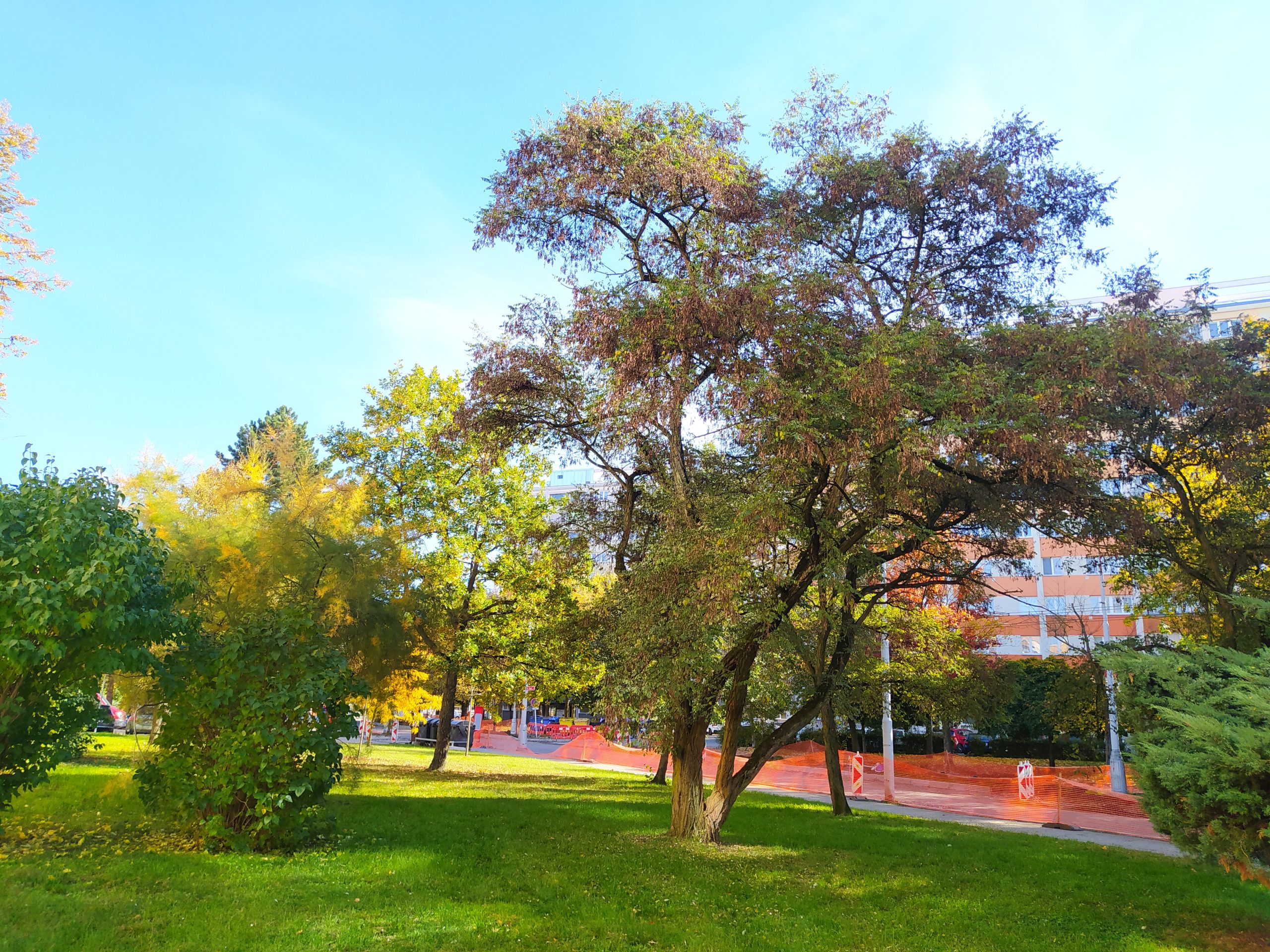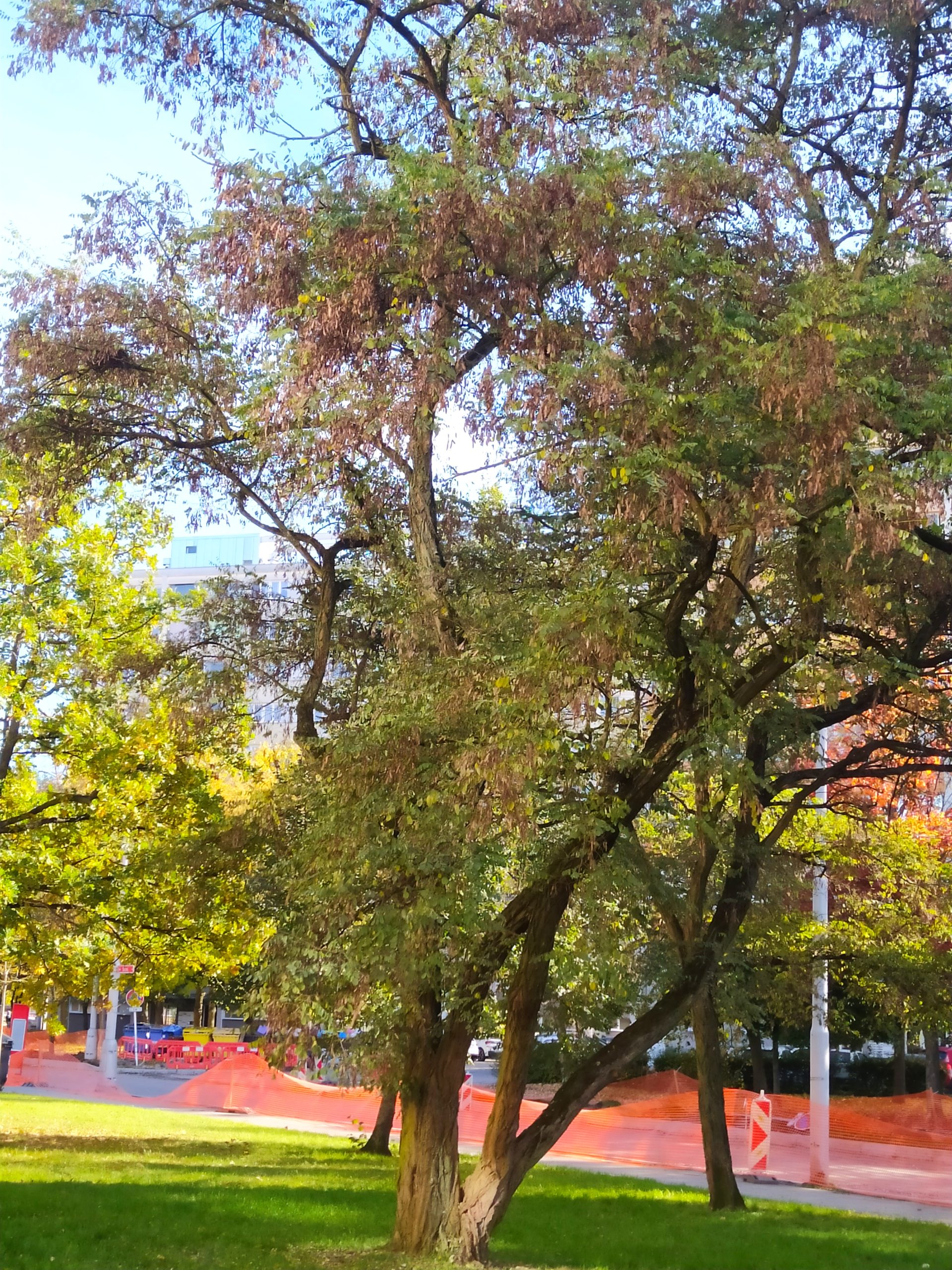

Legume/Pea family, Fabaceae
Origin: the east of the U.S.A.
Habitat in the original area: mountain forests up to 1,600 metres above sea level; on sandy and clay soils
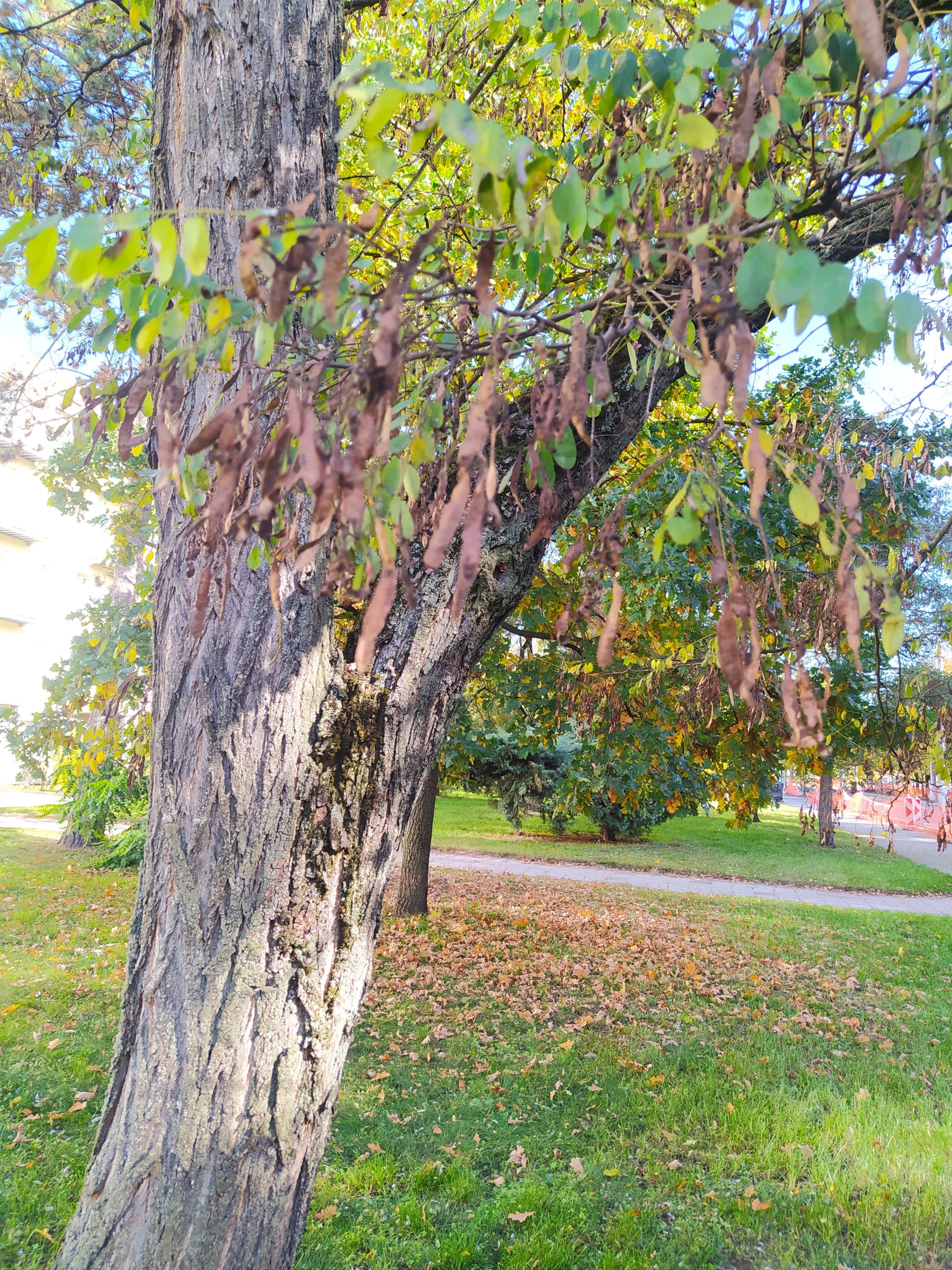
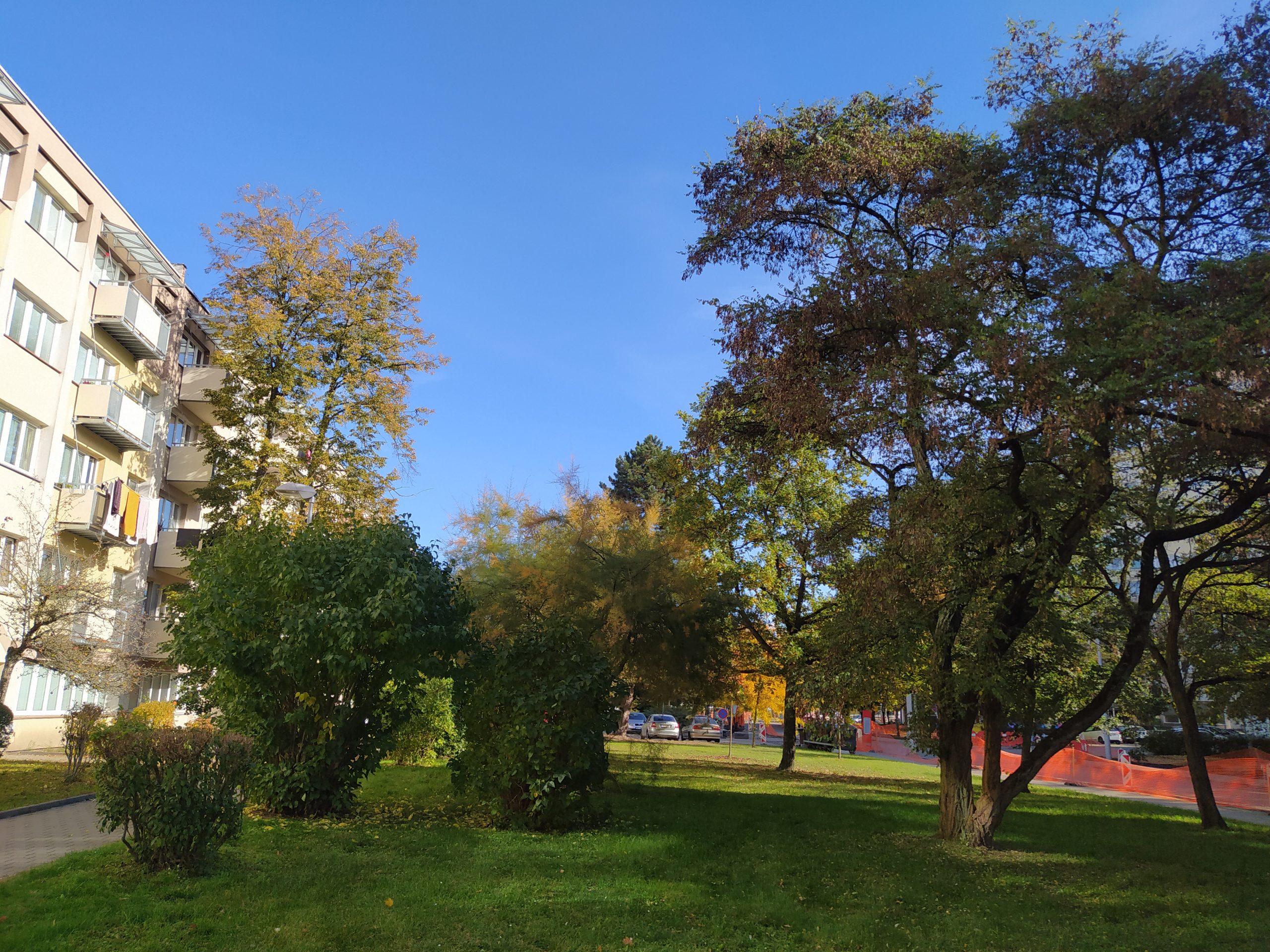
Habitus: The tree growing to the height of 2–30 metres. The bark on the trunk is cracked into deep furrows. The crown is sparsely branched and irregular. Thorns grow on the branches.
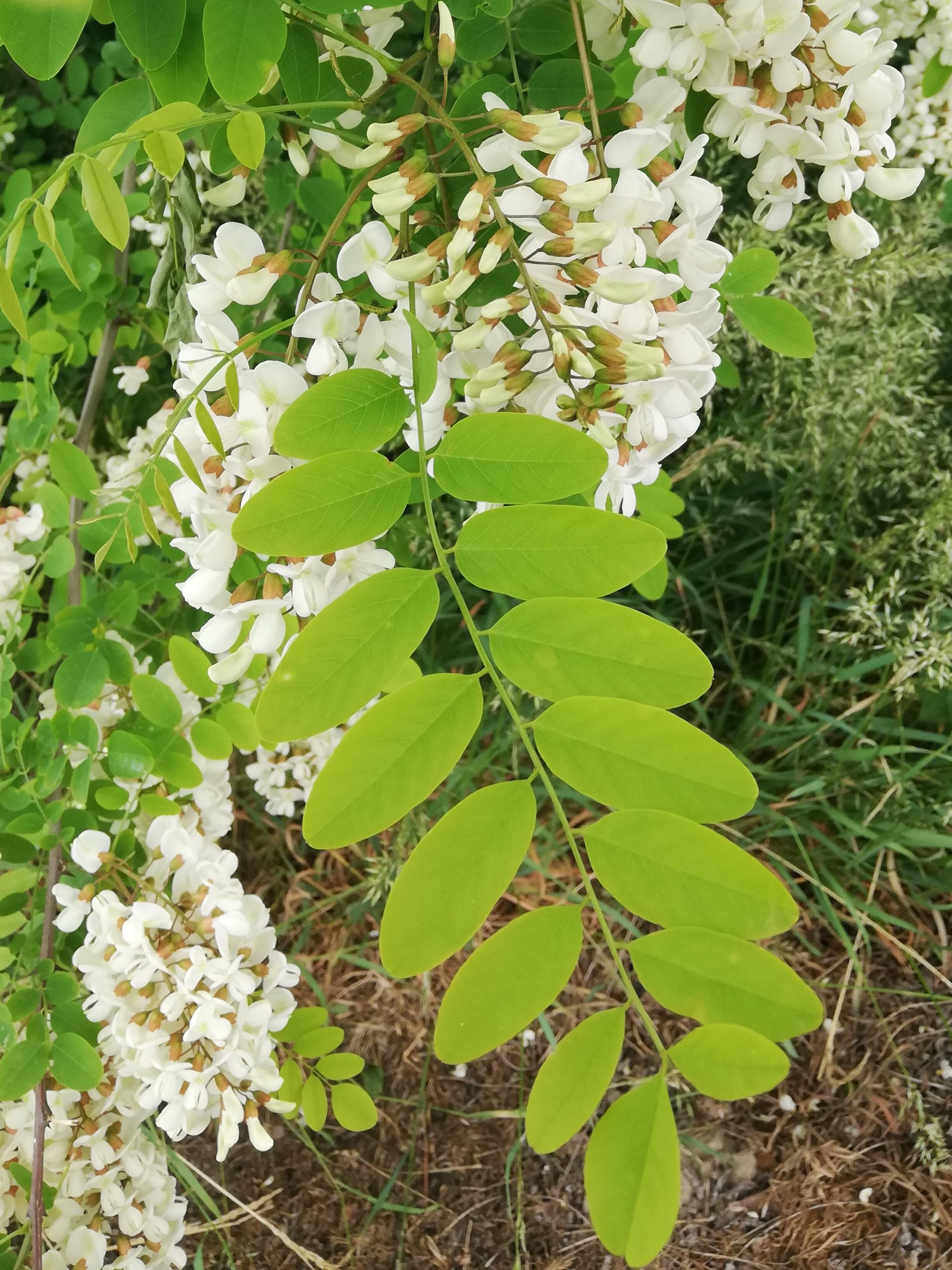
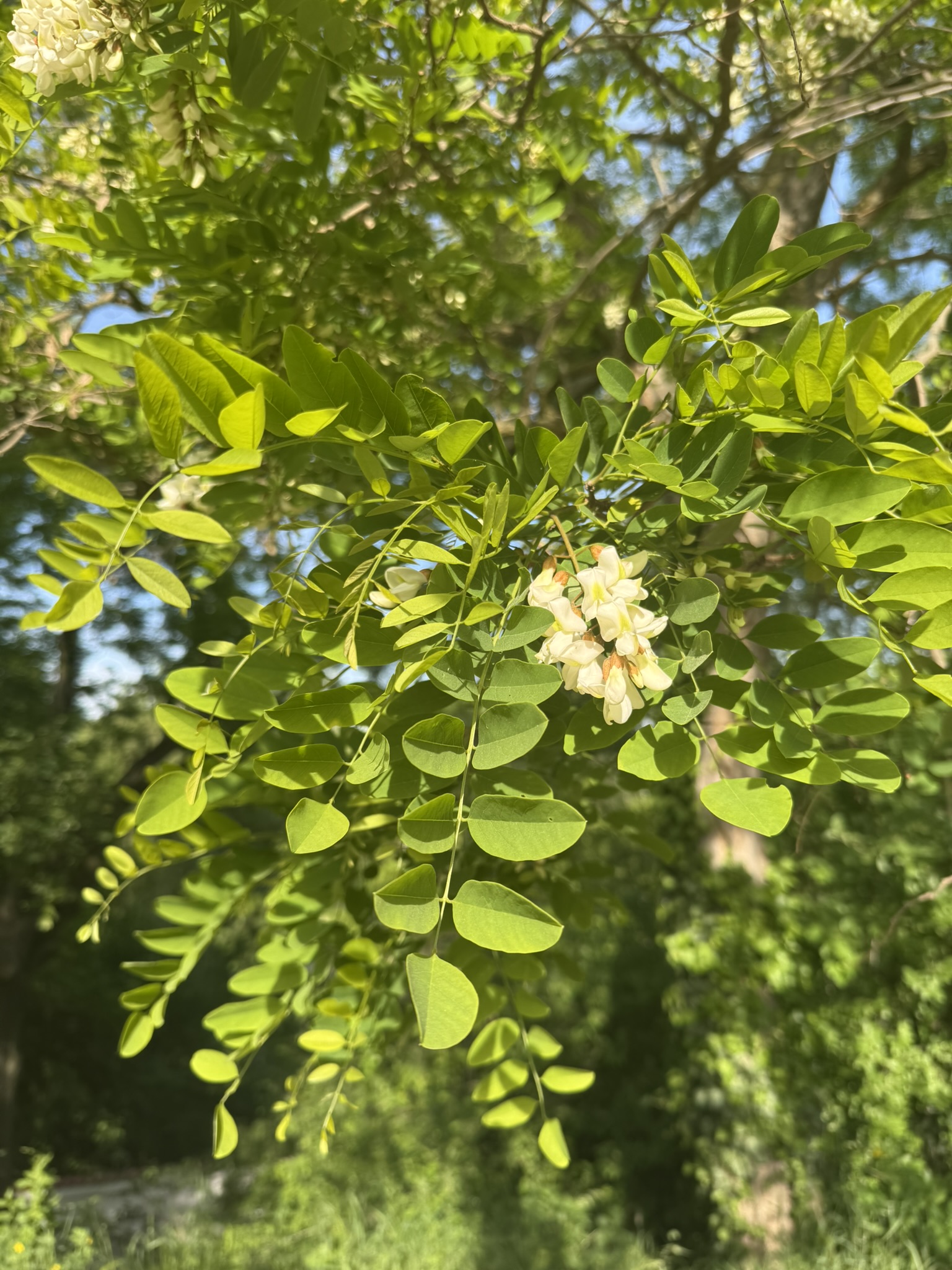
Leaf: The leaves are composed of 4–10 pairs of leaflets with an ovate blade. Their apex is blunt or notched with a pointed tip. The underside of the leaf is greyish; the upper side is bright green. The petioles are covered with fine trichomes.
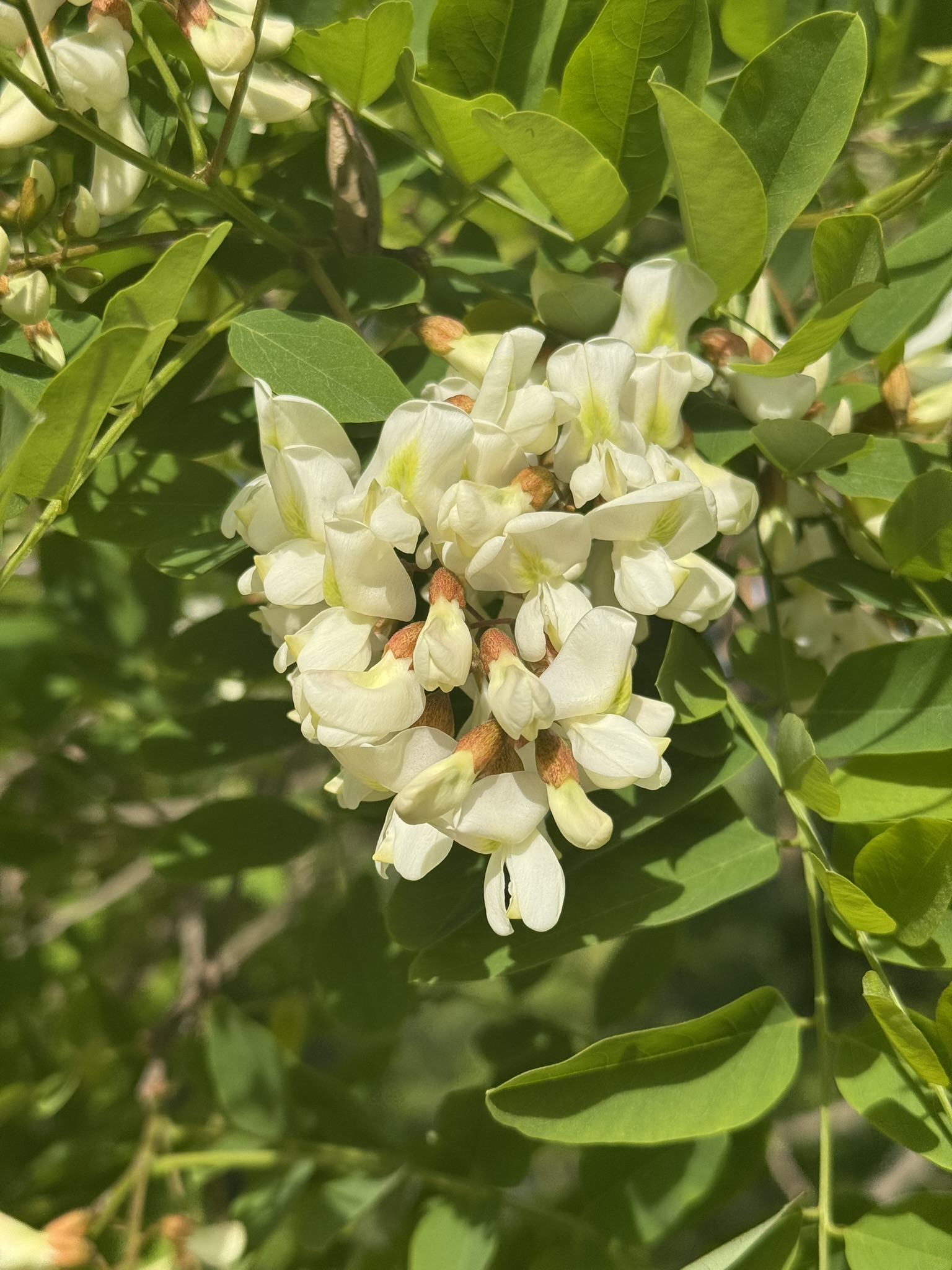
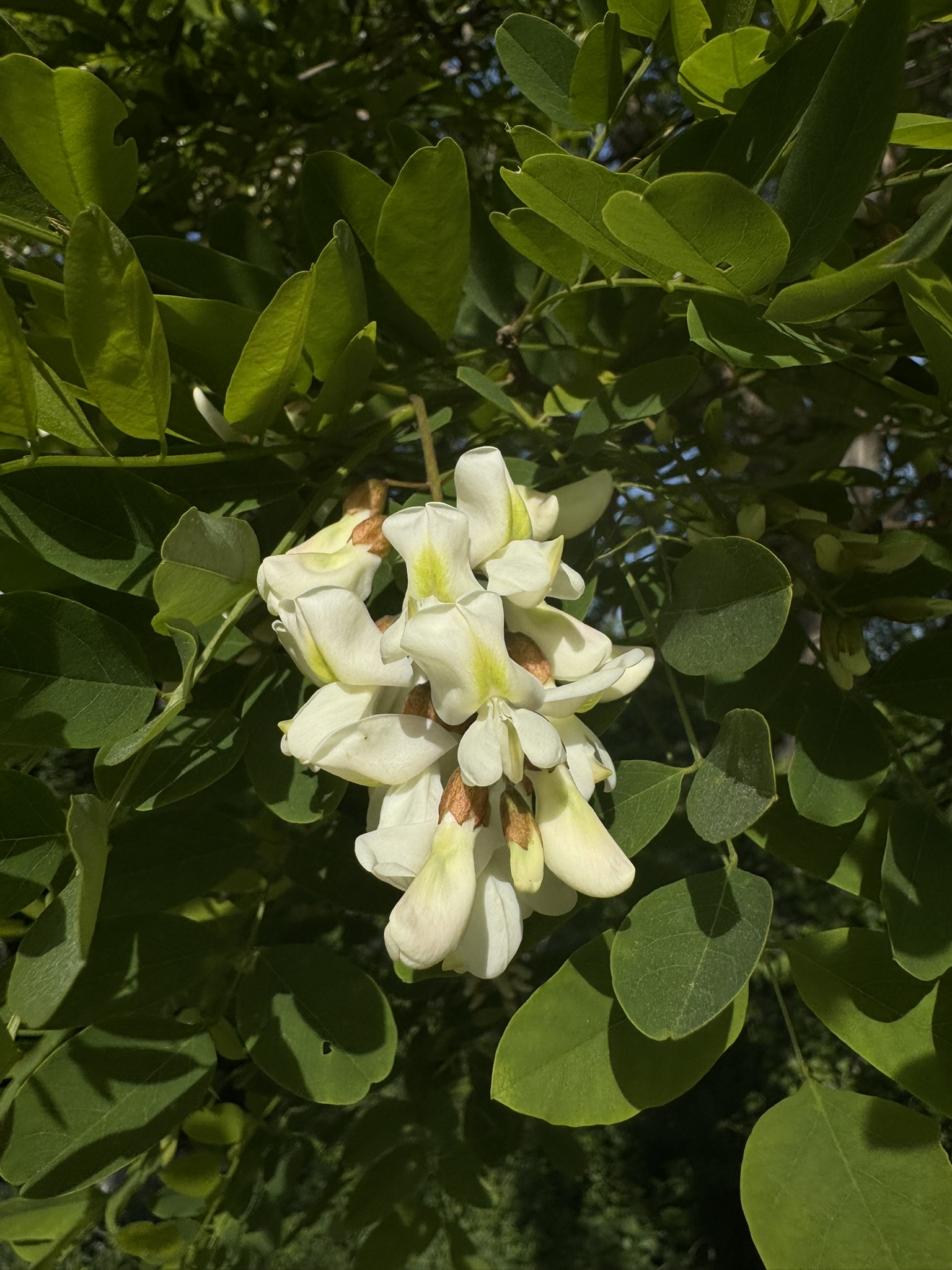
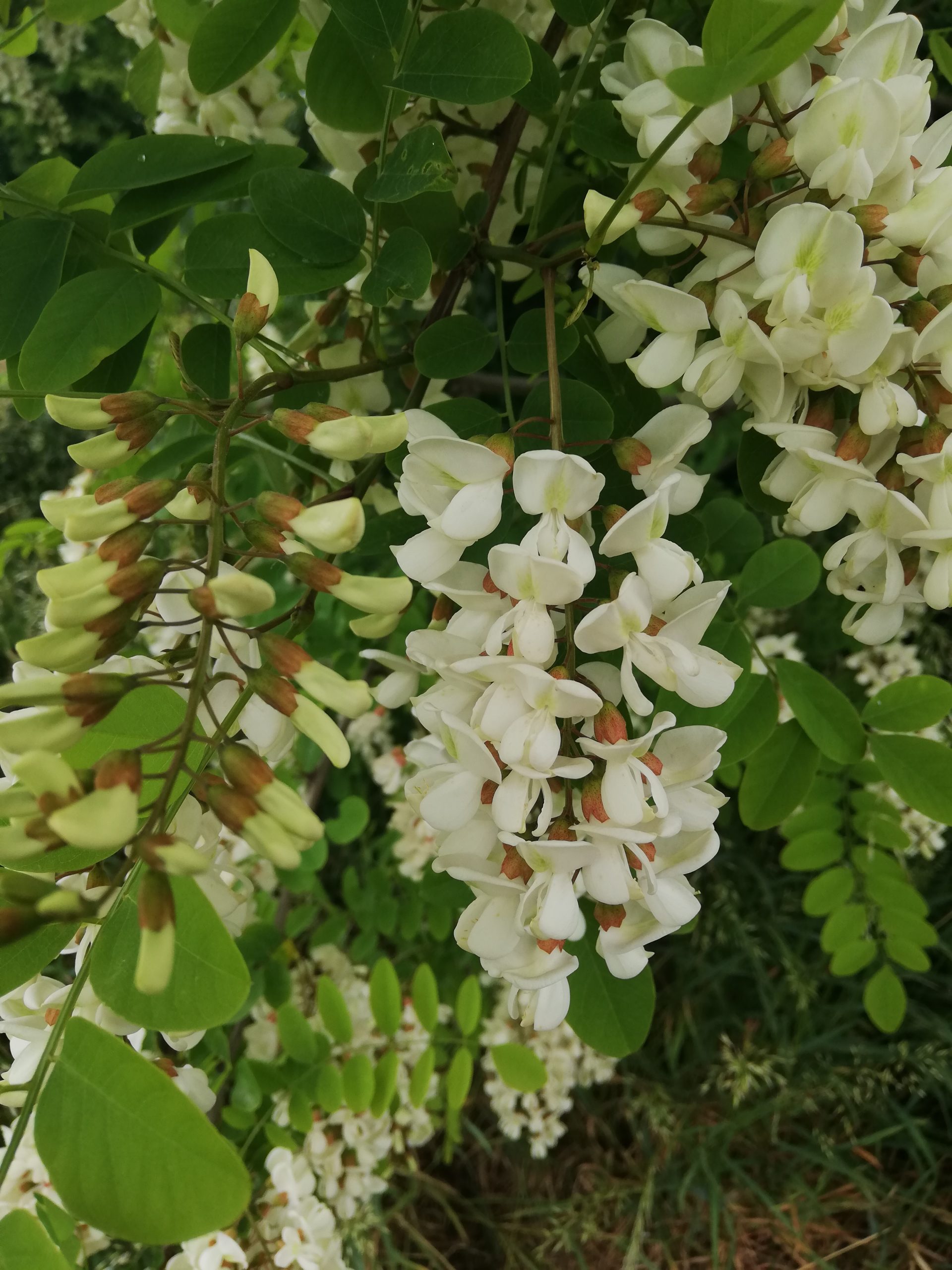
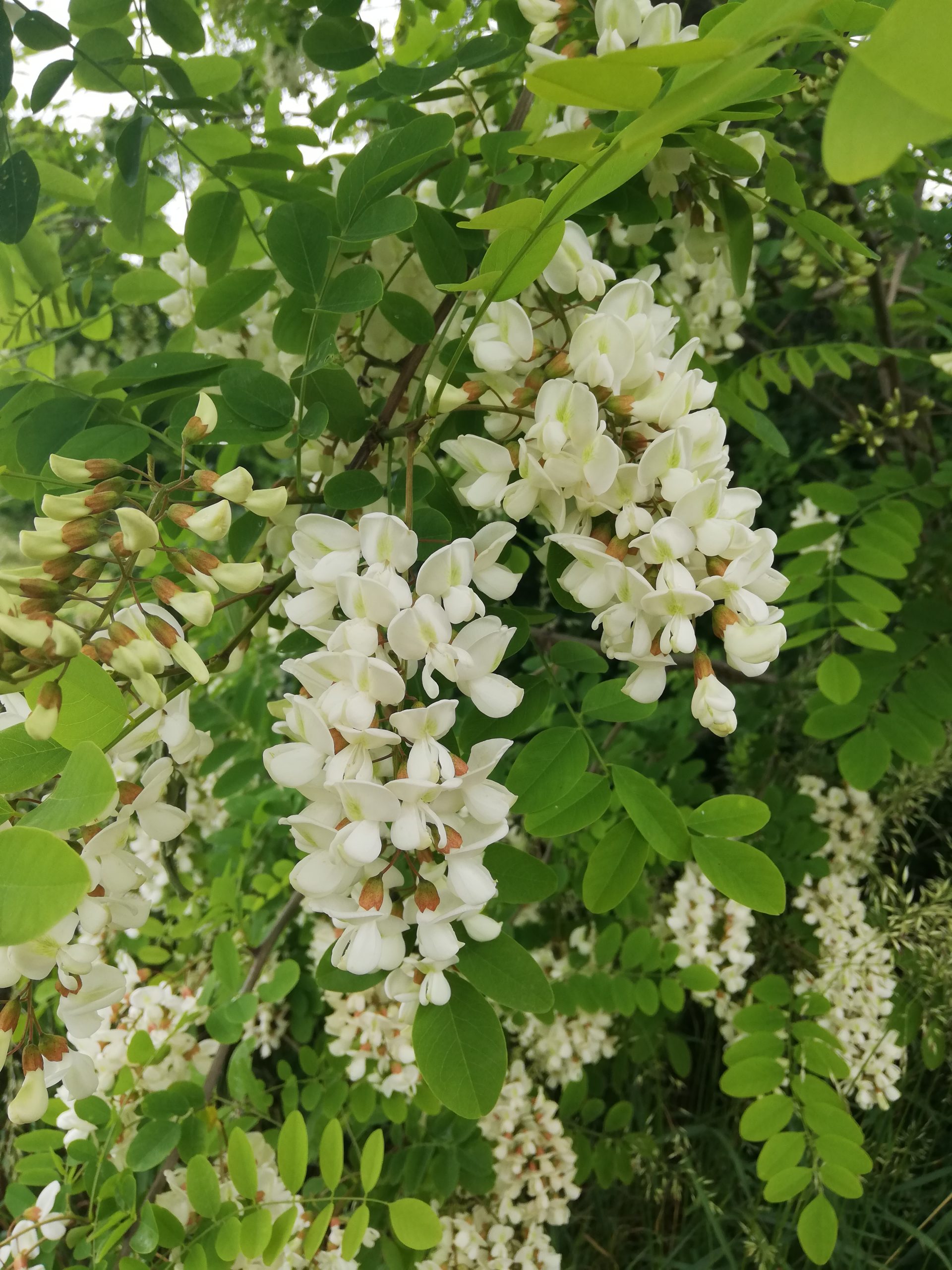
Bloom, fruit: The fragrant flowers are united in sparse racemes that hang down. The stalks bear white blossoms with a green spot, and they are covered with trichomes. It blooms from May to June. The fruiting pods contain up to 16 seeds. They are kidney-shaped, flat and dark brown.
Interesting fact: Widely planted in our country as a honey-bearing tree. However, it easily spreads and is included in the list of invasive trees.