
Oleasterfamily, Elaeagnaceae
Origin: the Mediterranean, Asia Minor, Caucasus, European Russia, Central Asia, China
Habitat in the original area: places with the direct sun; sandy soils
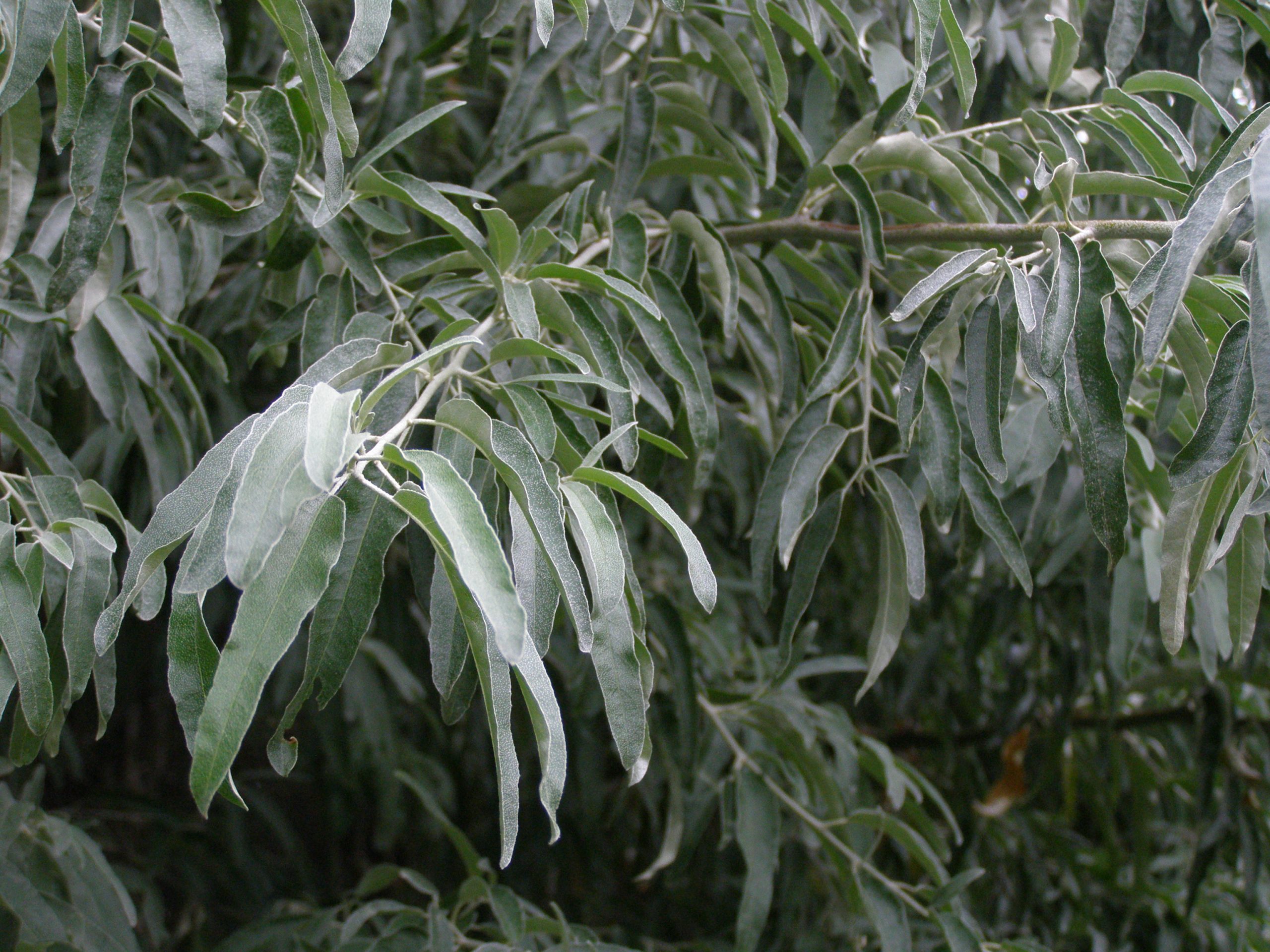
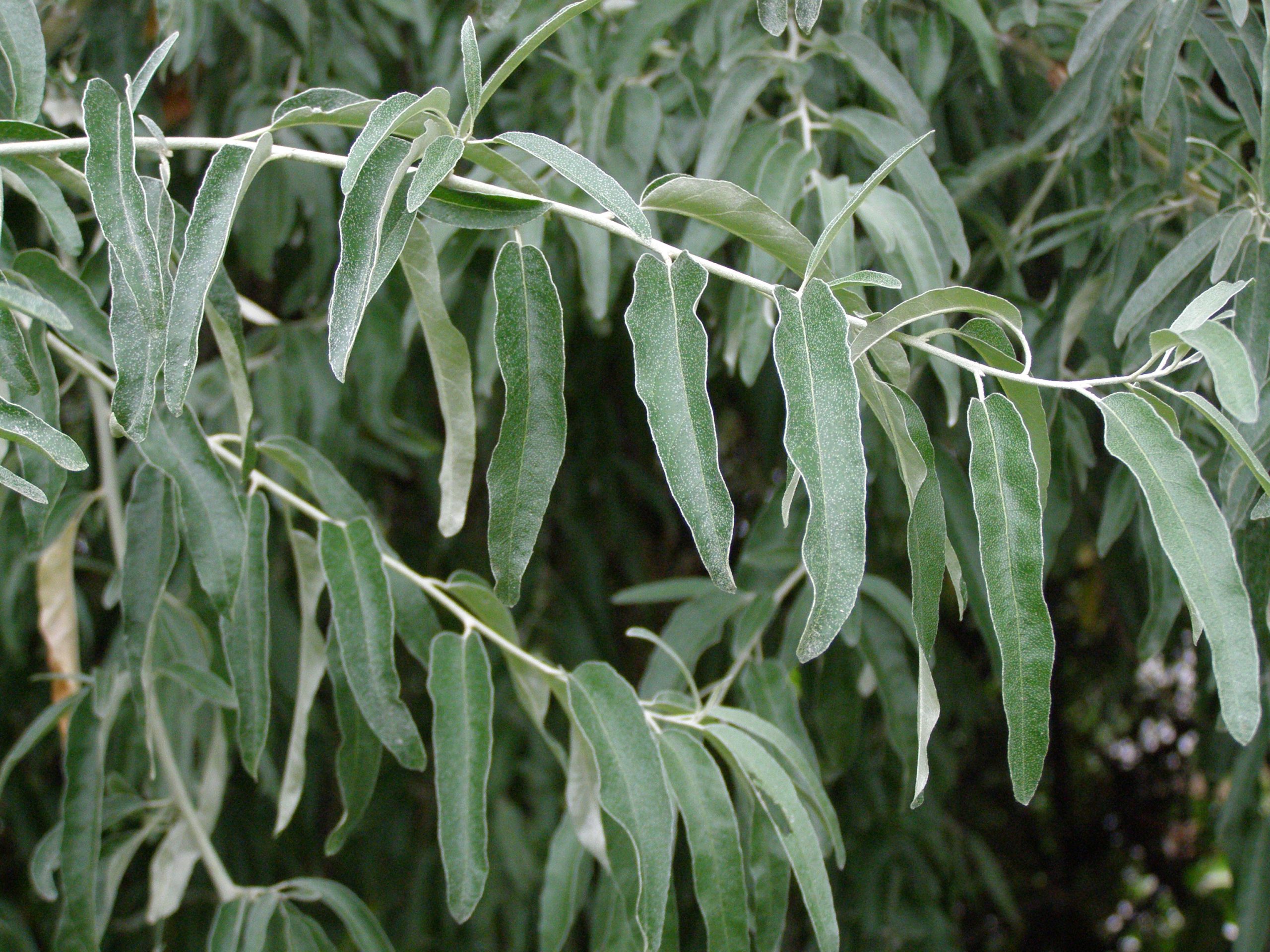
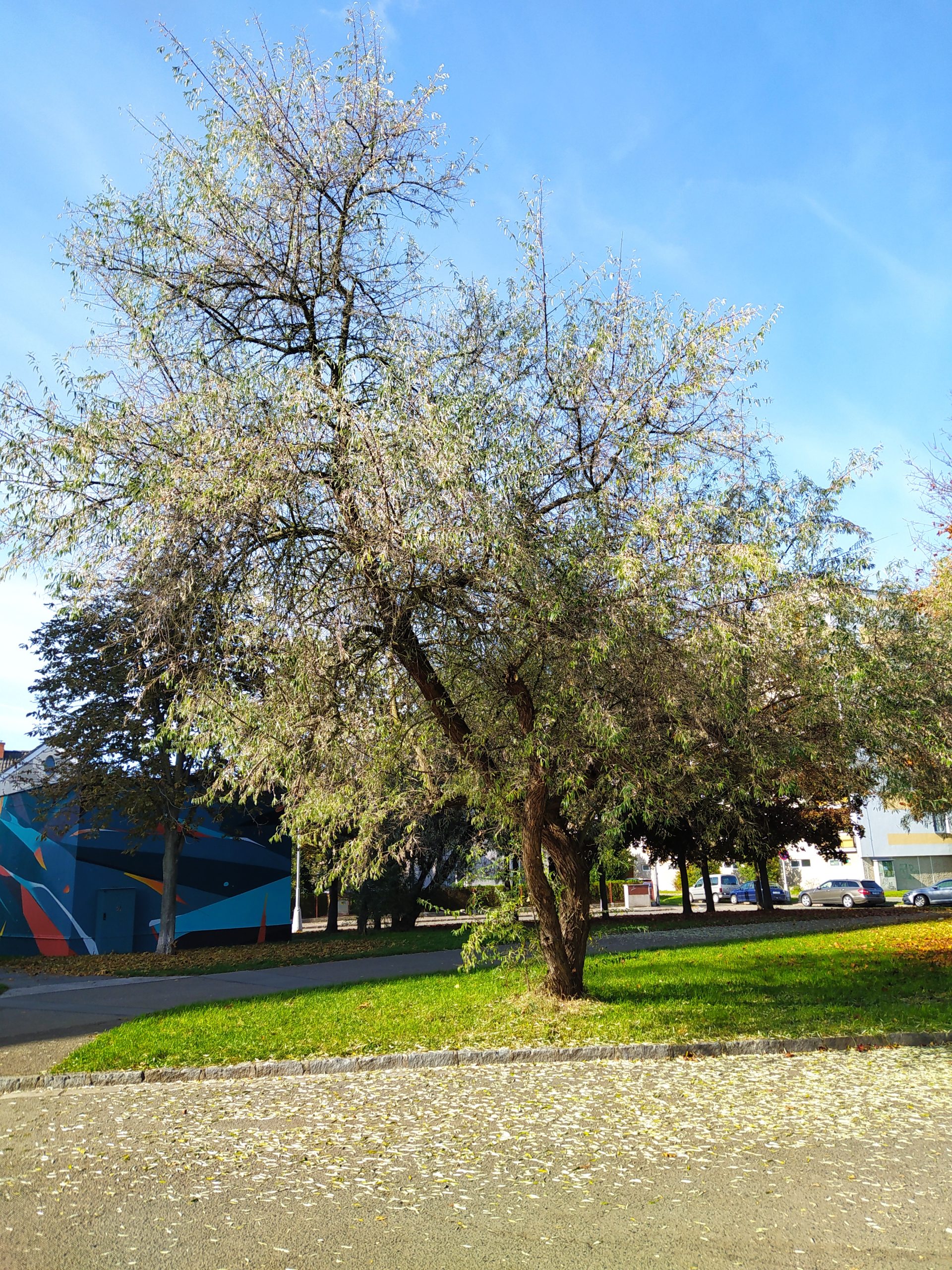
Habitus: A tree or shrub 5–10 metres tall. Trunks do not grow straight up, but are often crooked or inclined. The bark is longitudinally furrowed and peels off in narrow fringes. Young shoots are silvery and covered with trichomes. Older branches, on the contrary, are reddish-brown and often thorny.
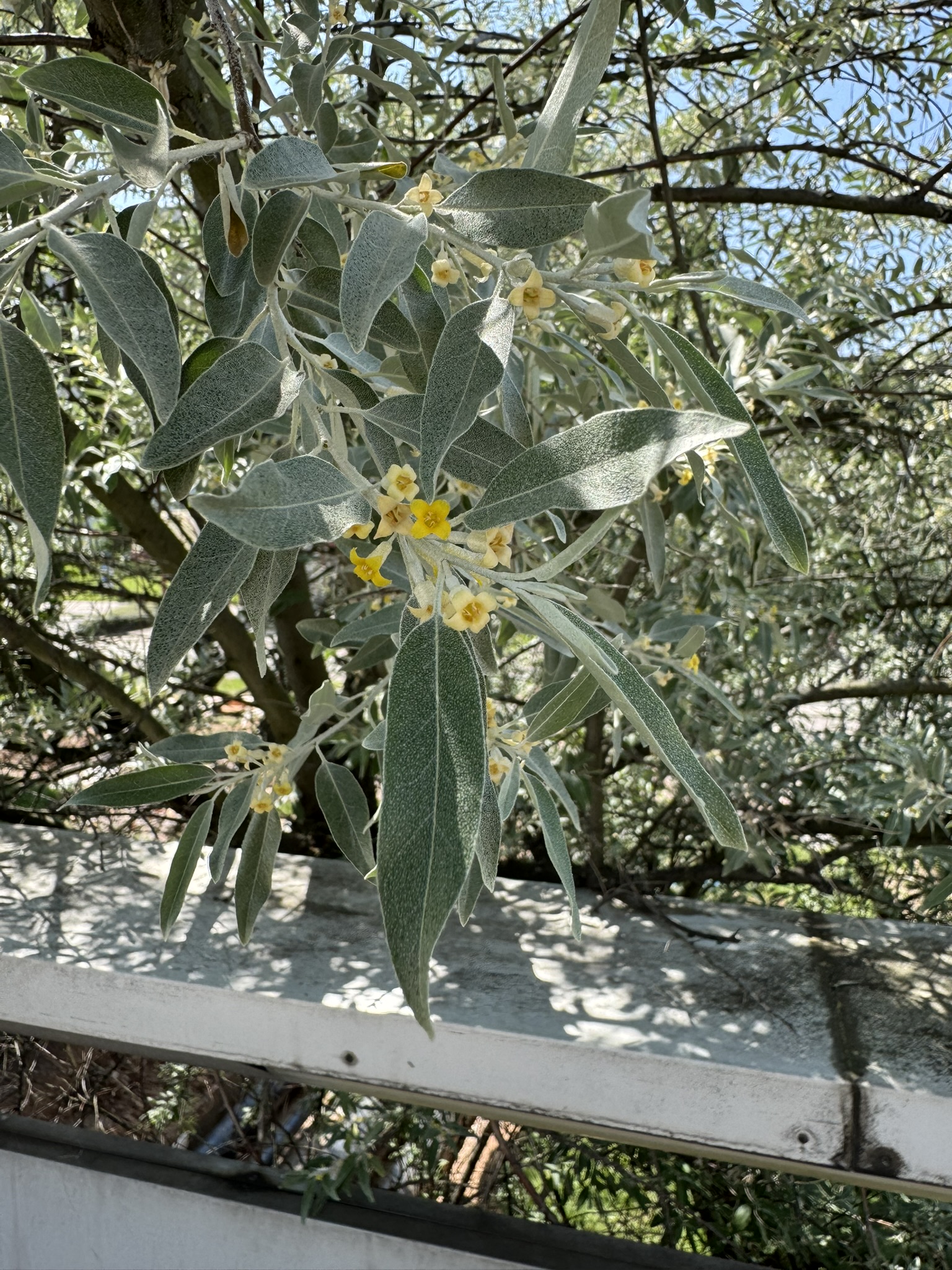
Leaf: Narrowly lanceolate leaves are silvery on both sides and covered with trichomes when young. Later they become dark green and trichomeless on the upper side.
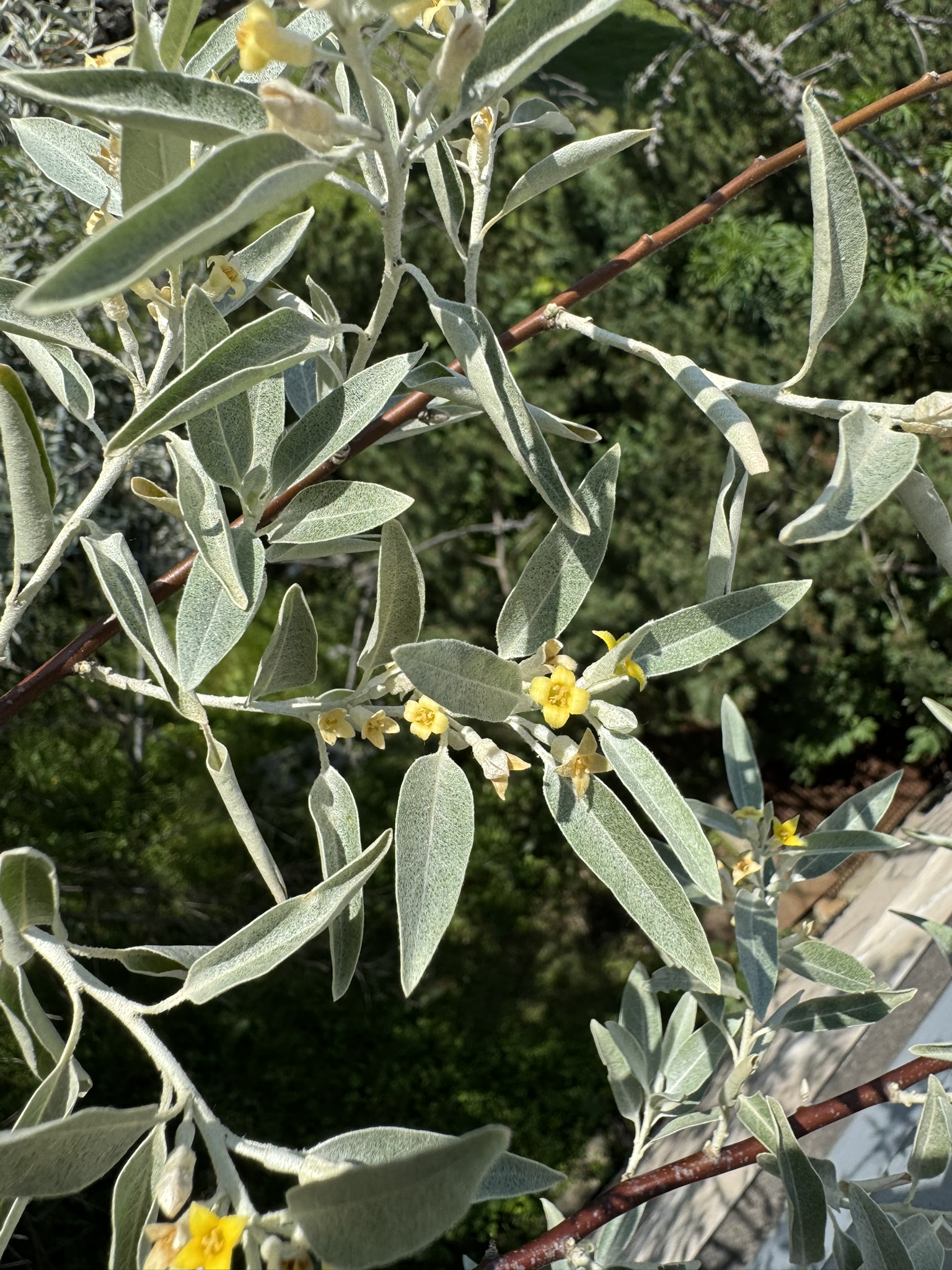
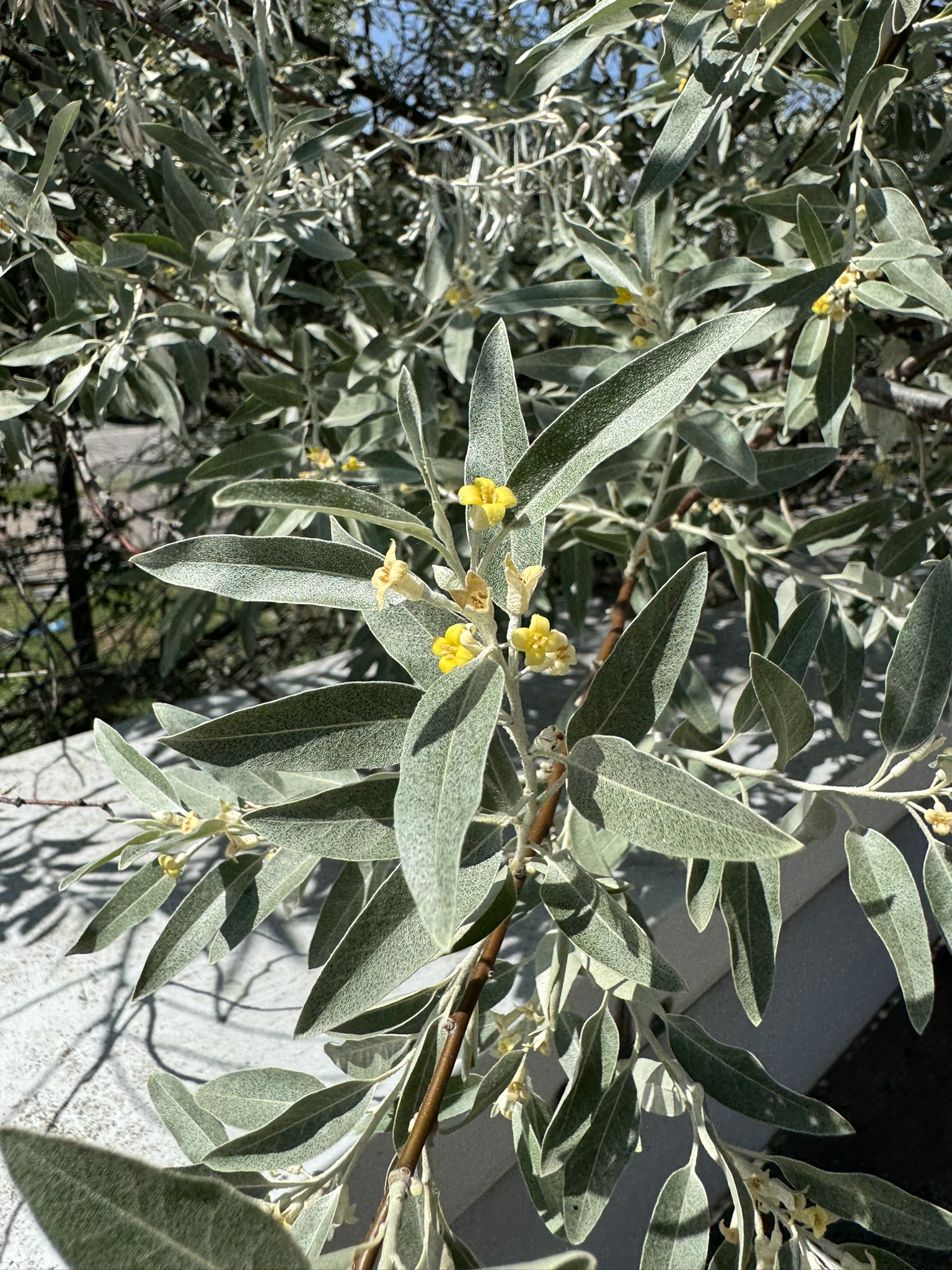
Bloom, fruit: The blossoms grow singly or in groups of 2–3 in the leaf axils. They are bell-shaped, yellowish inside and the outer tips are covered with silvery trichomes. The fruit is a nut covered with a brown comb, which has greyish trichomes on the surface.
Interesting fact: The plant is called the “Czech olive”. Its fruits are edible, but in larger quantities they can cause digestive problems. It tolerates saline soils, so it is planted near roads.