
Cashew family, Anacardiaceae
Origin: the east of North America
Habitat in the original area: along watercourses
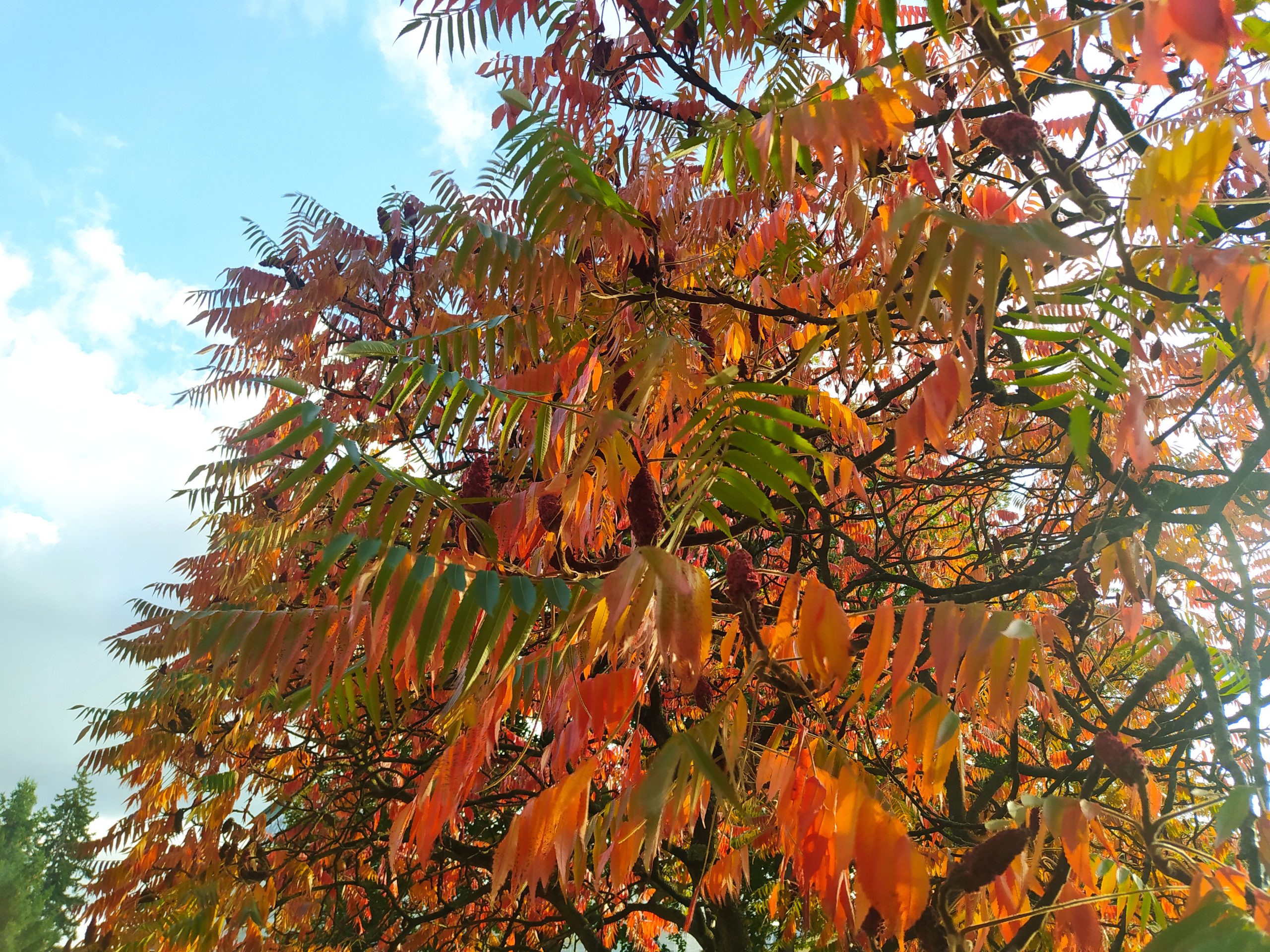
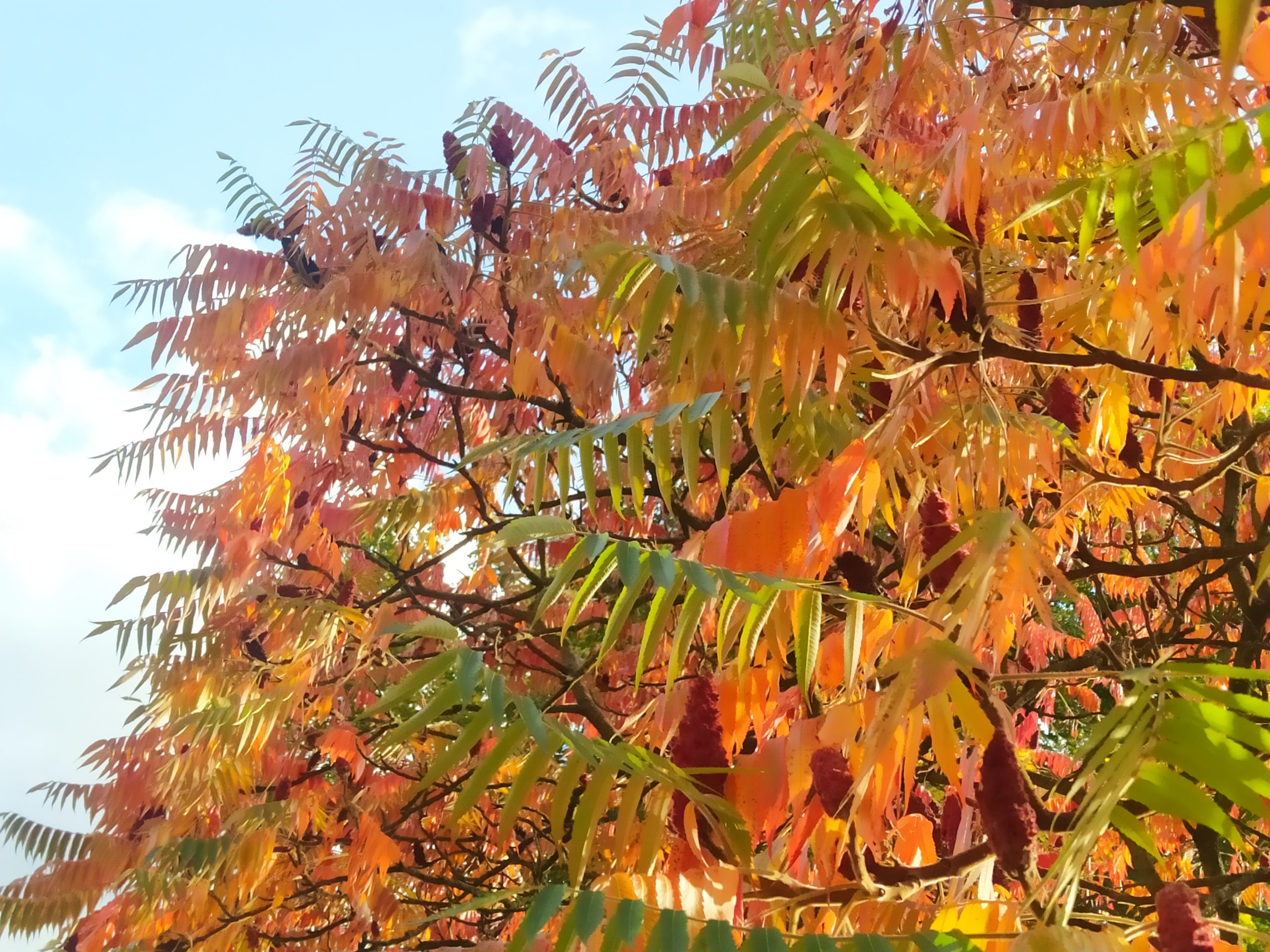
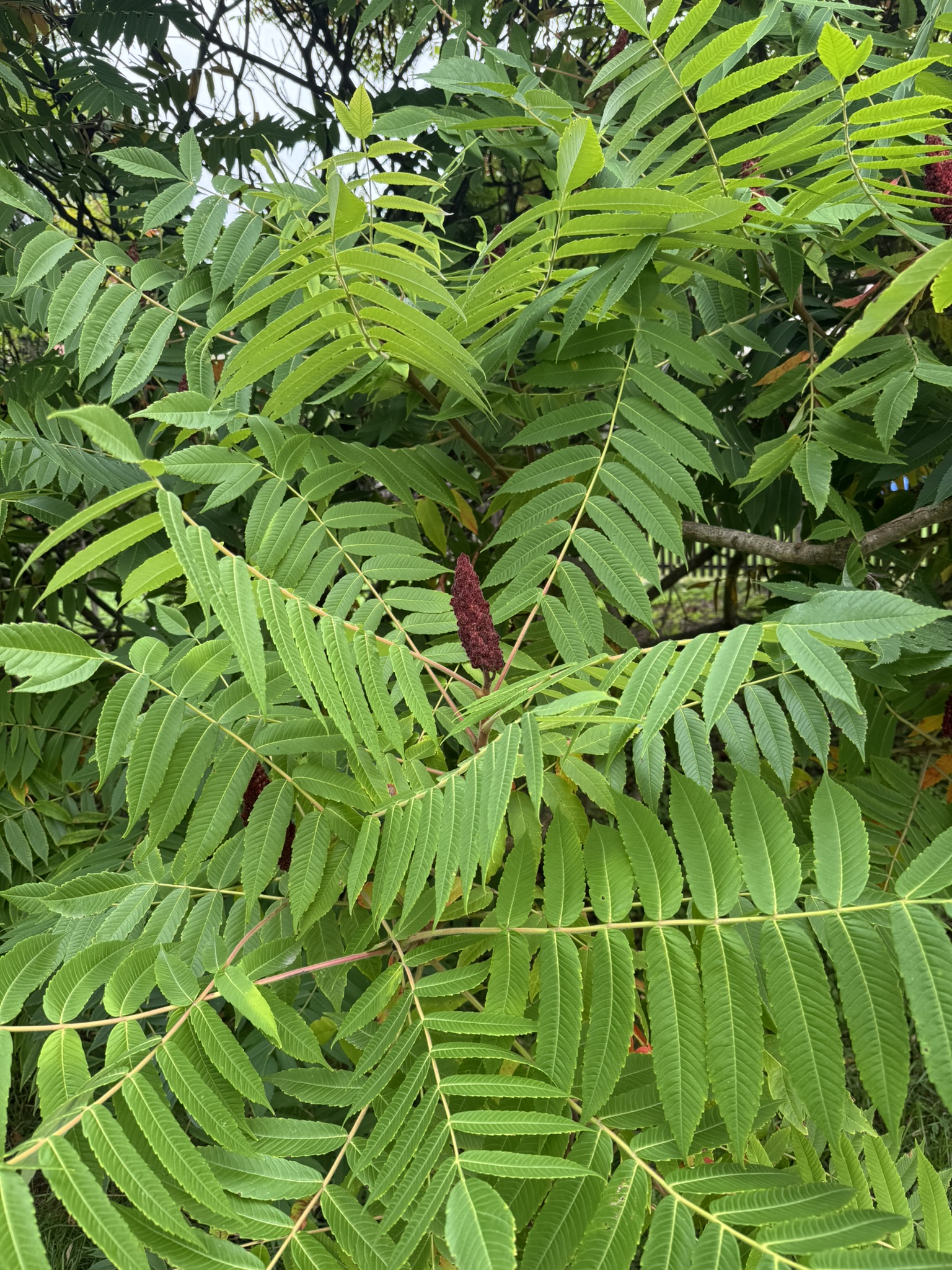
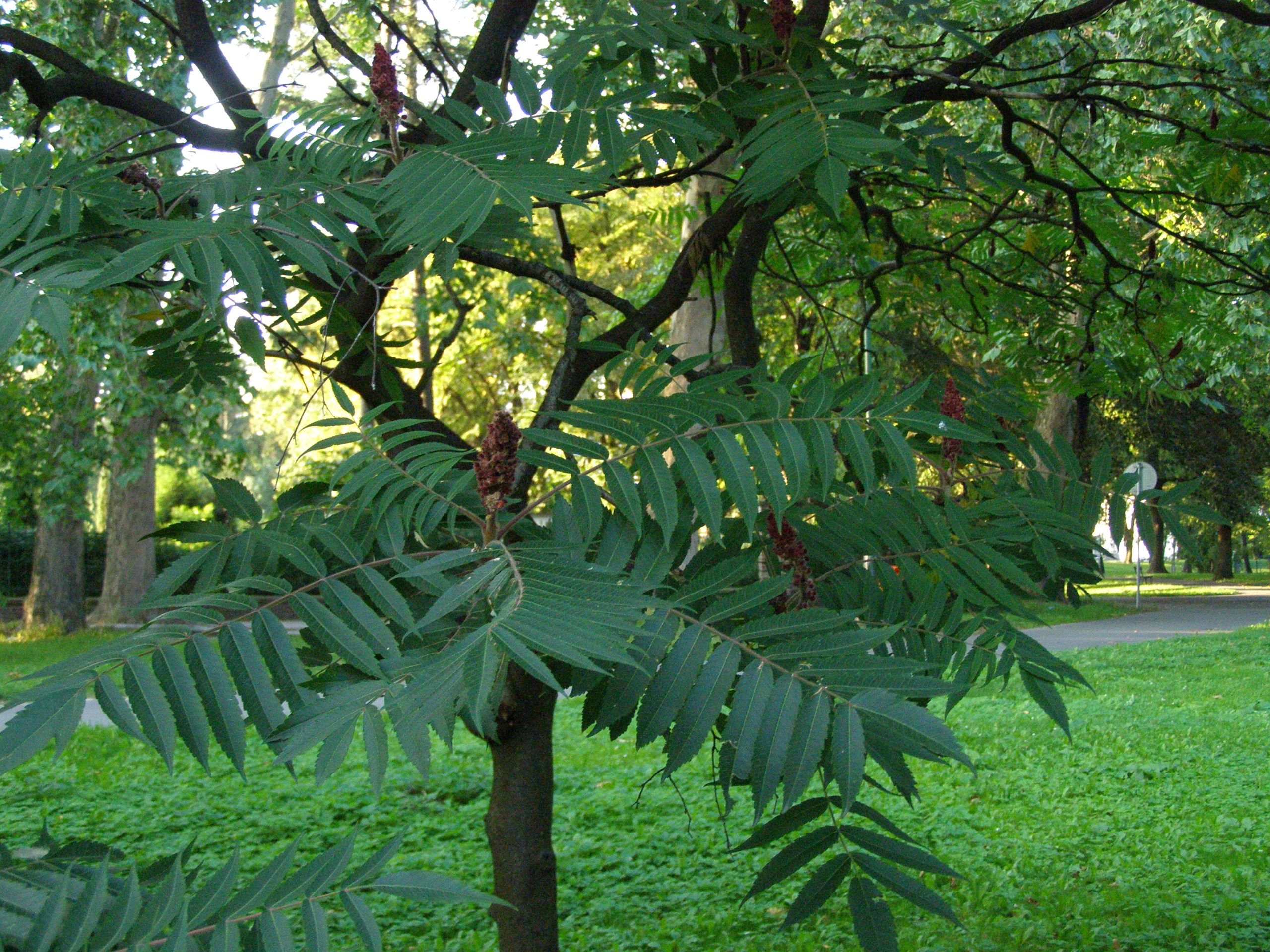
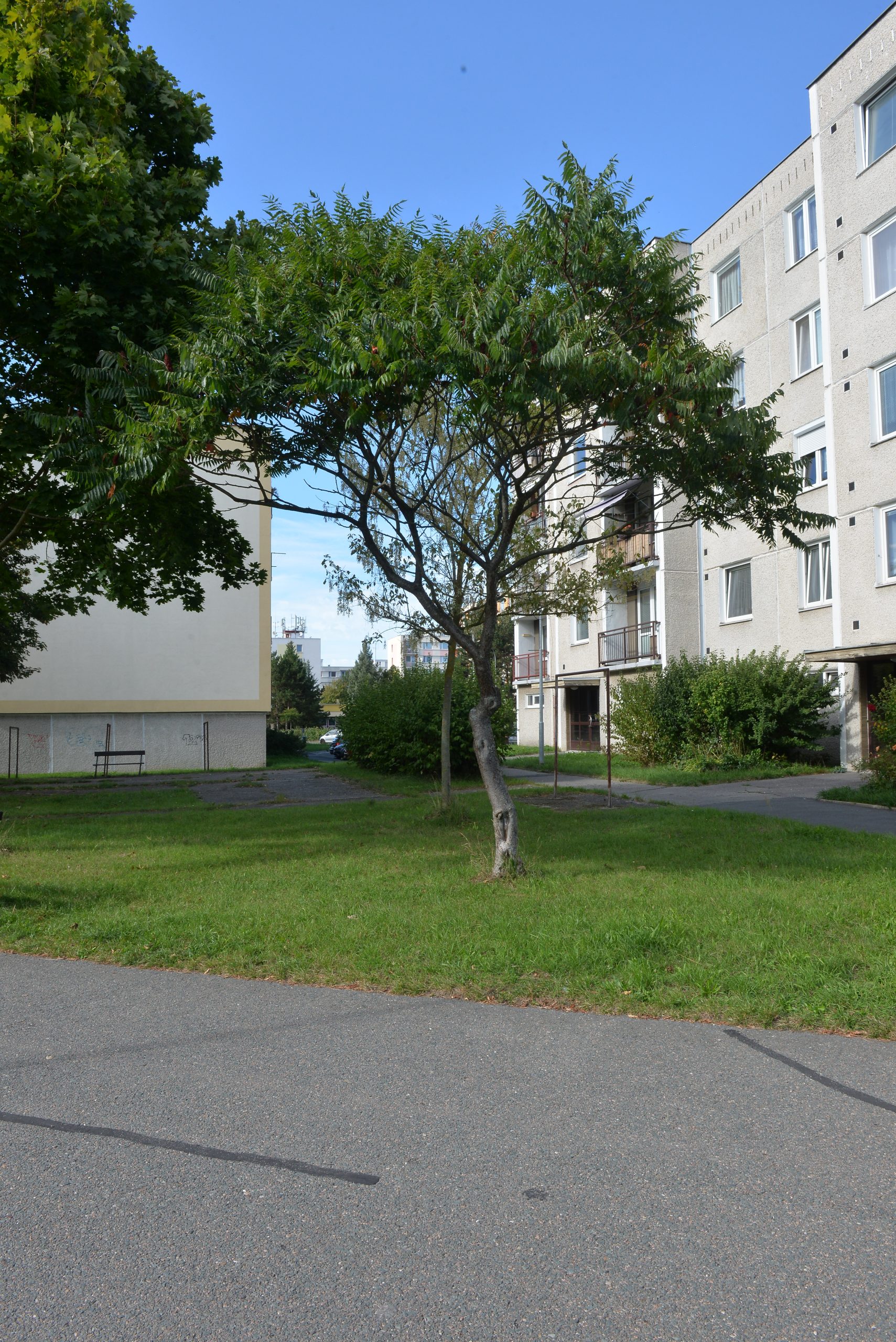
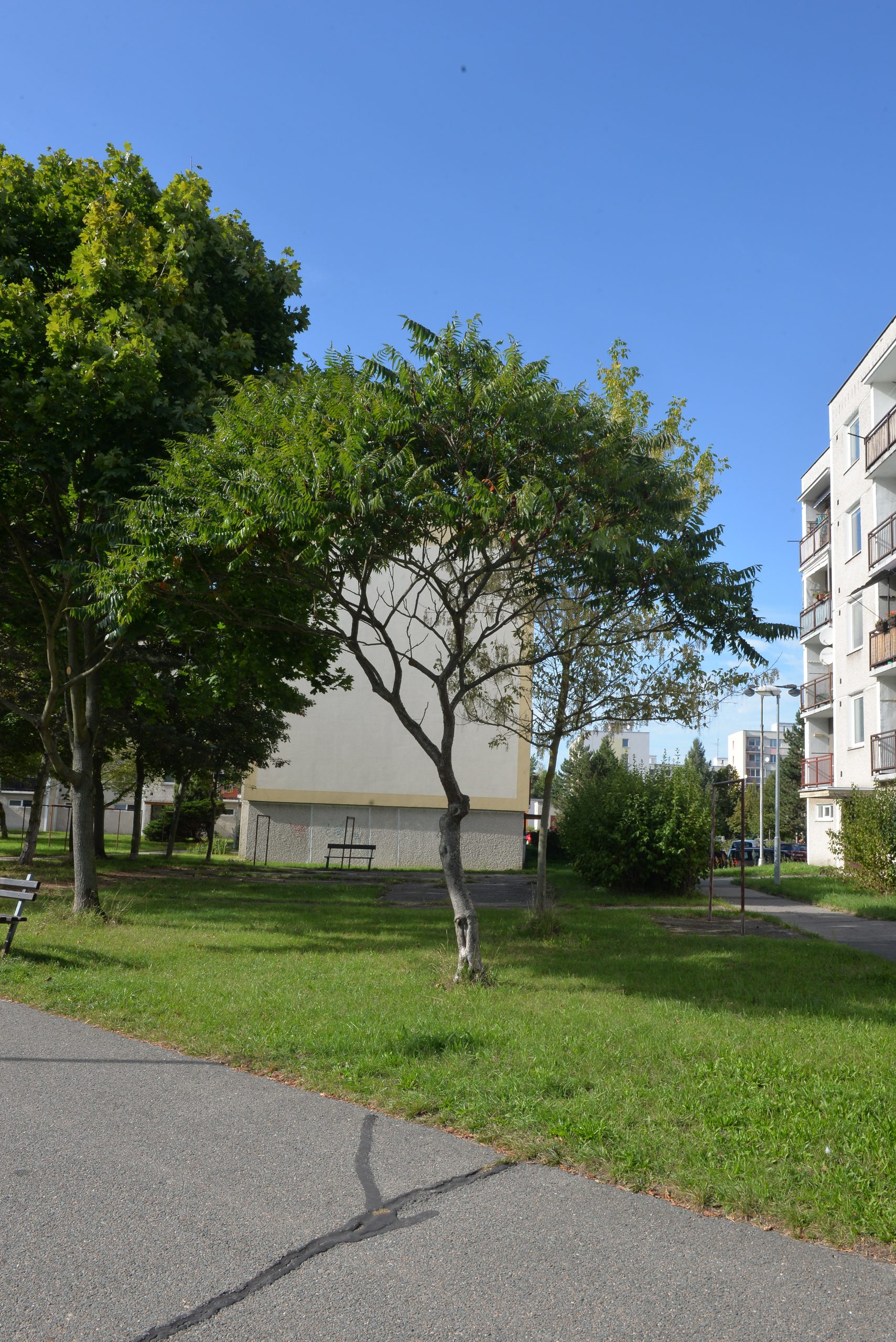
Habitus: A shrub or tree 2–8 metres tall with deep roots and umbrella-shaped crown. The bark is grey-brown and longitudinally fissured. Latex is shed on the cut. Young branches are strong and with striking trichomes, these trichomes disappear when the plant get old.
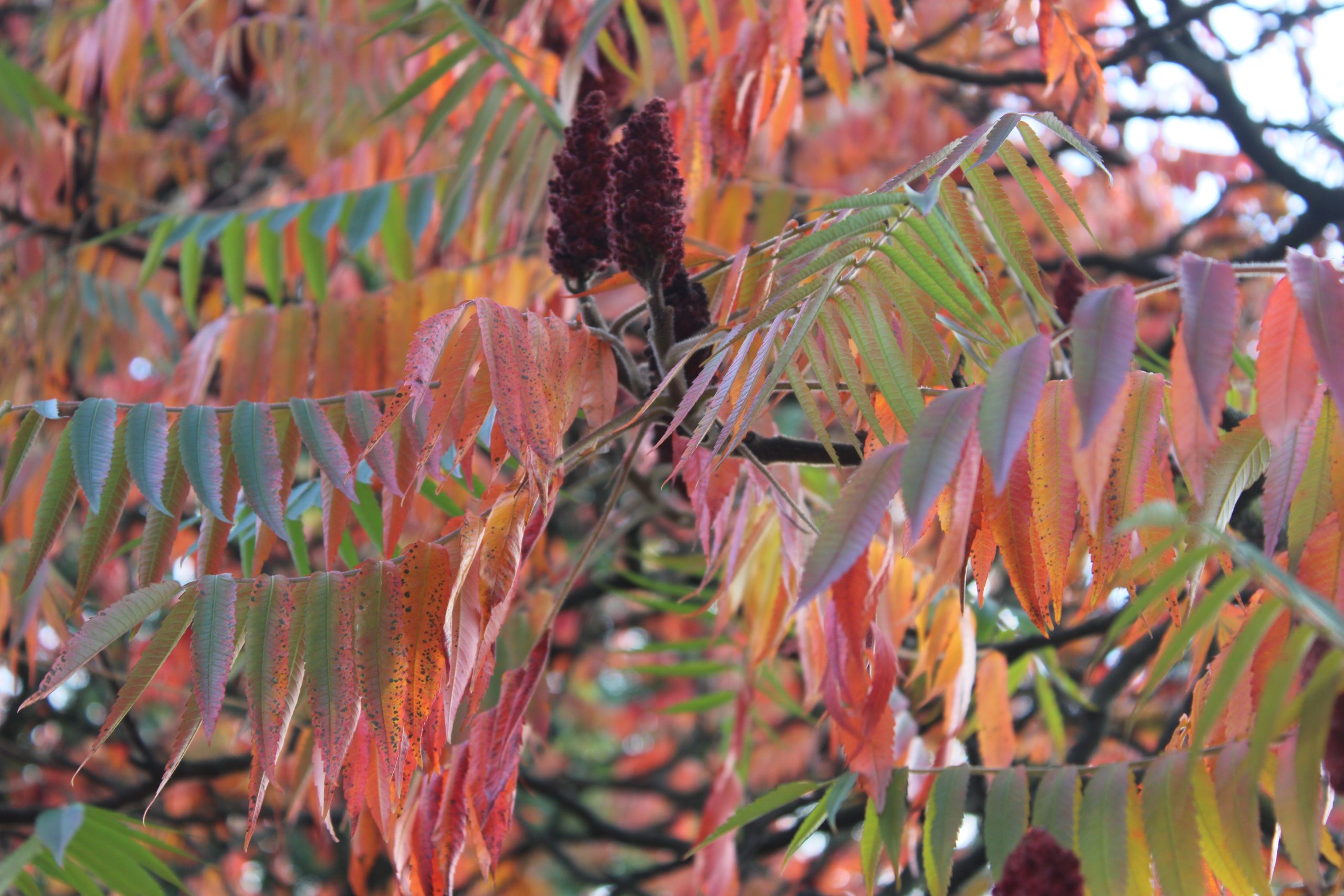
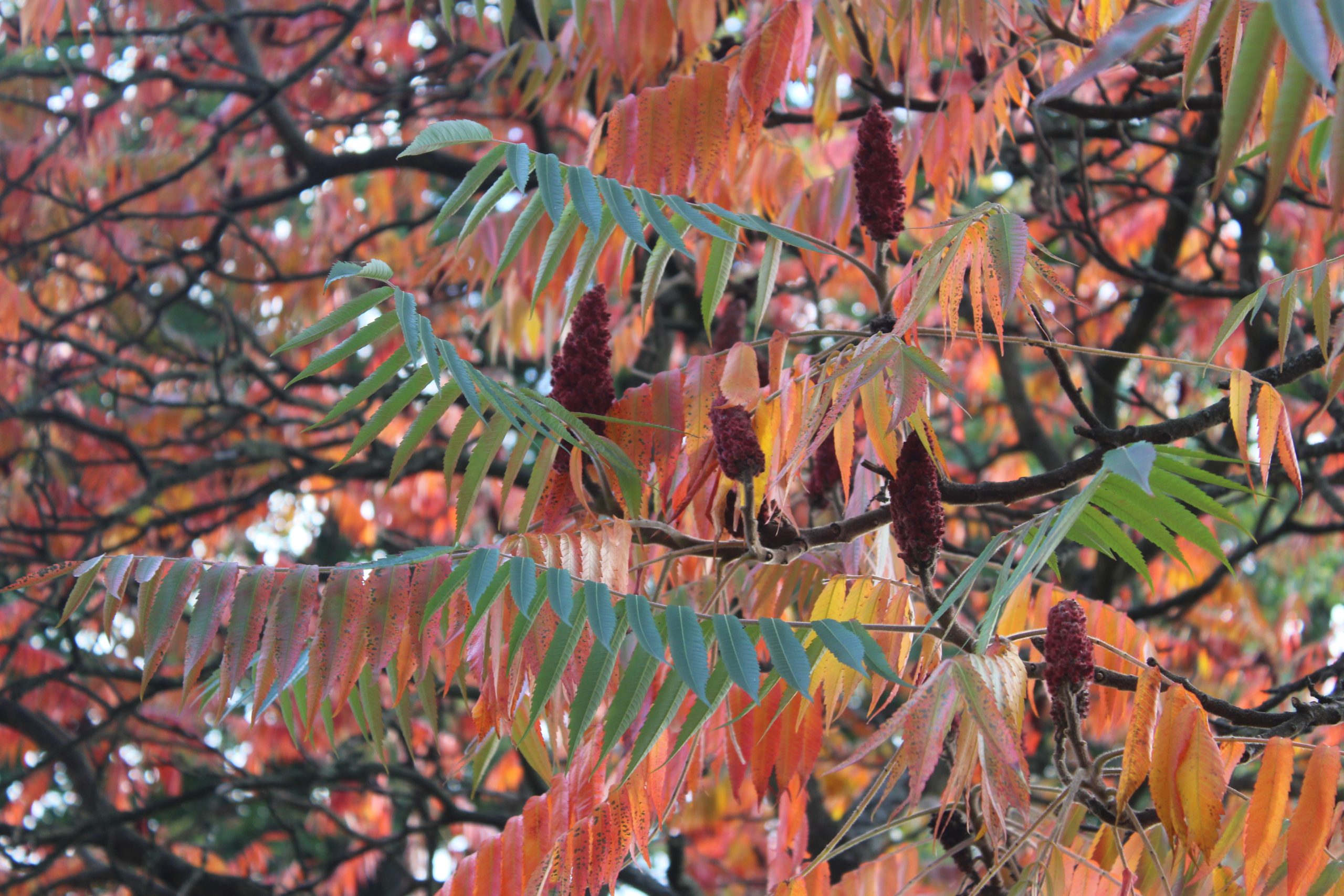
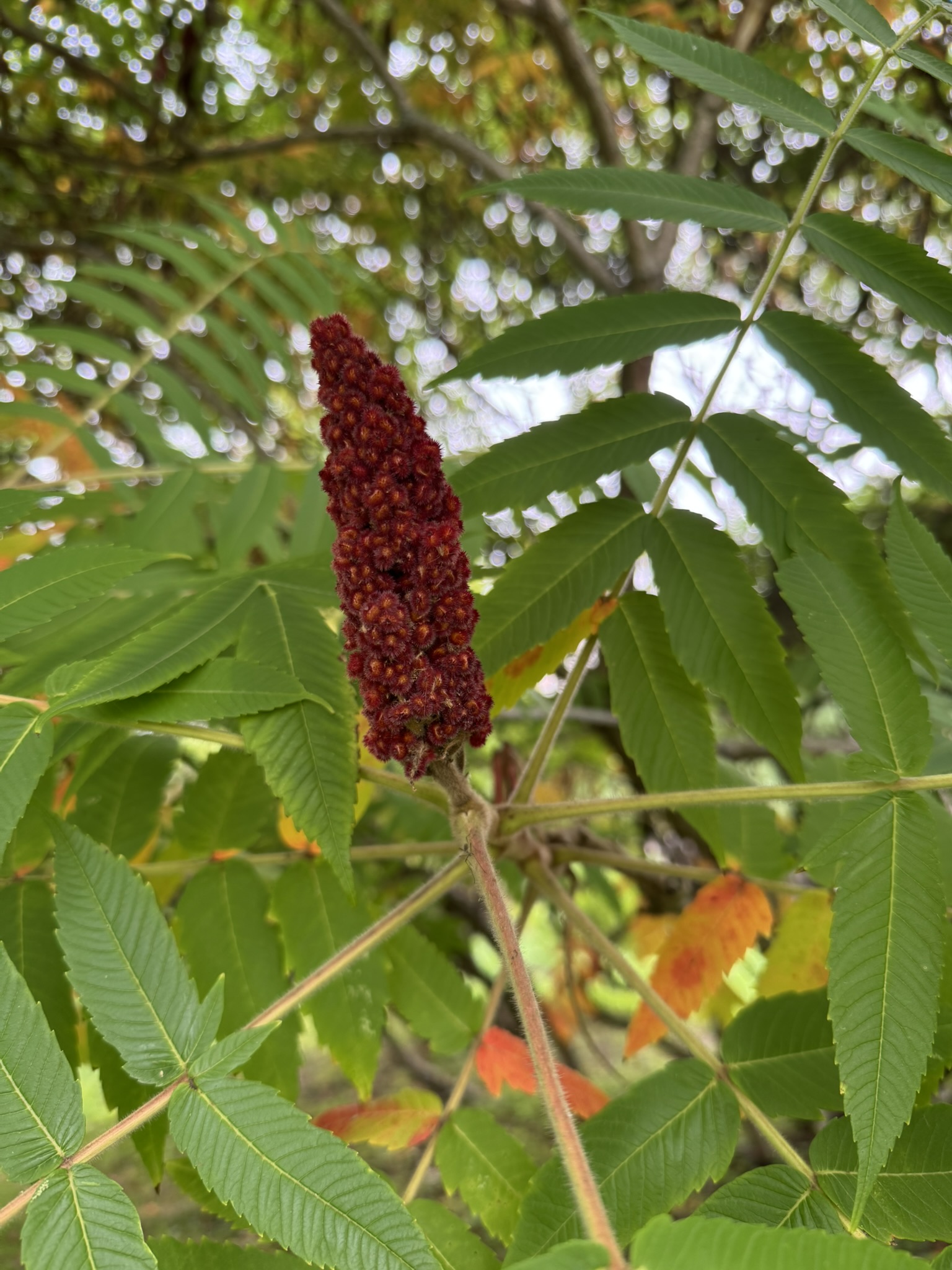
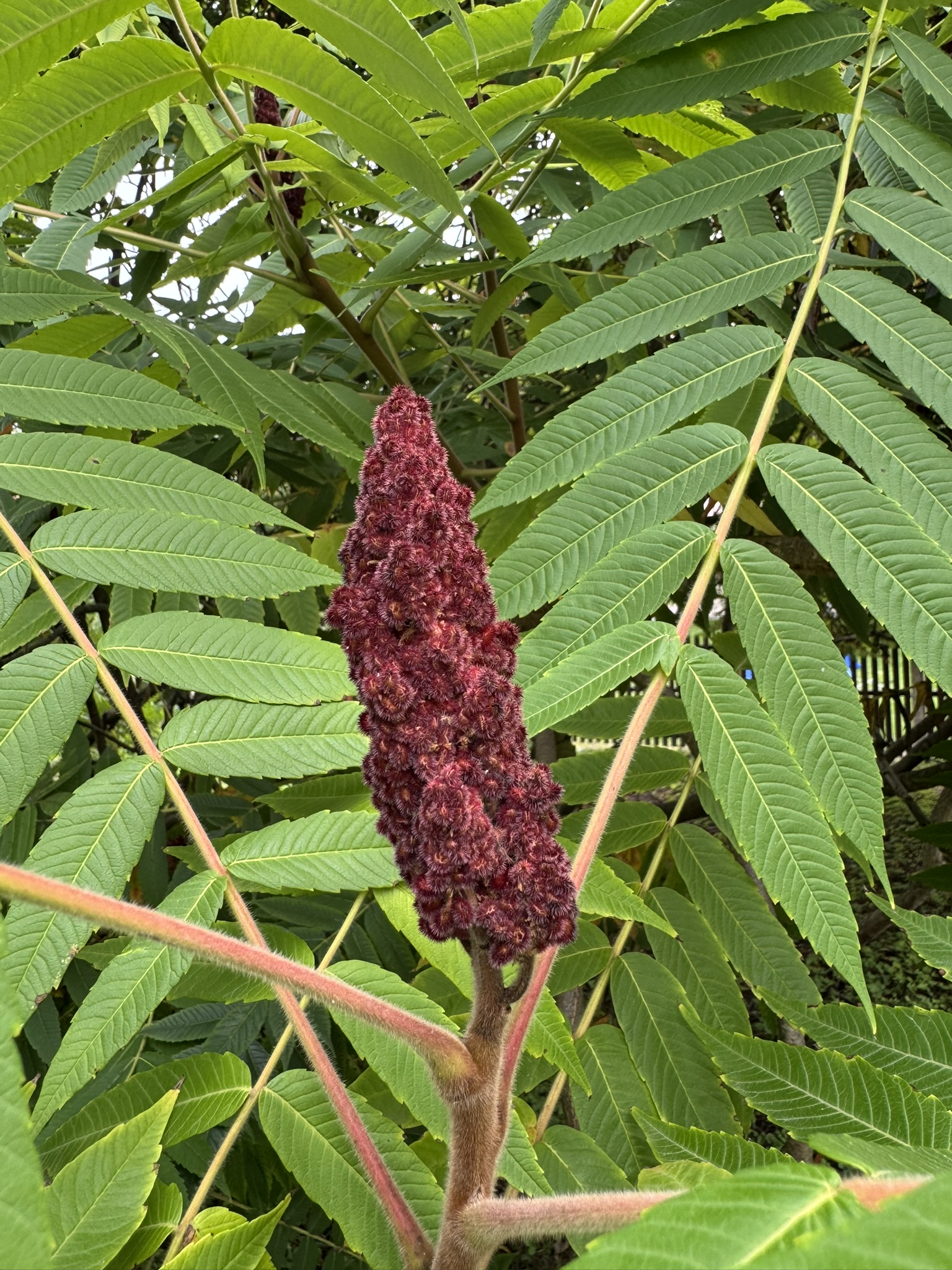
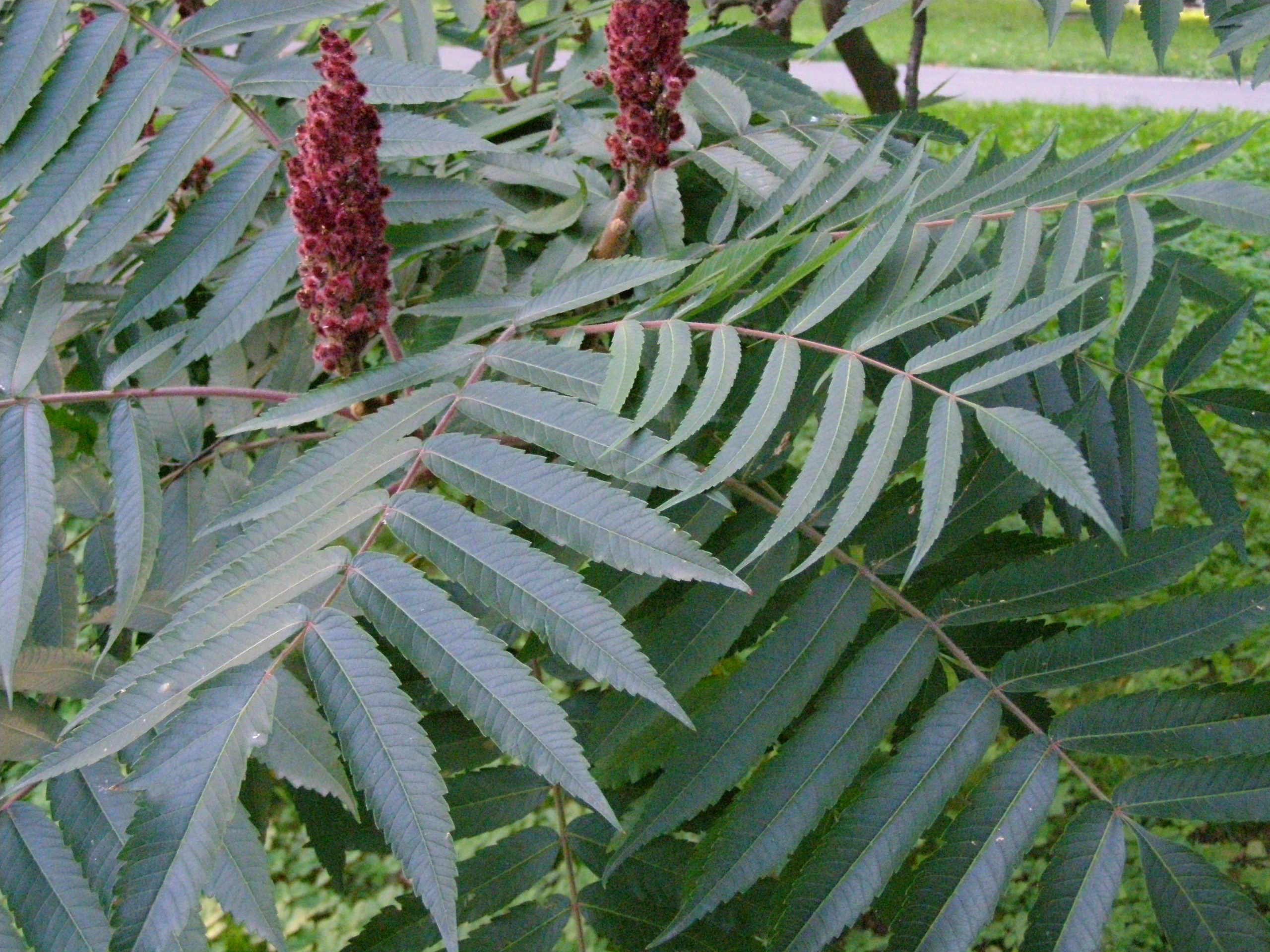
Leaf: The odd-pinnate leaves composed of 9–31 leaflets can be up to 50 centimetres long. The leaf stem is covered in dense trichomes. The individual lanceolate leaves have a serrated edge and are pointed. They are dark green on the upper side and finely pubescent and greyer on the underside. In autumn they turn scarlet red.
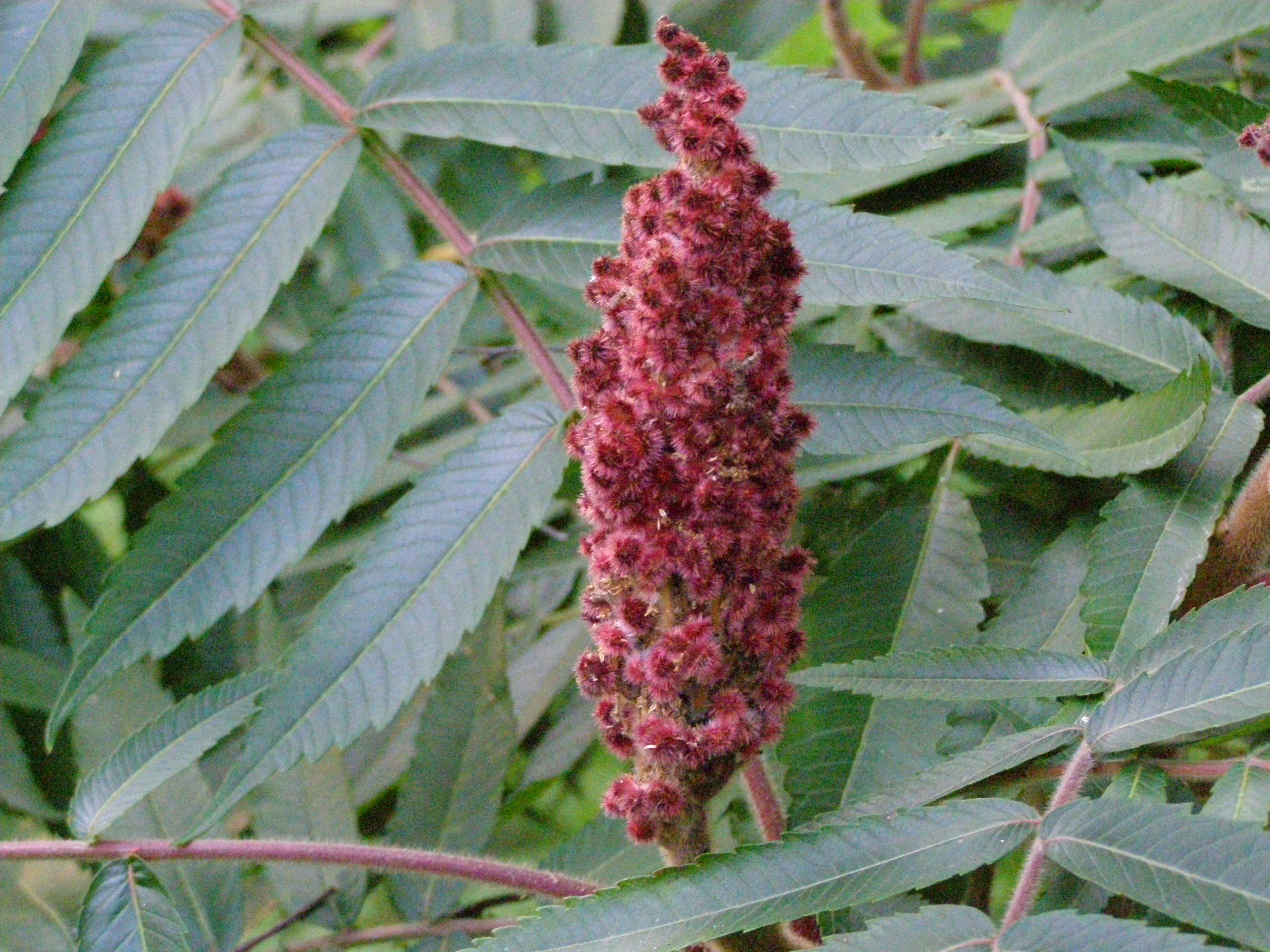
Bloom, fruit: The blossoms are densely clustered in club-shaped panicles. The inflorescence stem is velvety and covered with trichomes. The male blossoms are yellowish green, the female ones are red. The spherical drupes are grouped into a compact, club-shaped fruit and with red trichomes on the surface.
Interesting fact: The entire plant is poisonous. It can cause an allergic reaction when the skin comes in contact with it. The leaves and branches are used as a natural dye due to their tannin content. Native tribes made lemonade from the dried fruits.