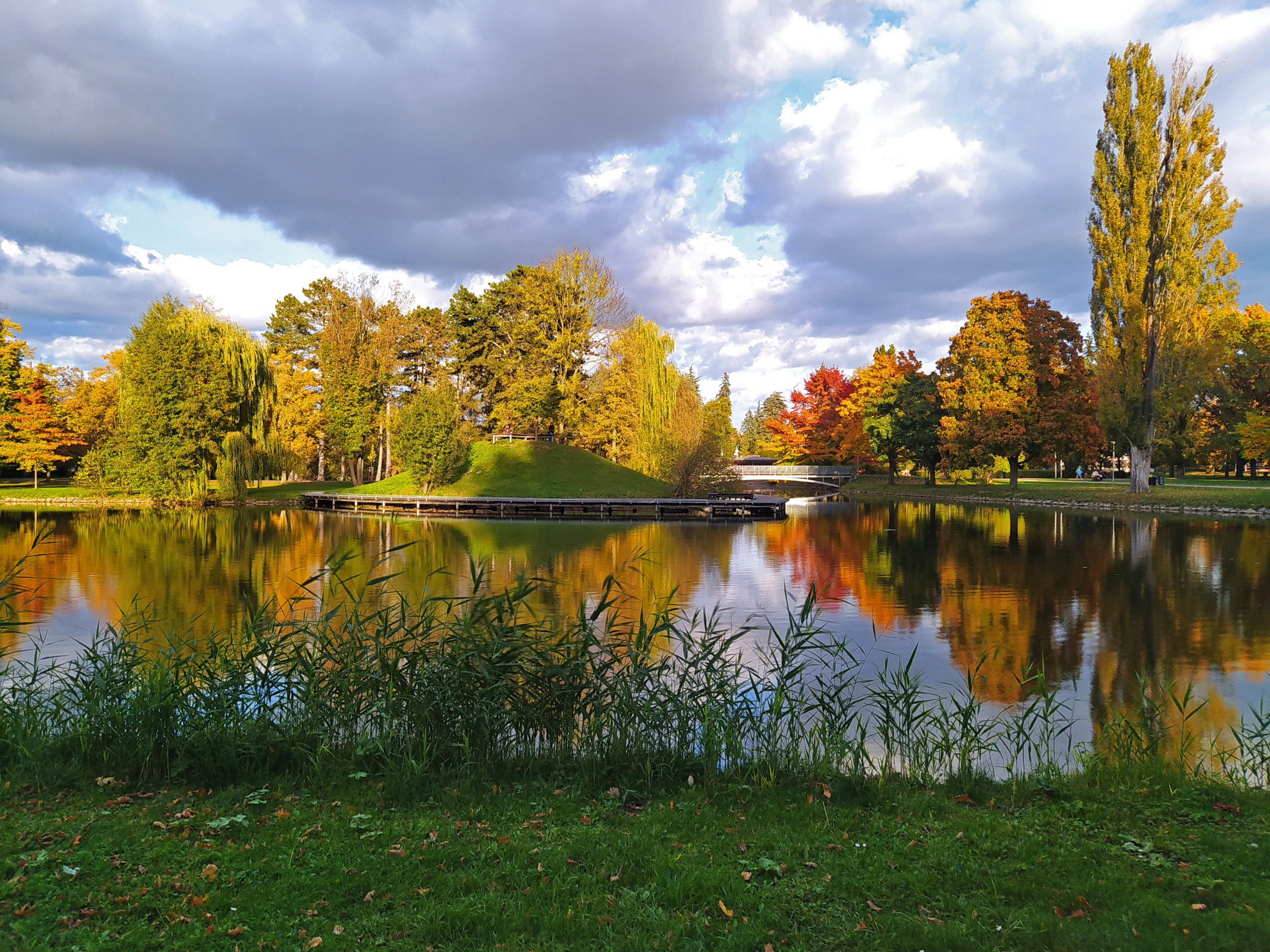

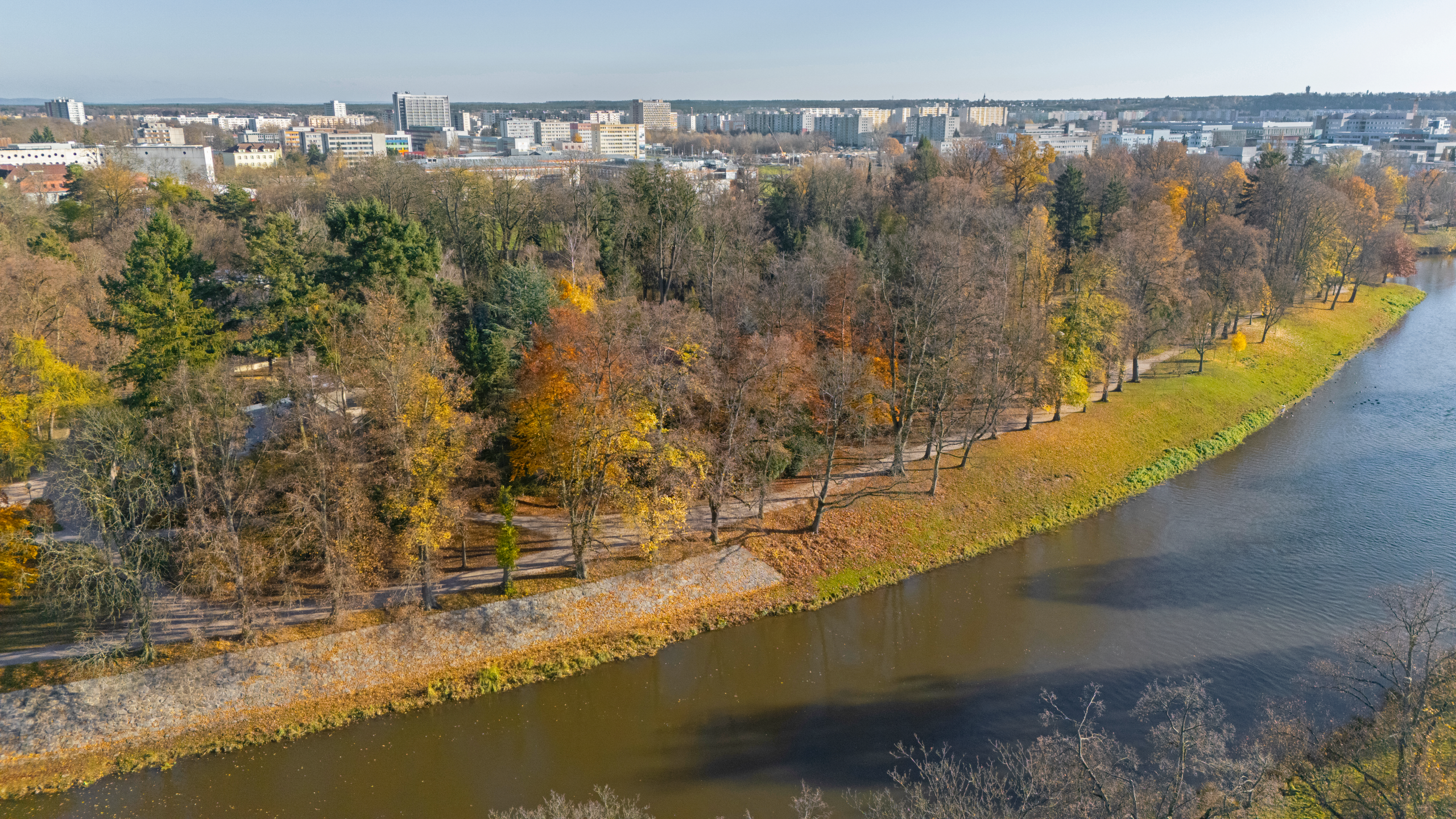
Jirásek´s Park is located at the confluence of the Labe and Orlice rivers, to the southwest of the old part of the city of Hradec Králové. In the southern part of the park there is a rosarium, which can be reached through so-called poterna. This is an approximately seven-meter-long tunnel that used to be part of the Hradec Králové fortress. The Labe River flows along the western side of the park, there is the weir called Hučák on it. In the period of 1909–1921, the hydroelectric power plant was built on the weir, and it is called Hučák as well. The confluence of the Labe and Orlice rivers closes the Park in the south. On the northern side, Jirásek´s Park is bordered by Křižík´s Street and Rokycana´s Street. Komenský´s Street, with the buildings of the former brewery (today’s Regional Administrative Office) and the in-door ice rink, extends to the east of Jirásek´s Park. There are two entrances to the park. The first entrance is located at the Hučák weir, next to the stone bridge leading from Tyl´s embankment. The second entrance is located close to the ice rink. The park is a lively social place; concerts and social events are held in its pavilion.
The site of the current Jirásek´s Park was once a fishing district. In the first half of the 19th century, the area was part of the military fortress, and therefore remains of the above mentioned poterna and remains of the casemates can still be found in this area. The park was previously known as Officers’ Park, which was established in the period of 1867–1868 (i.e. after the Austro-Prussian War) and which was not accessible to the public.
In 1897, Officers’ Park was expanded, and a major landscaping project was carried out, in which several landscape architects participated. In 1918, the park´s name was changed in honour of Alois Jirásek, a famous Czech writer. In 1926, the park came under the city´s administration, and development renovations were started. The existing vegetable garden was replaced by a rose garden at the confluence of the Labe and Orlice rivers. In 1927, on the fortress’s transverse rampart, an alpine garden was created, which resulted from the cooperation of the city´s Landscaping Guild in and the city’s Holticulture Department. In 1934, the sculpture called The Lovers (by Josef Václav Škoda), which is at present listed as a cultural monument, was unveiled near the confluence of the two rivers. The park houses the 17th century´s Orthodox wooden church of St. Nicholas, which was brought there from the village of Habura in eastern Slovakia in 1935 to honour fallen legionnaires.
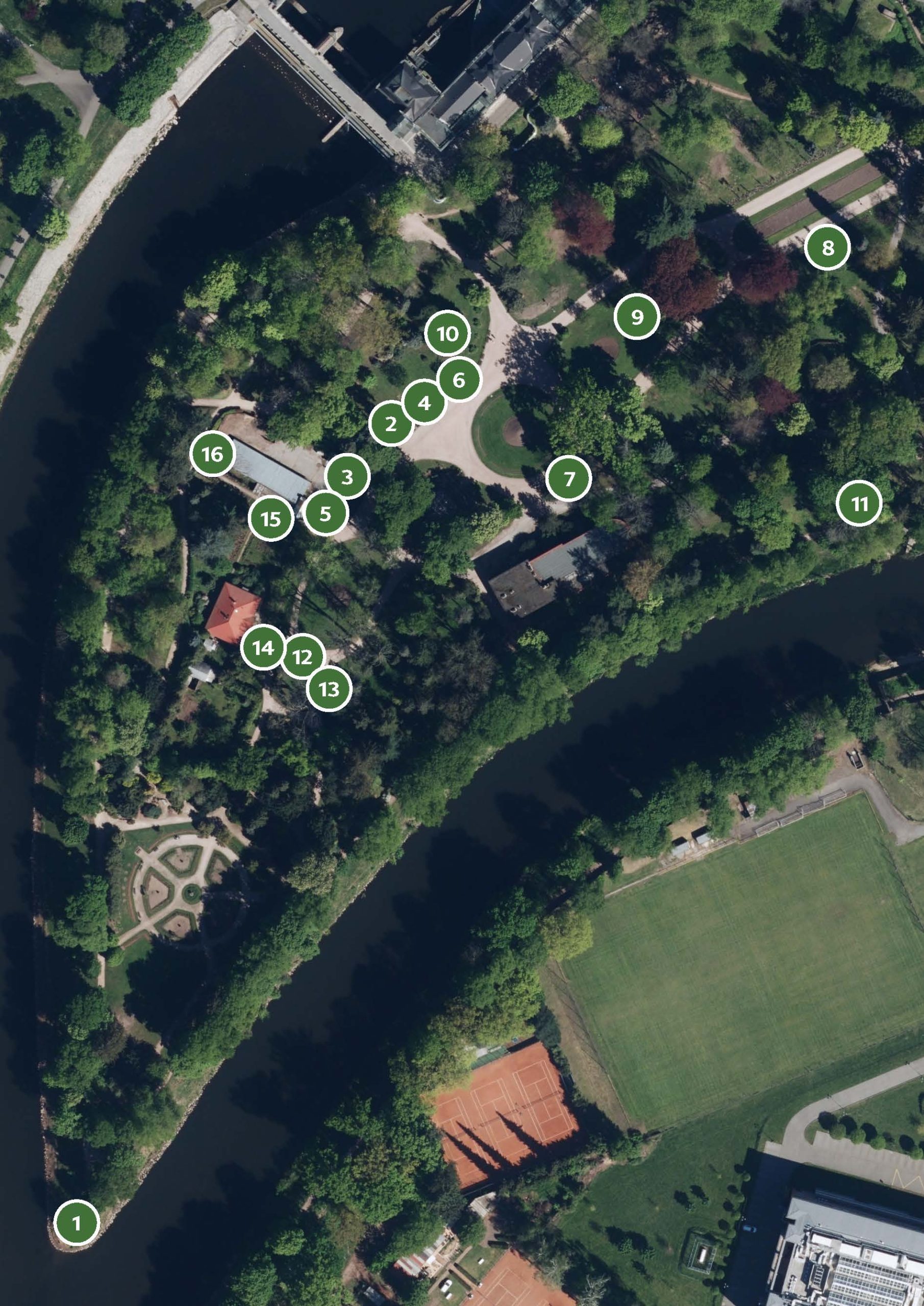
1 – Pin Oak (Quercus palustris)
2 – Panicle Hydrangea (Hydrangea paniculata)
3 – Sargent Hydrangea (Hydrangea sargentiana)
4 – Wild Hydrangea (Hydrangea arborescens)
5 – Bigleaf Hydrangea (Hydrangea macrophylla)
6 – Japanese Maple (Acer palmatum)
7 – Greek Fir (Abies cephalonica)
8 – Japanese Cedar (Cryptomeria japonica)
9 – Tuliptree (Liriodendron tulipifera)
10 – Princess Tree / Empress Tree (Paulownia tomentosa)
11 – Black Jetbead (Rhodotypos scandens)
12 – Star Magnolia (Magnolia stellata)
13 – Thurber’s Magnolia (Magnolia kobus)
14 – Lily Magnolia (Magnolia liliiflora)
15 – Saucer Magnolia (Magnolia ×soulangeana)
16 – Chinese Wisteria (Wisteria sinensis)