
Tamarisk family, Tamaricaceae
Origin: the eastern Mediterranean
Habitat in the original area: sand dunes on the seashores
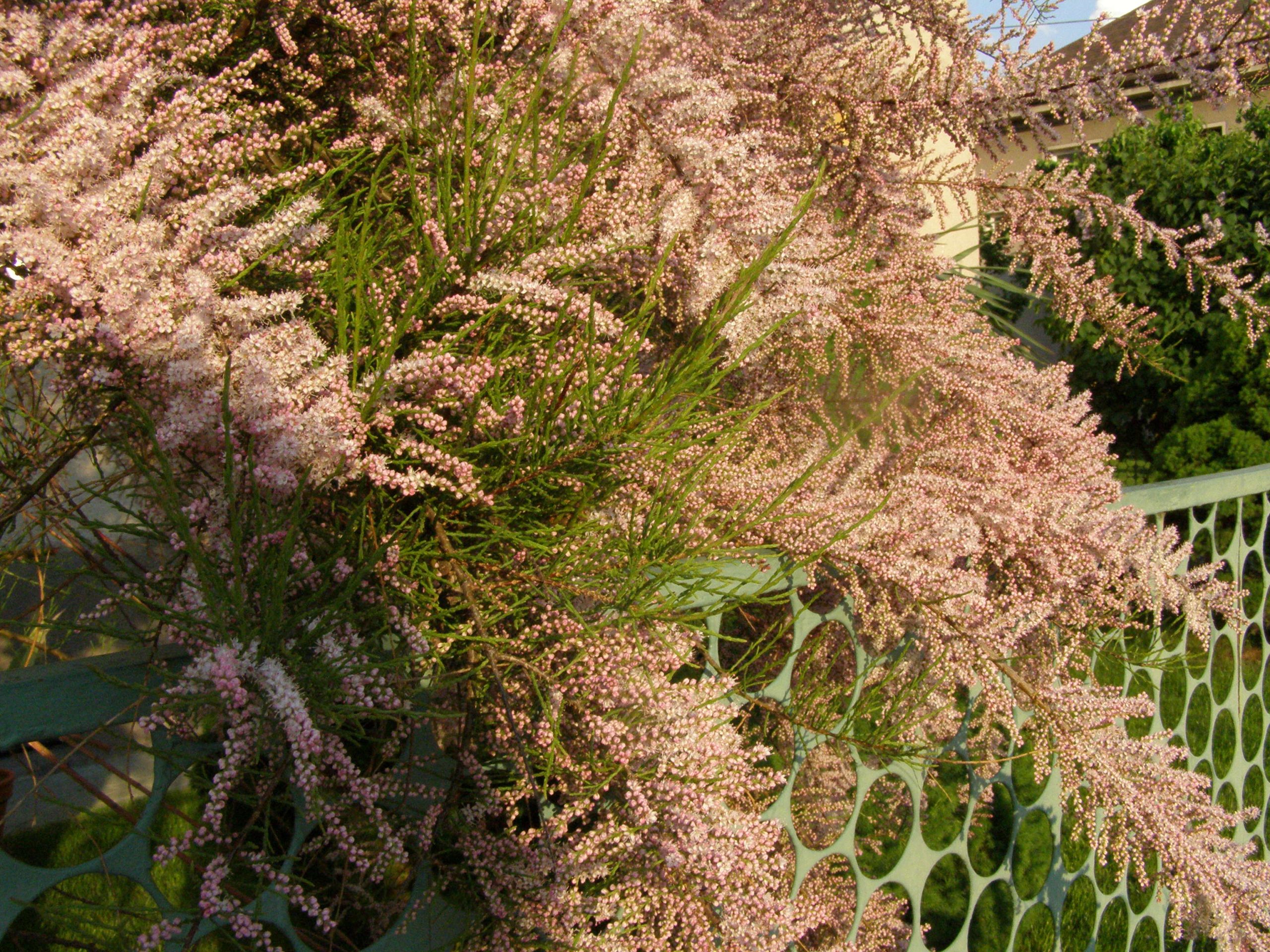
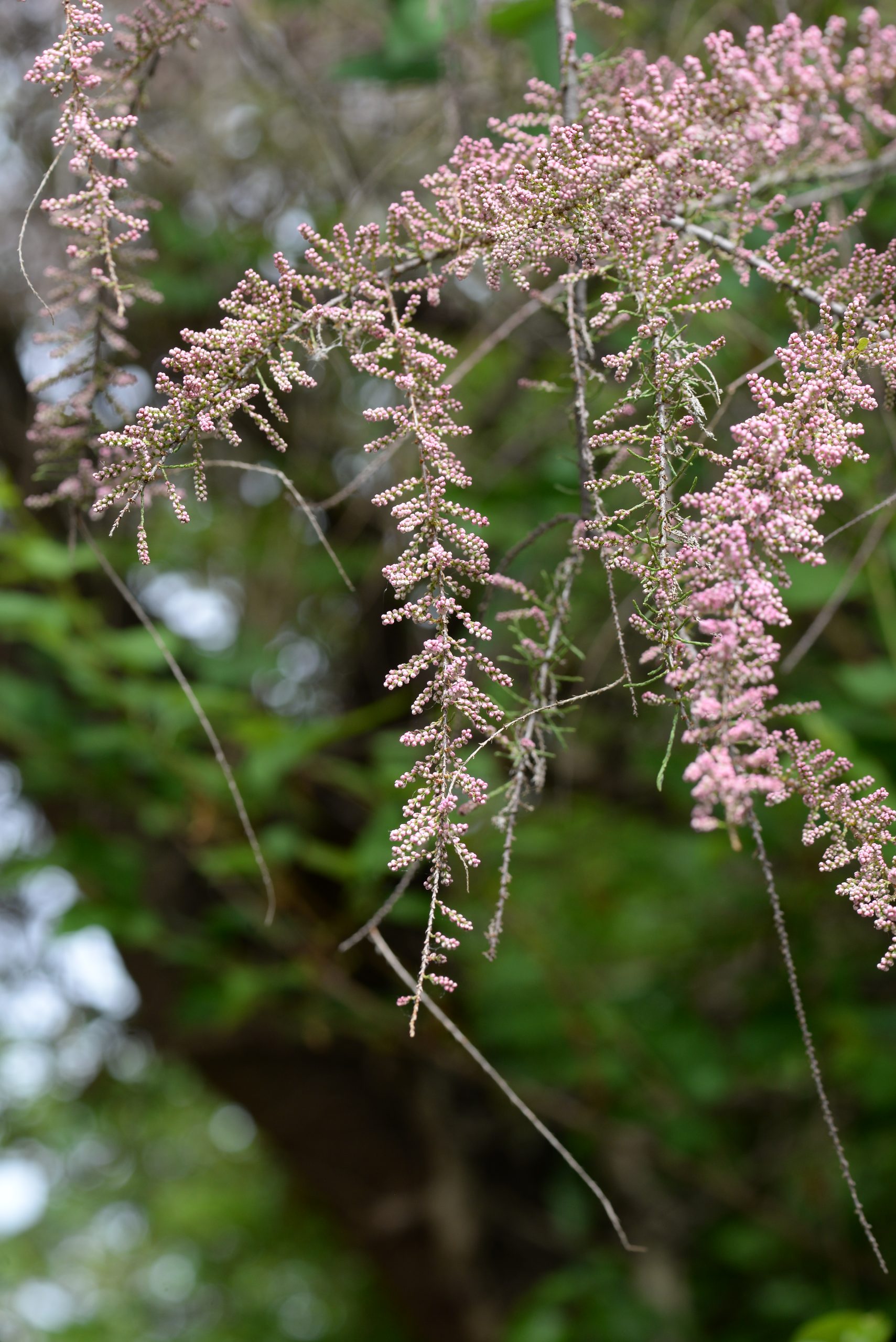
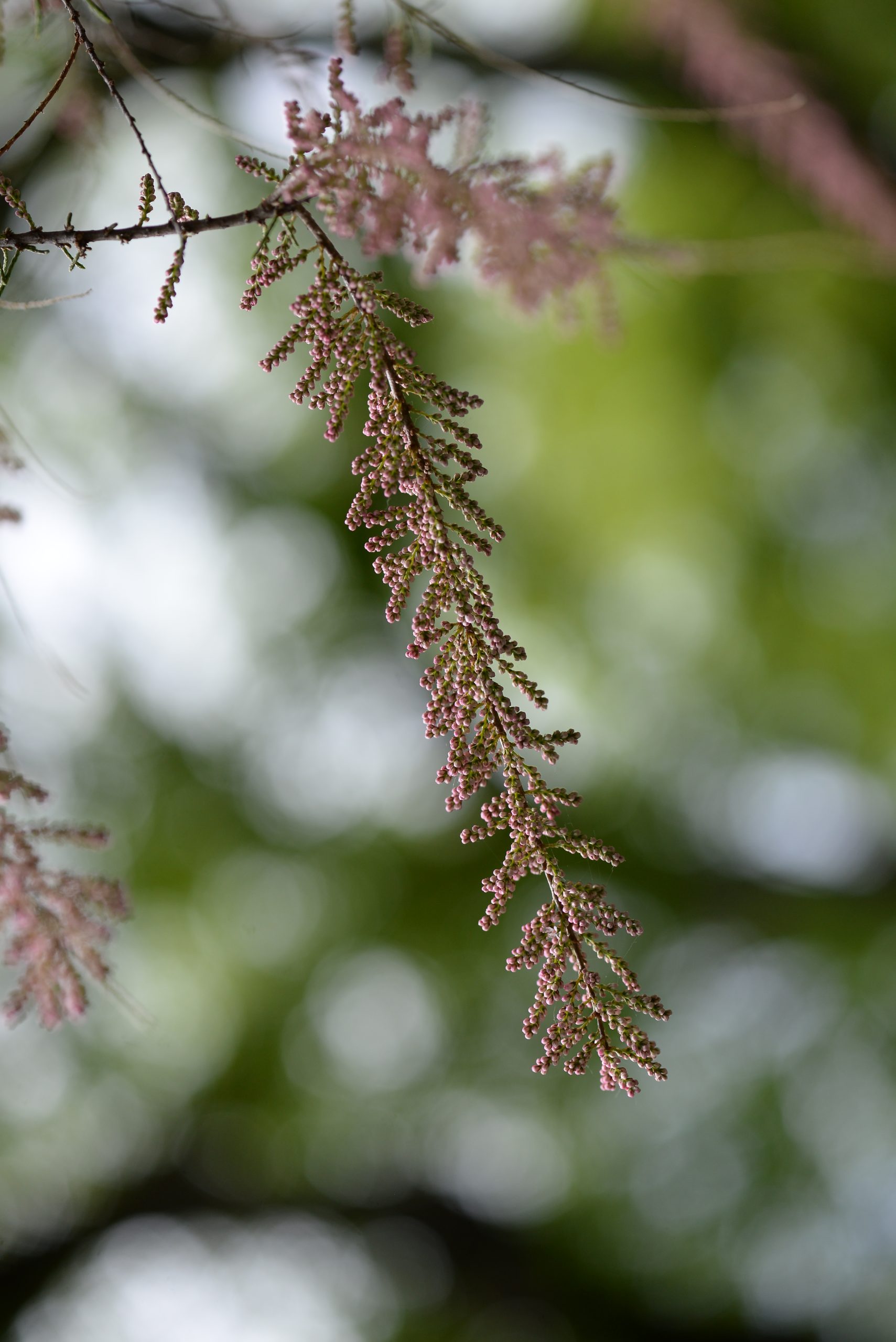
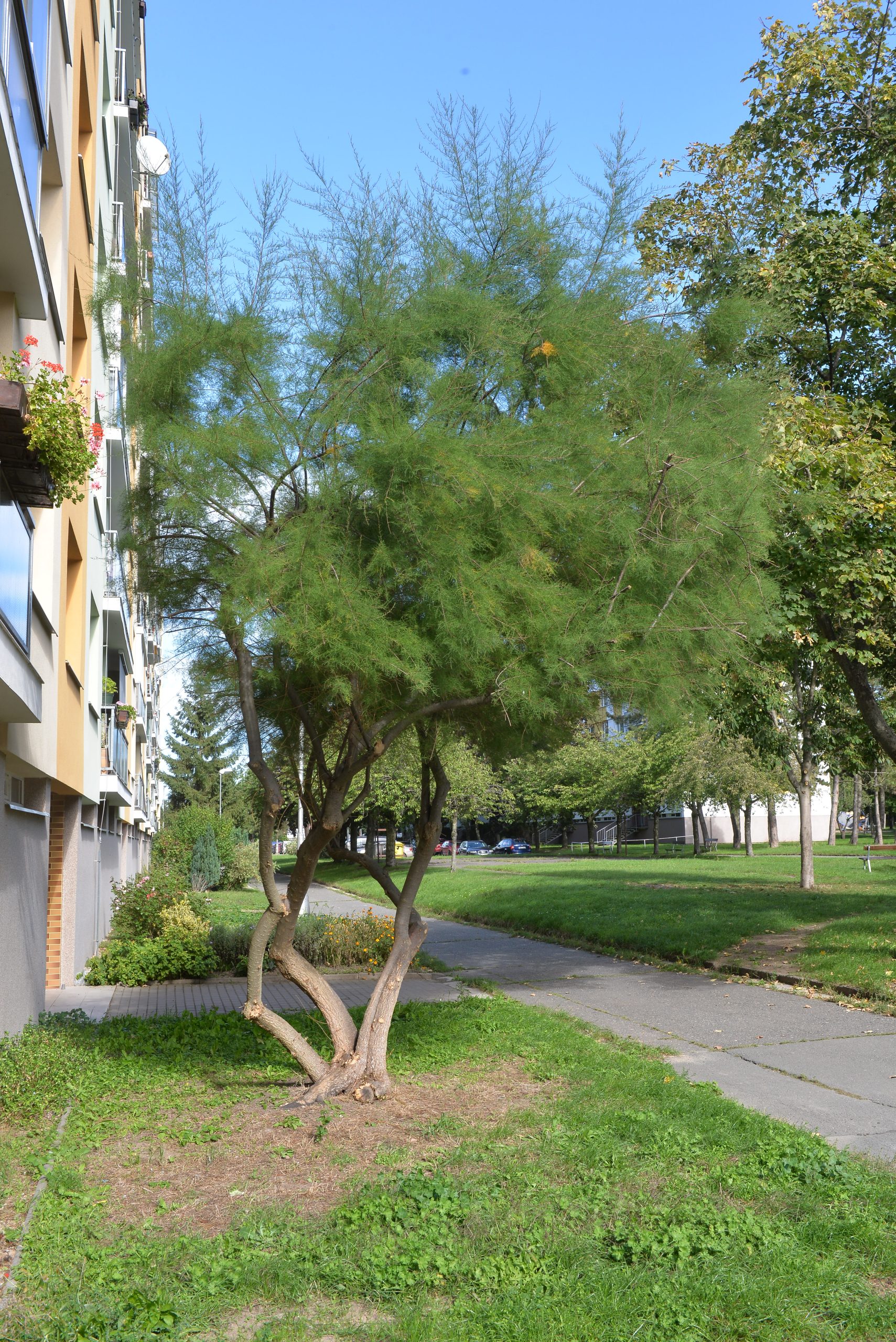
Habitus: A shrub or low tree, whose branches are curved and crimson or brown in colour. The roots are deeply embedded in the soil. The lateral shoots fall off in autumn together with the leaves.
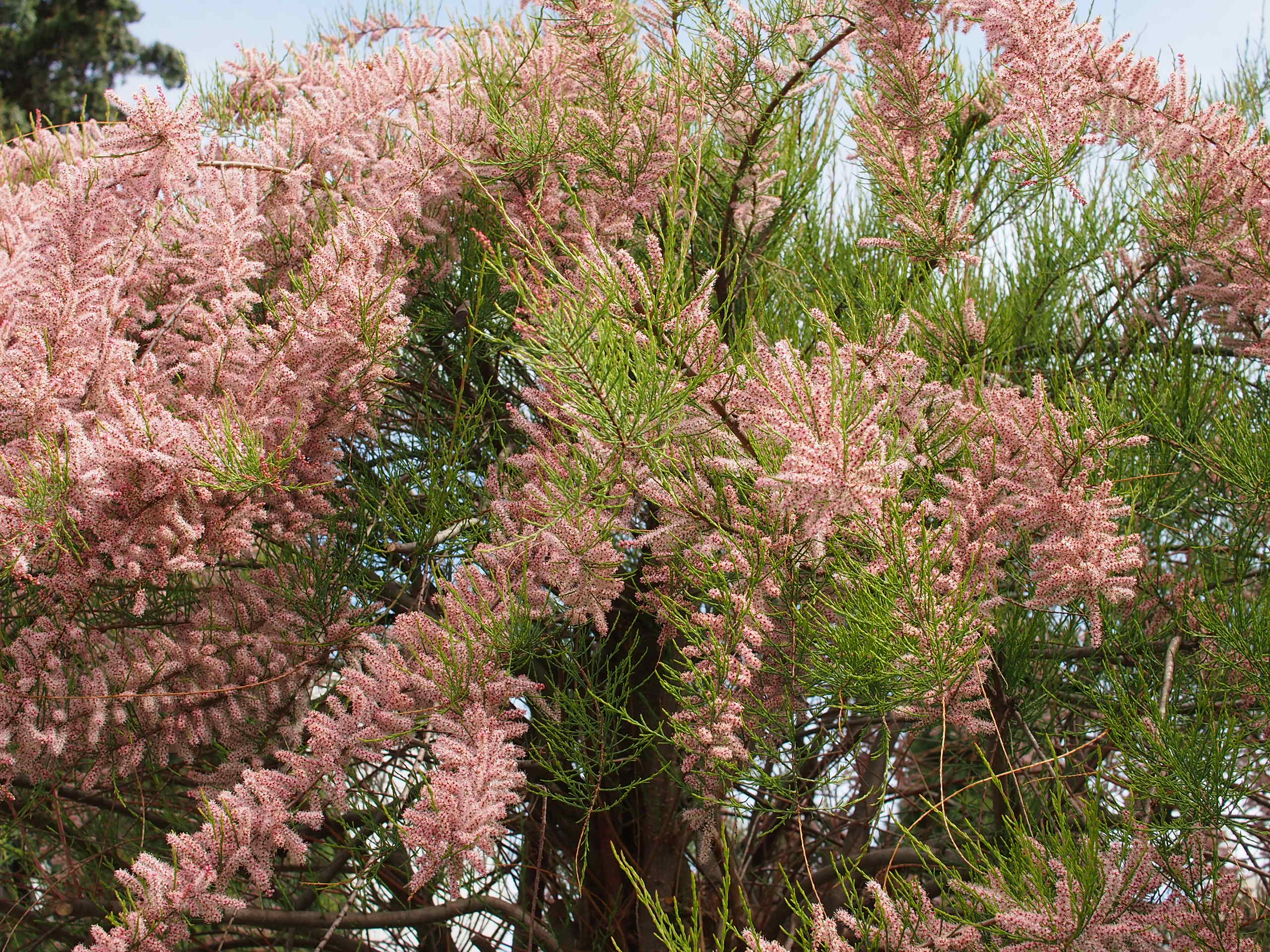
List: The leaves are small, almost scale-like and their base hugs the twigs. They are pointed, blue-grey and contain glands from which they secrete salt solutions.
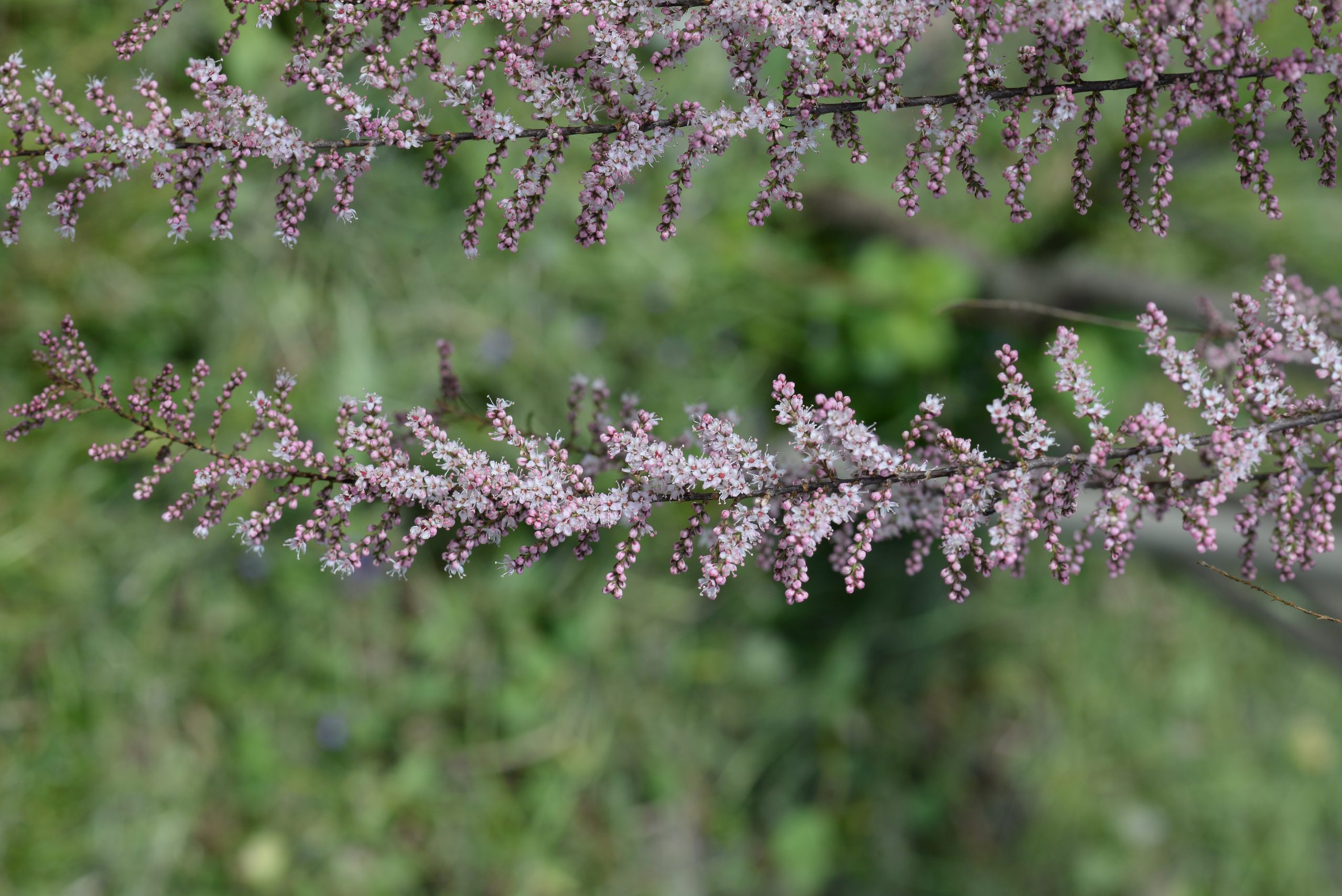
Bloom, fruit: It blooms in May. Clusters of small blossoms grow on the twigs of the previous year. They are four-petaled and pink in colour. The stamens are longer than the petals, and therefore protrude from the blossom. The conical capsules are small, about 0.5 centimetres in diameter. They open with several flaps and hide the seeds with a tuft of trichomes.
Interesting fact: The red-heart wood is not easily flammable. That is why fire-resistant strips are planted from tamarisk. Since it copes well with salinity, this plant is widely grown near roads. The four-flowered tamarisk (Tamarix tetranda) is also grown in the Czech Republic. It originats from the Balkans, Asia Minor and southern Russia. It also has a four-petal flower, but while the small-flowered tamarisk (T. parviflora) has 3 stamens in the flower, the tetrand tamarisk (T. tetranda) has four.