
Sweet-gum family, Altingiaceae
Origin: North and Central America
Habitat in the original area: in the U.S.A. – deciduous and humid forests of the temperate zone and the valleys of the lower rivers; in Central America – in mountain humid forests at the altitude from 400 to 1,800 metres above sea level
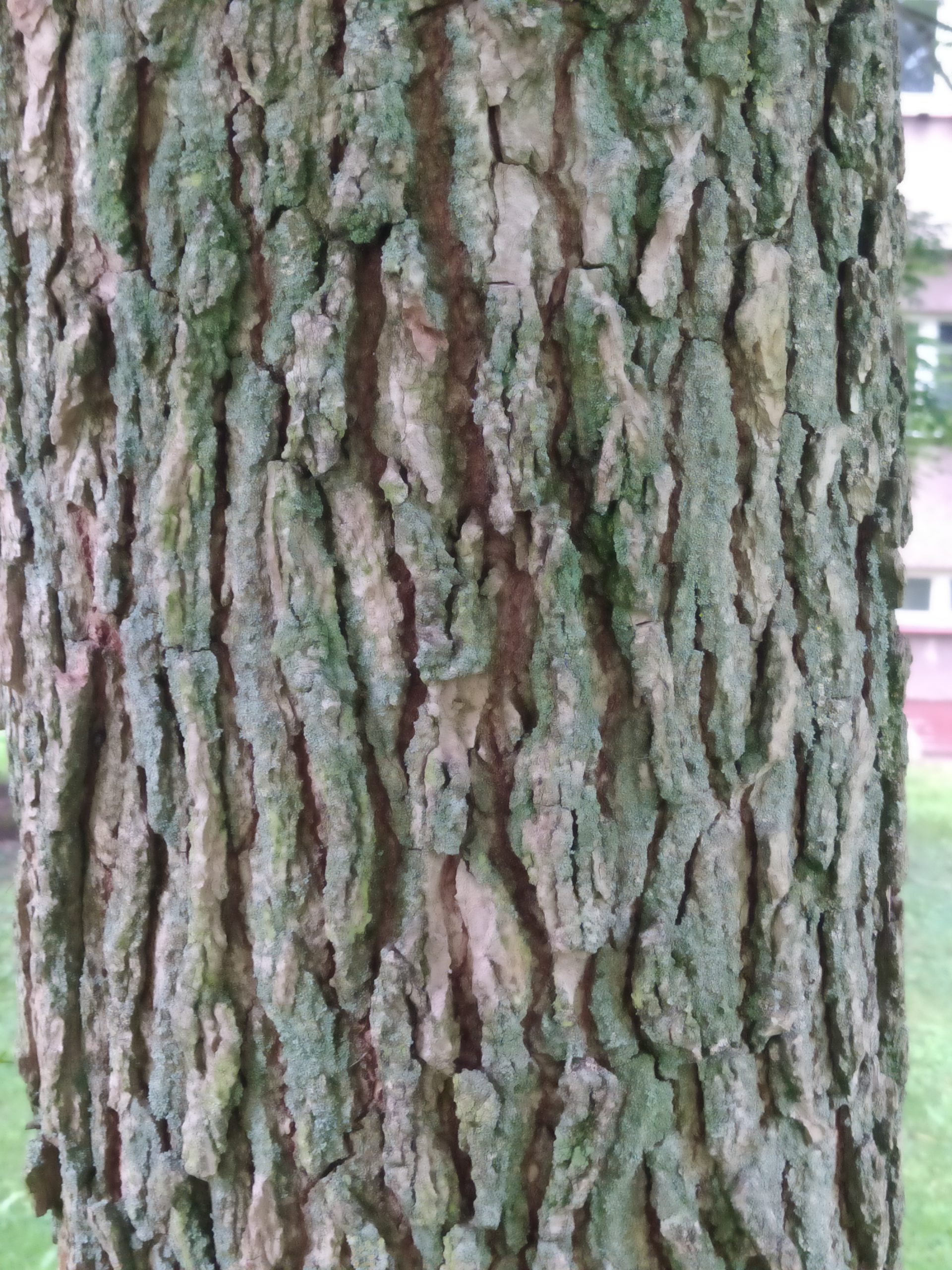
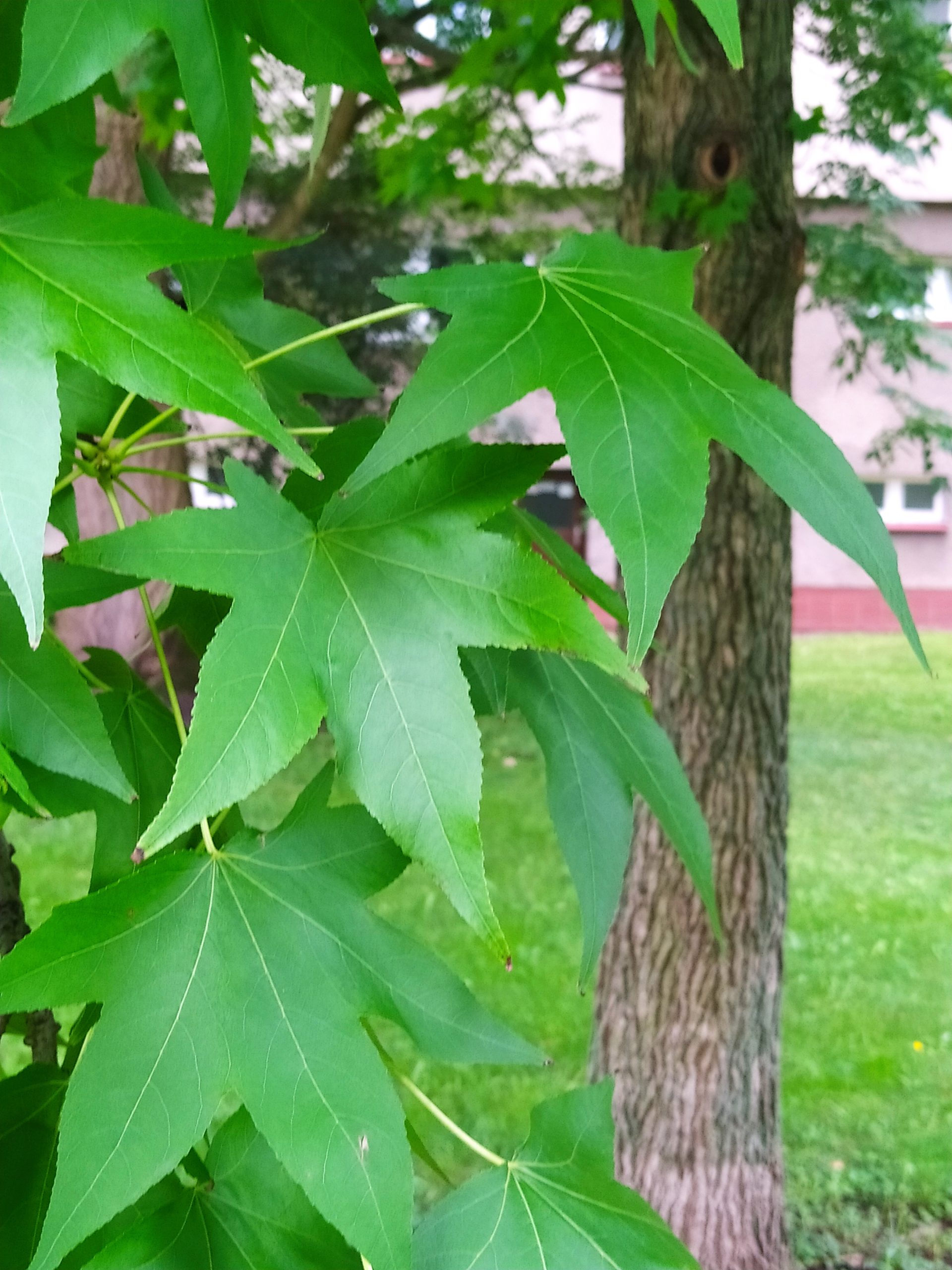
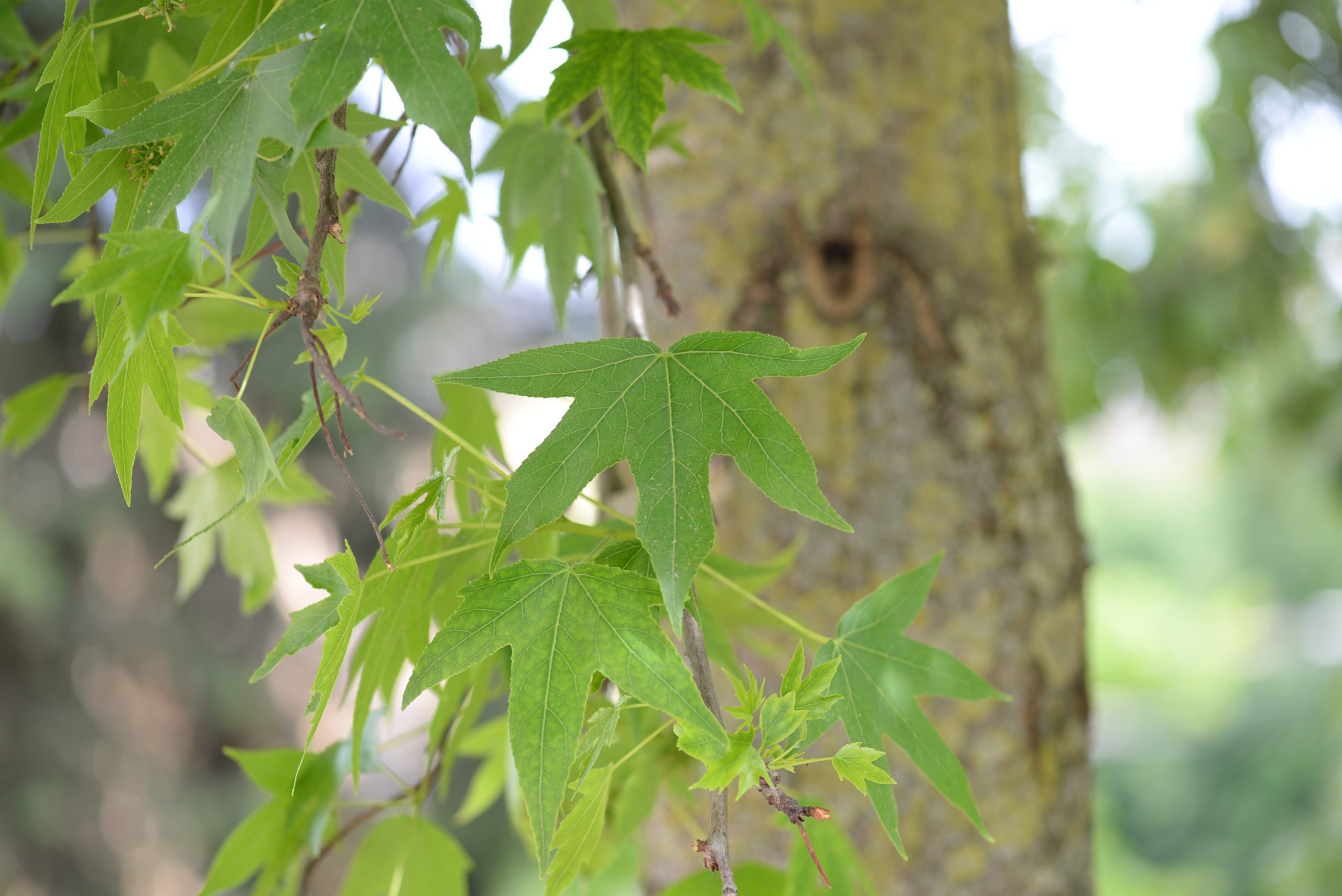
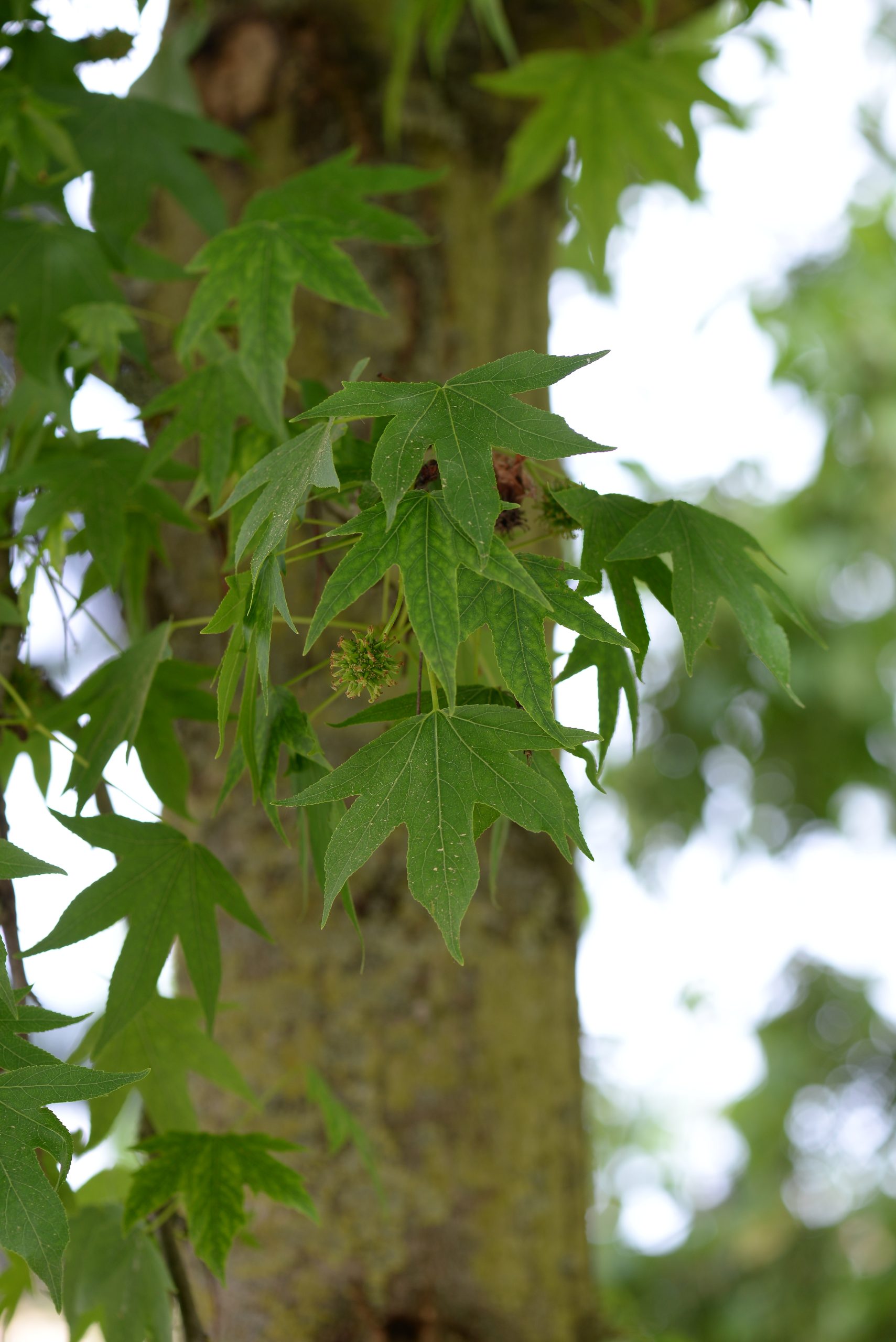
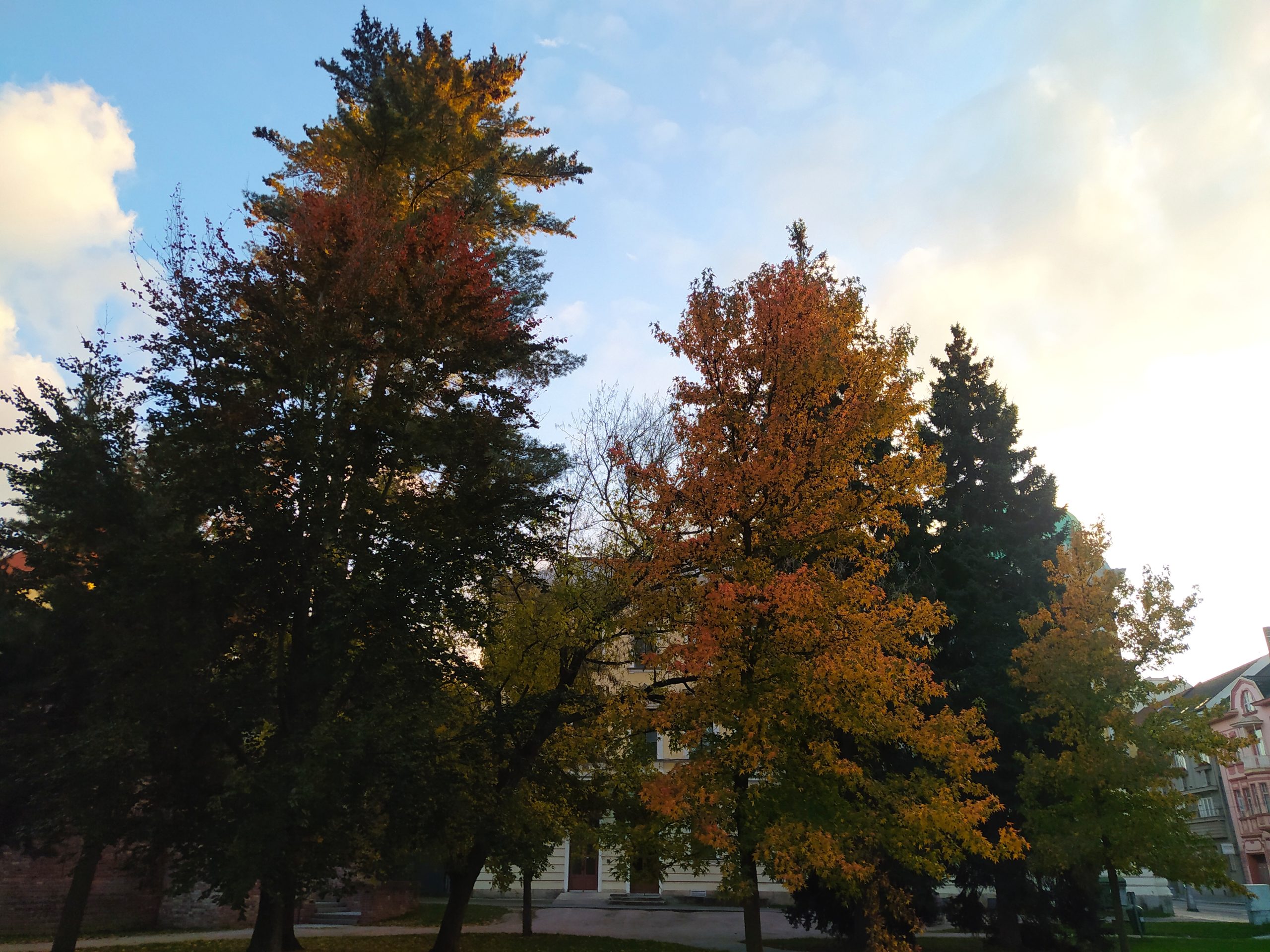
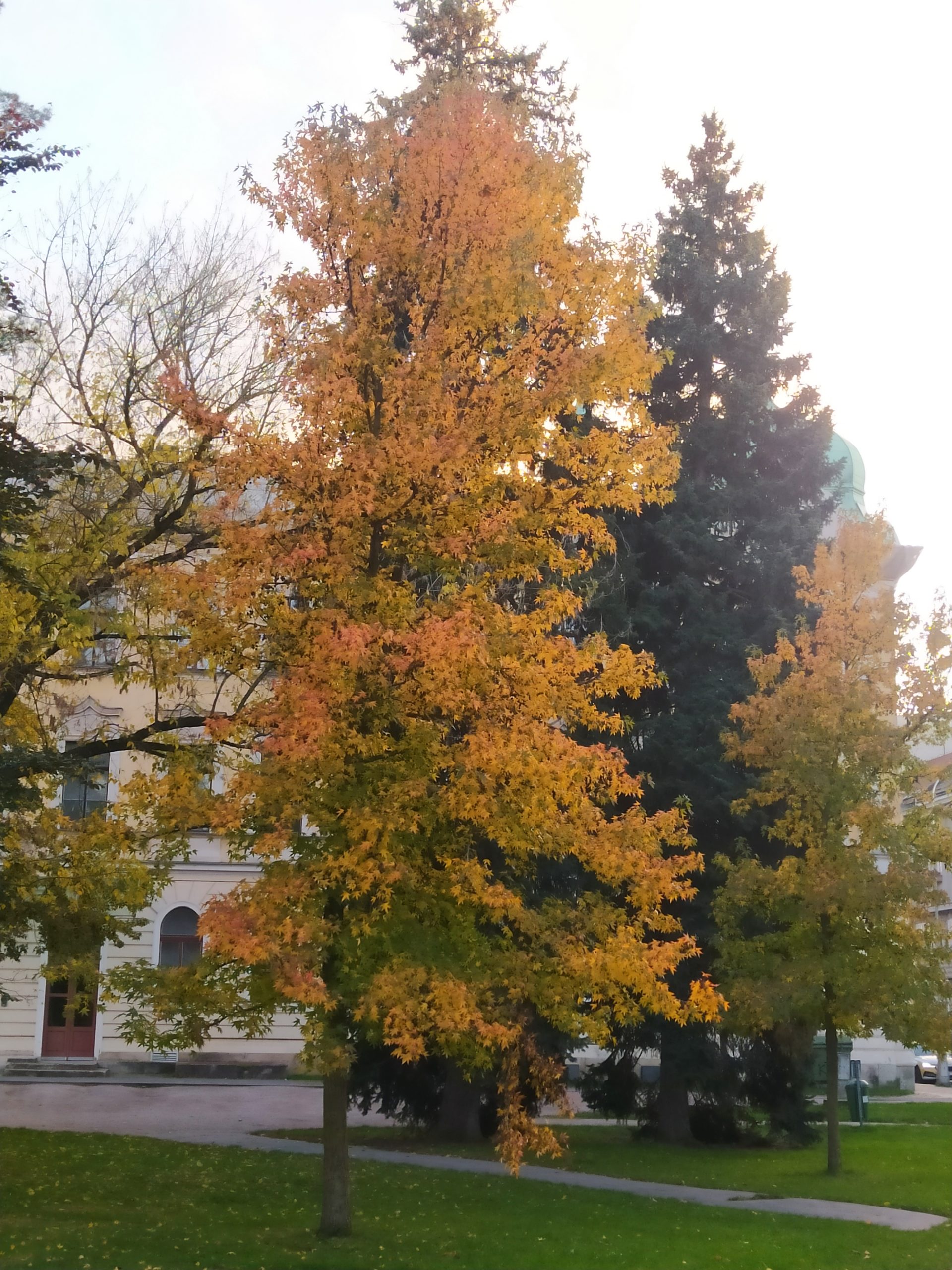
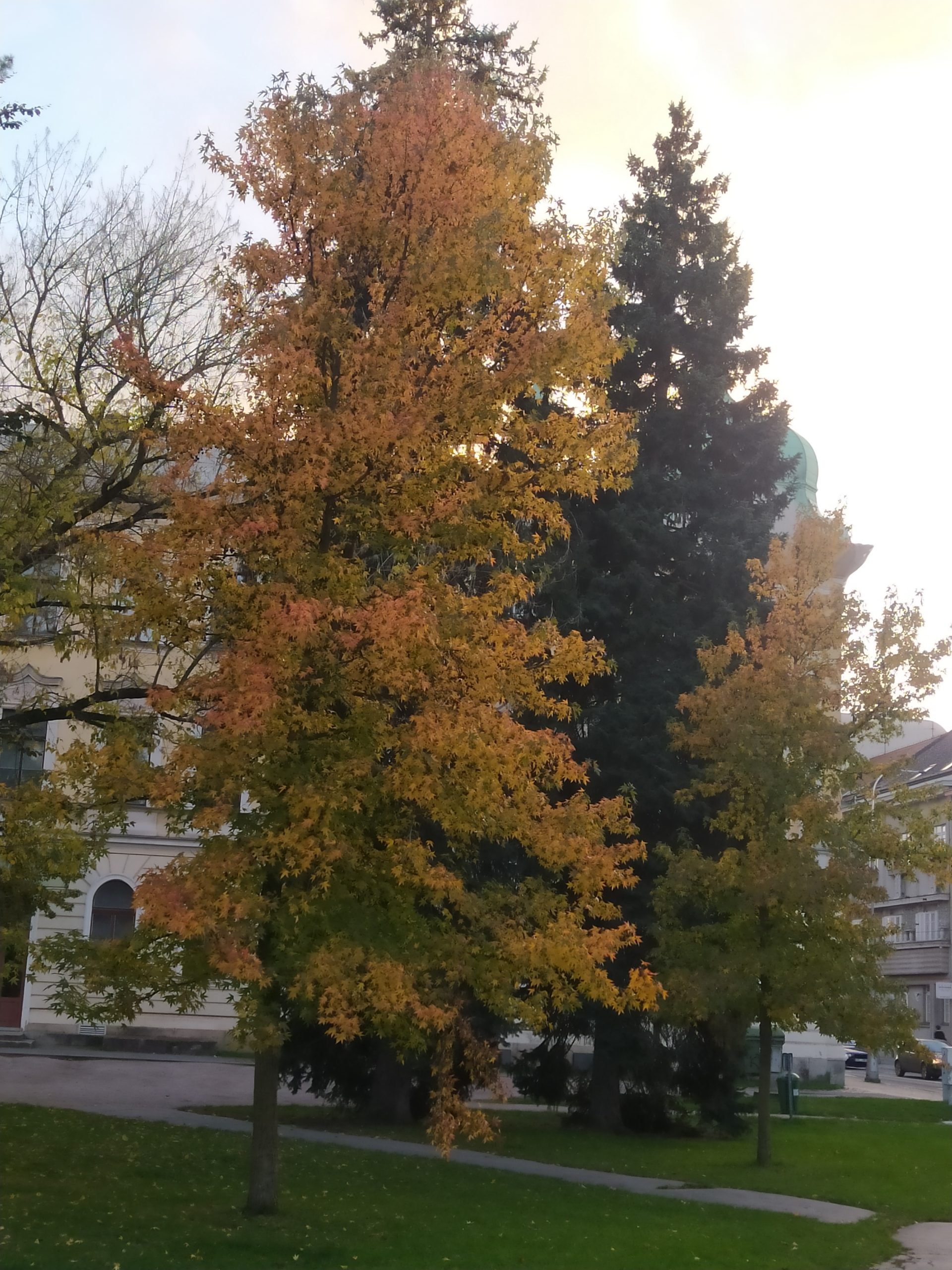
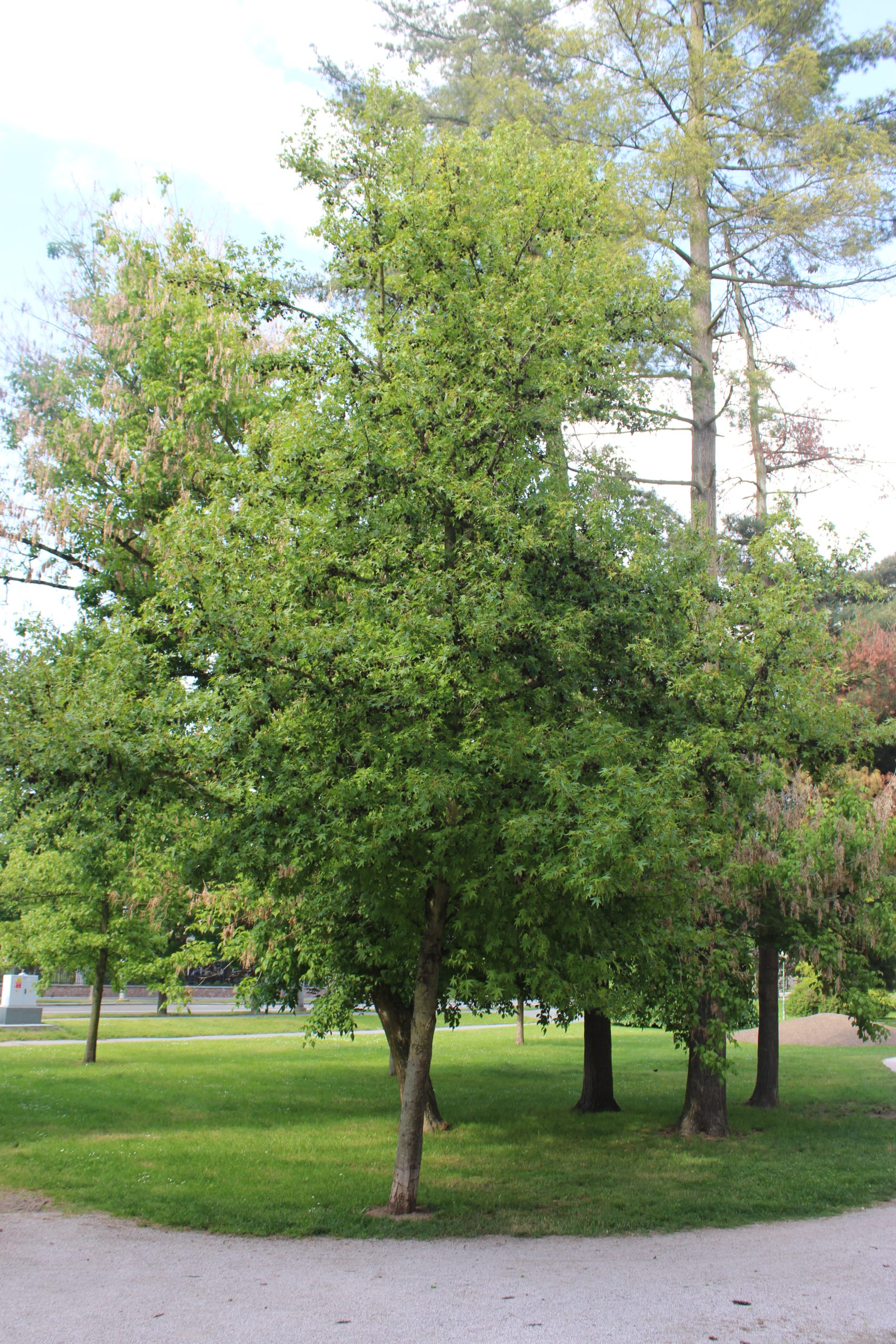
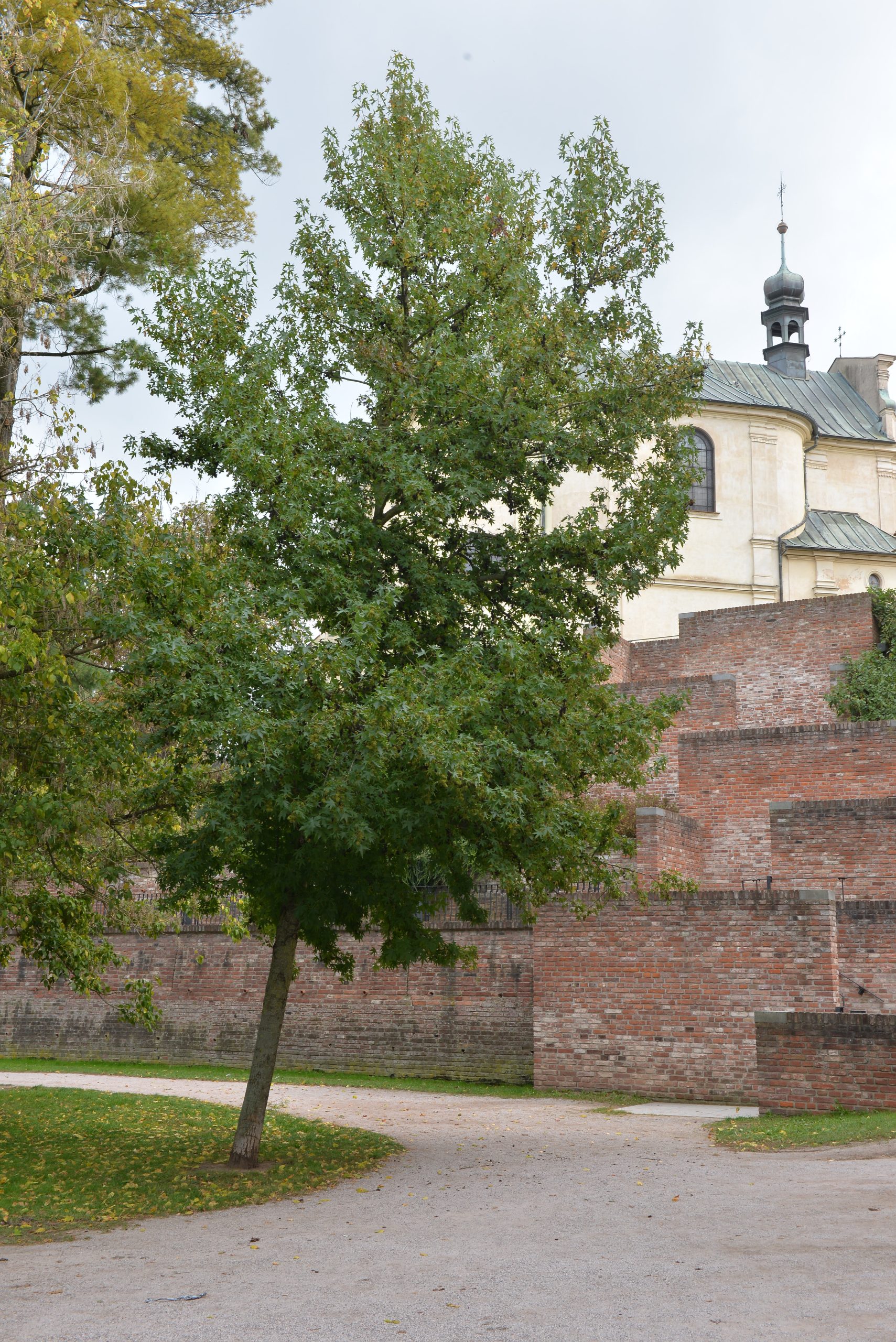
Habitus: A tree with a widely branched crown growing to the height of 30–50 metres. The bark is smooth and grey when young, longitudinally furrowed when old. Cork wings appear on older twigs.
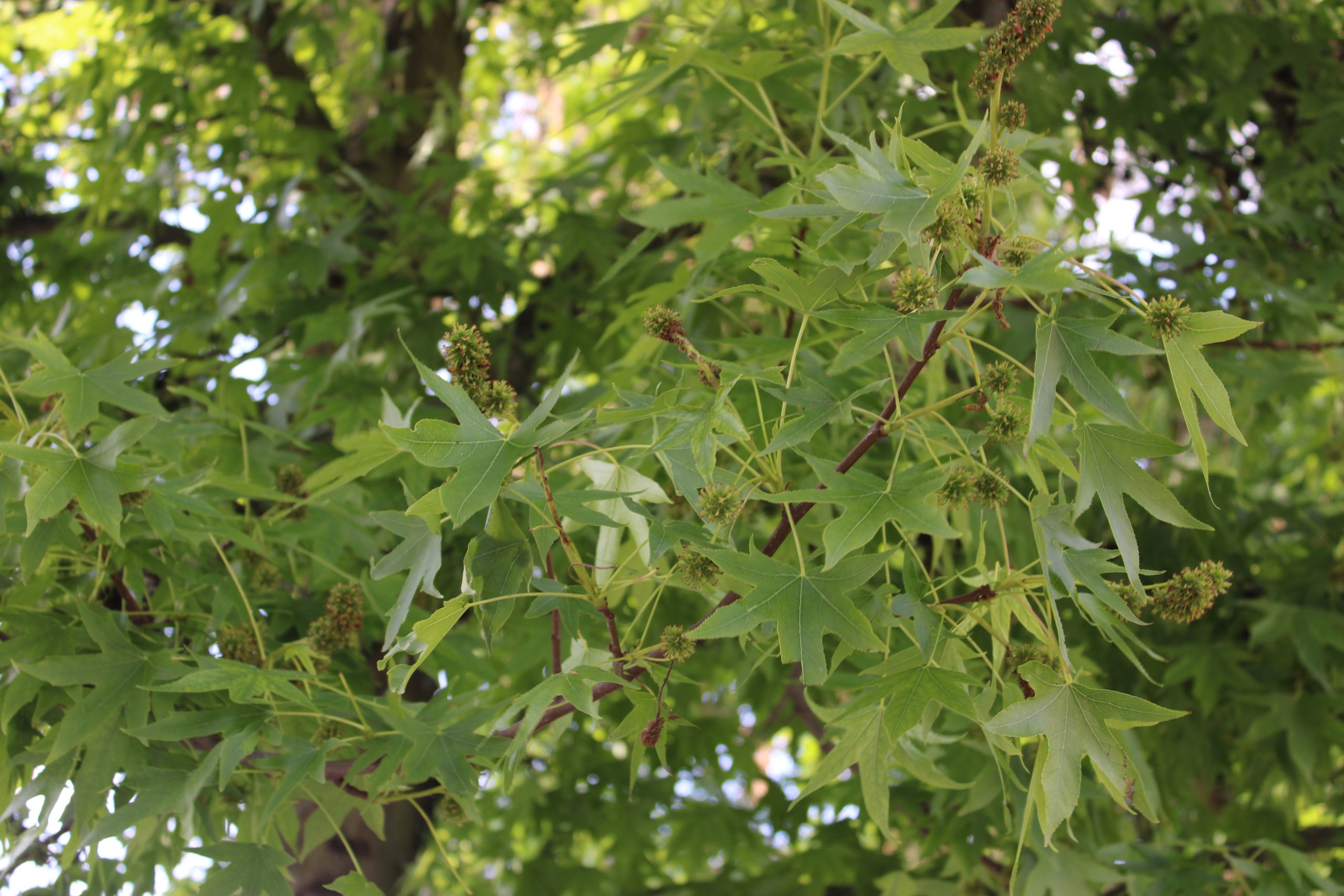
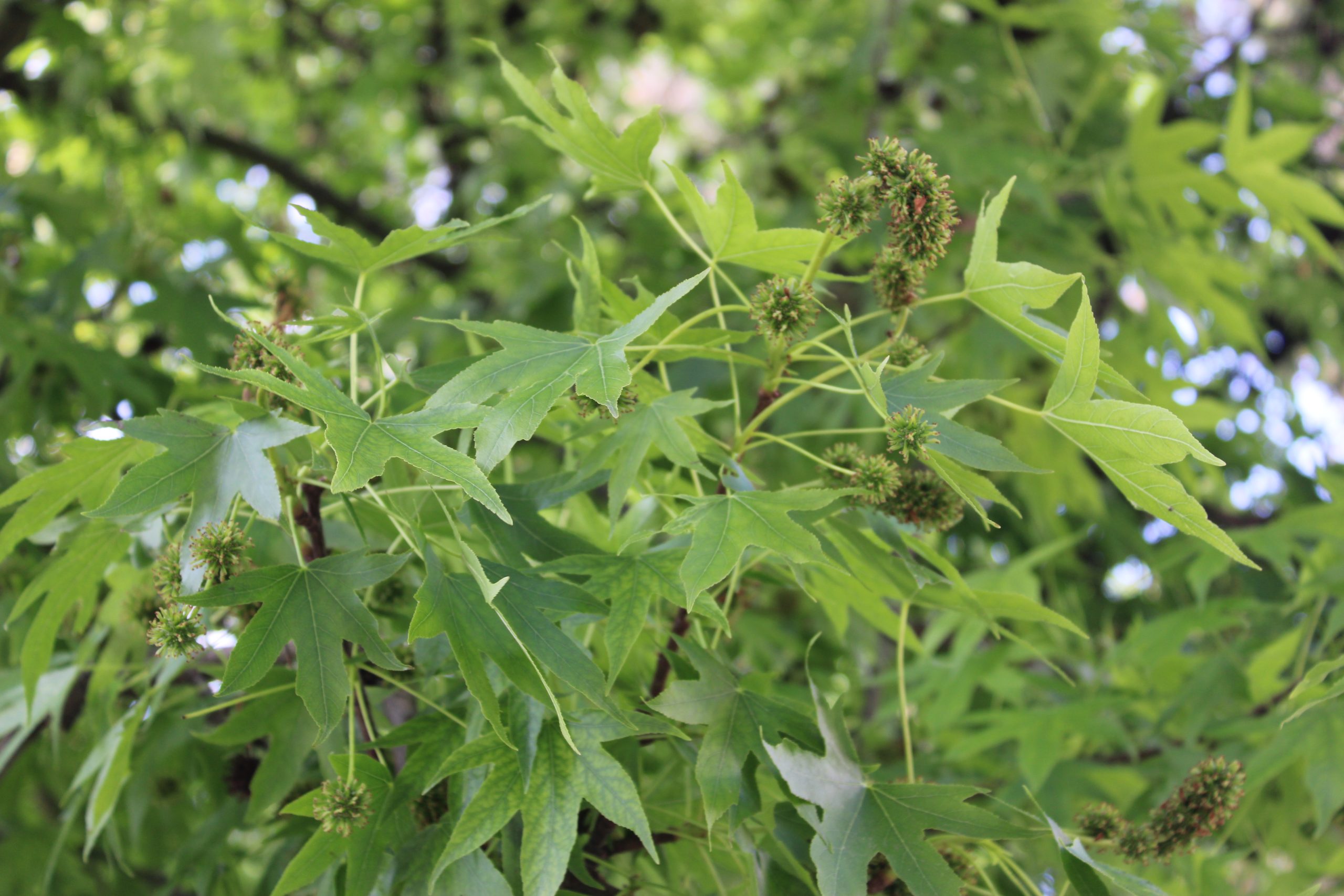
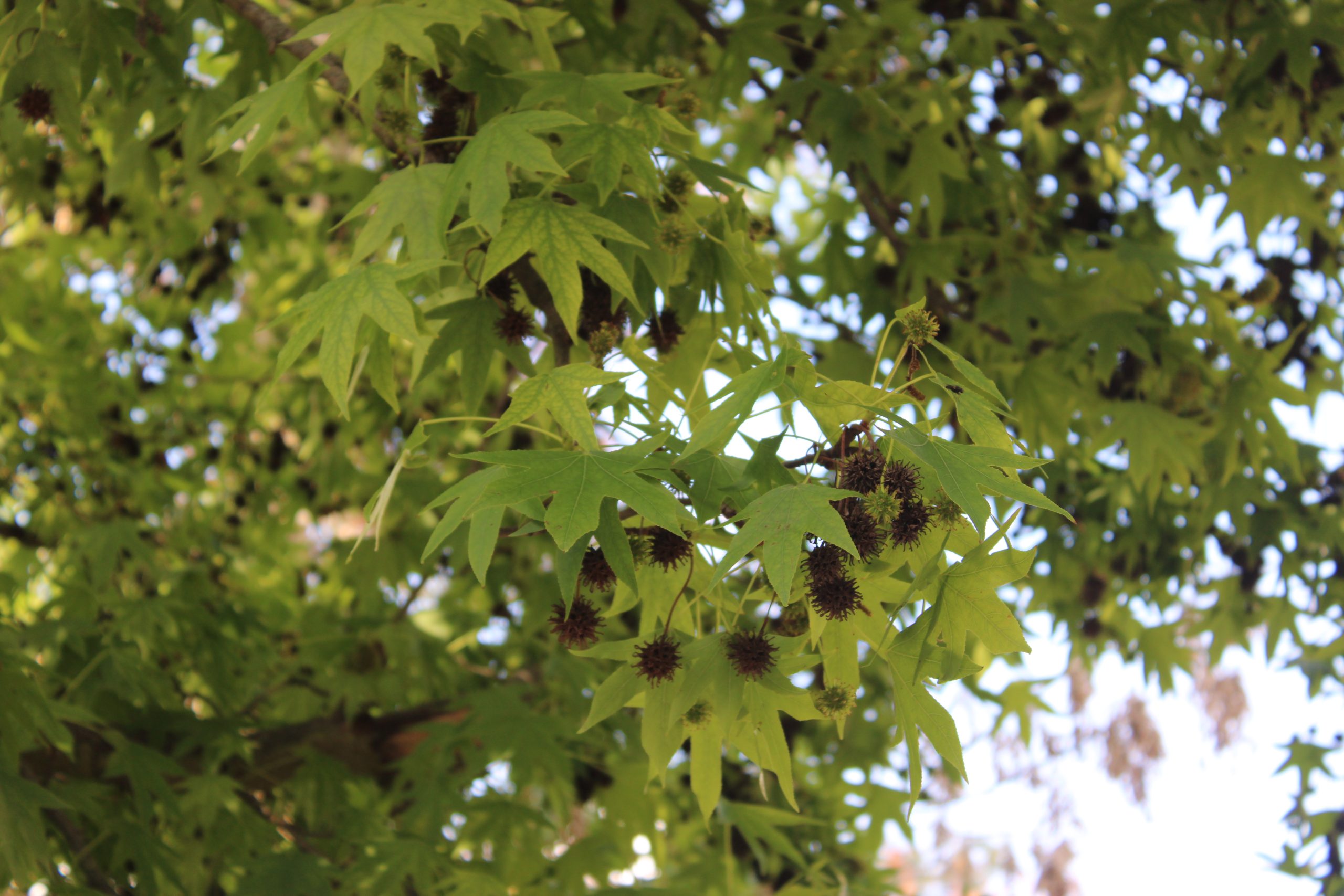
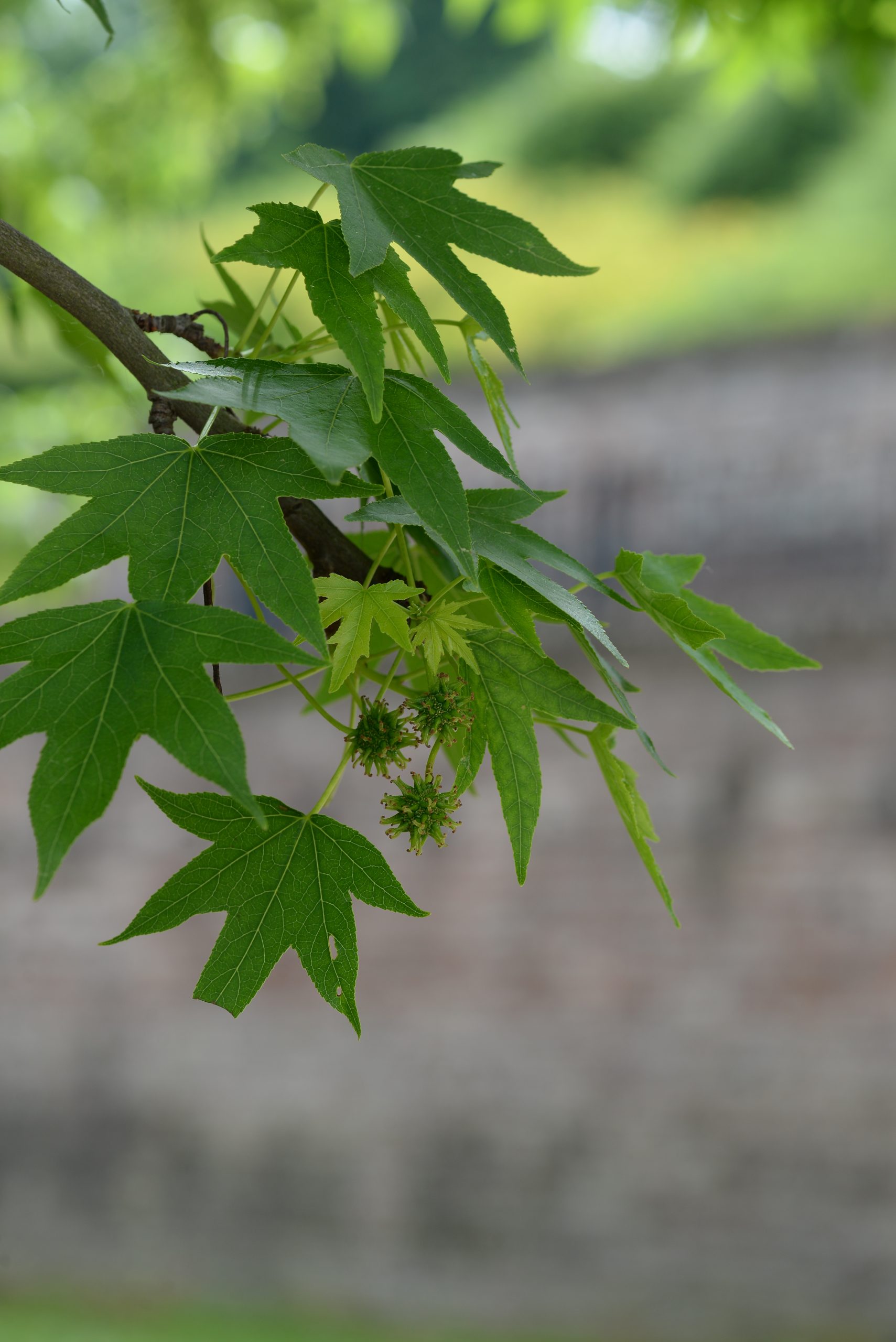
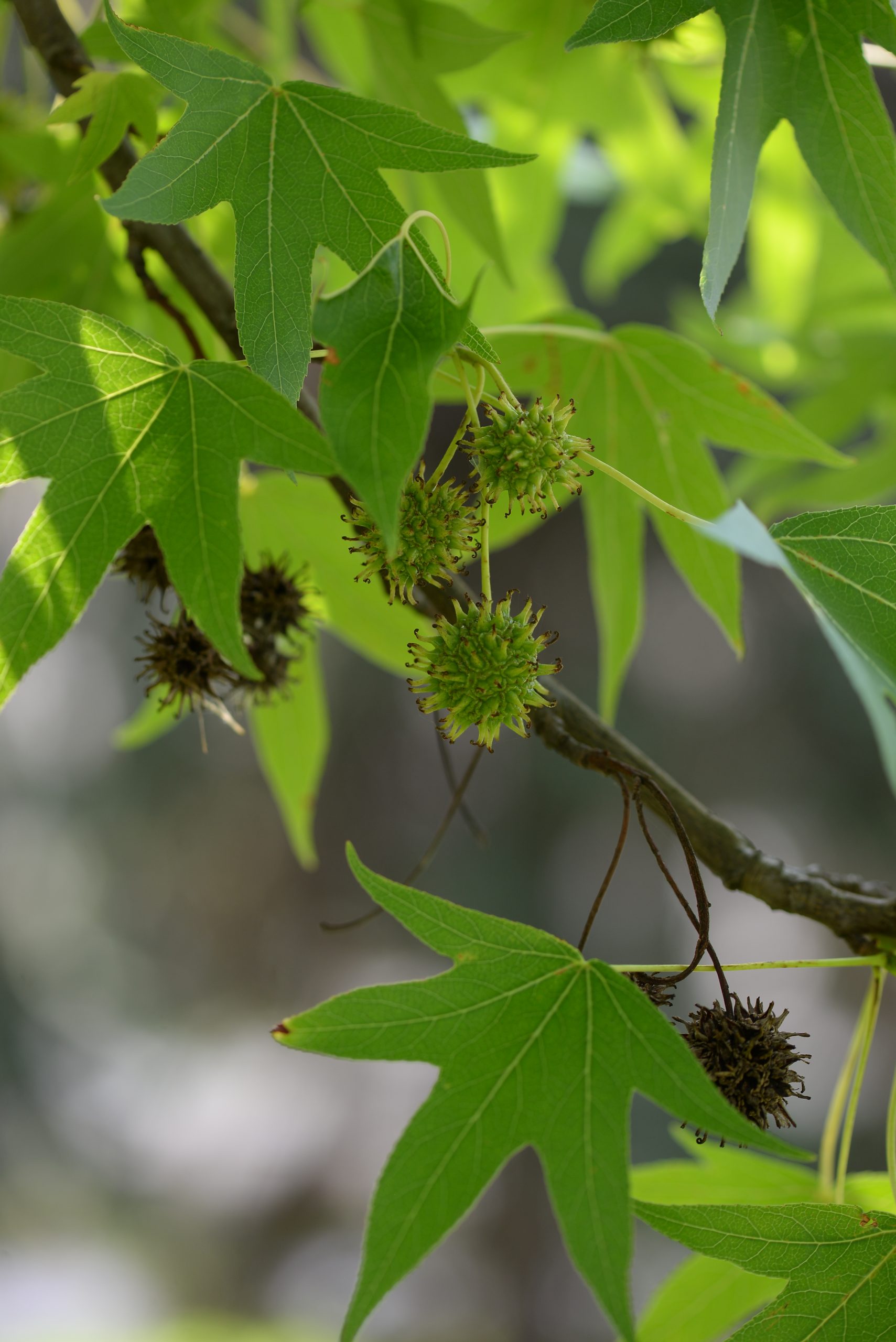
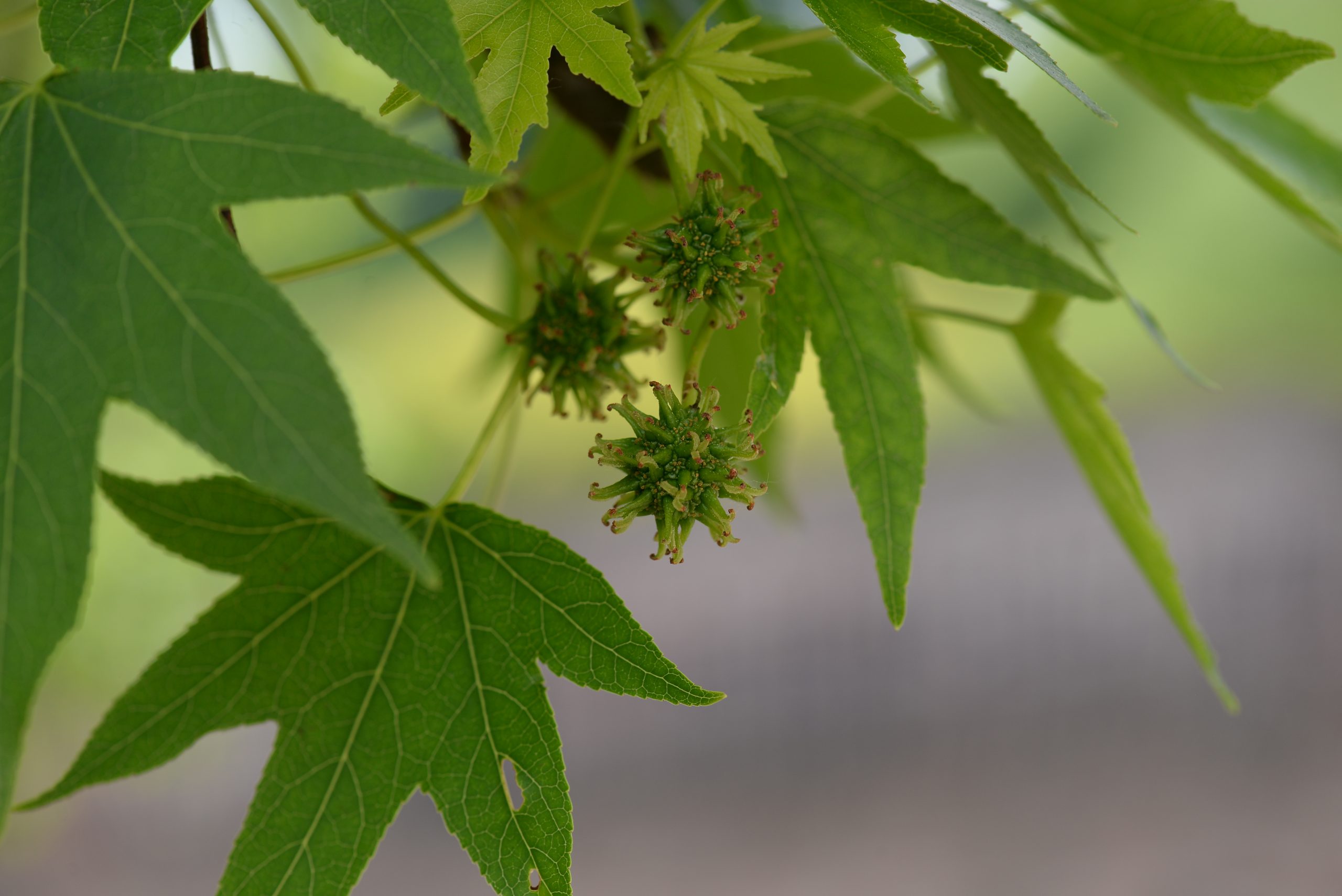
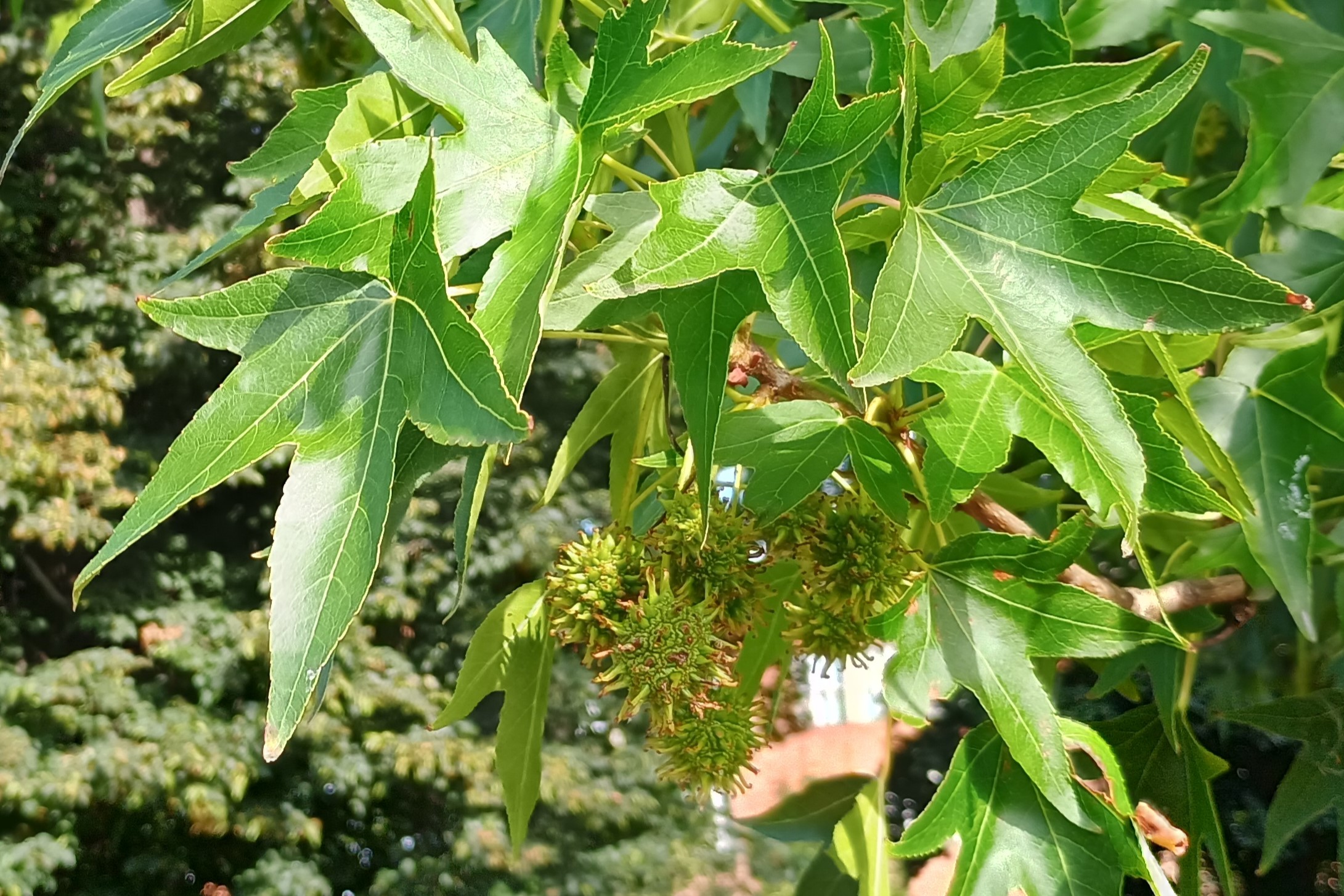
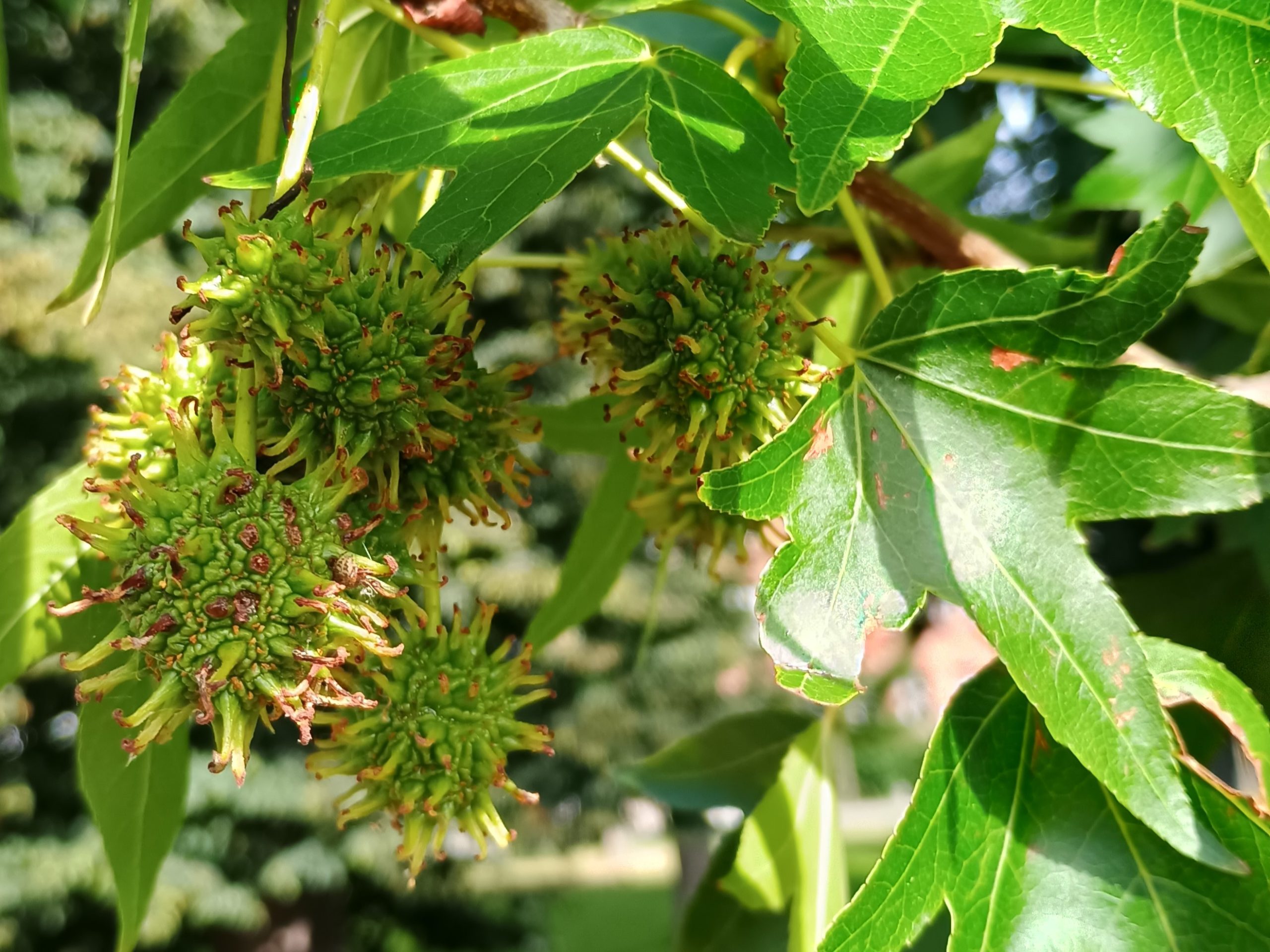
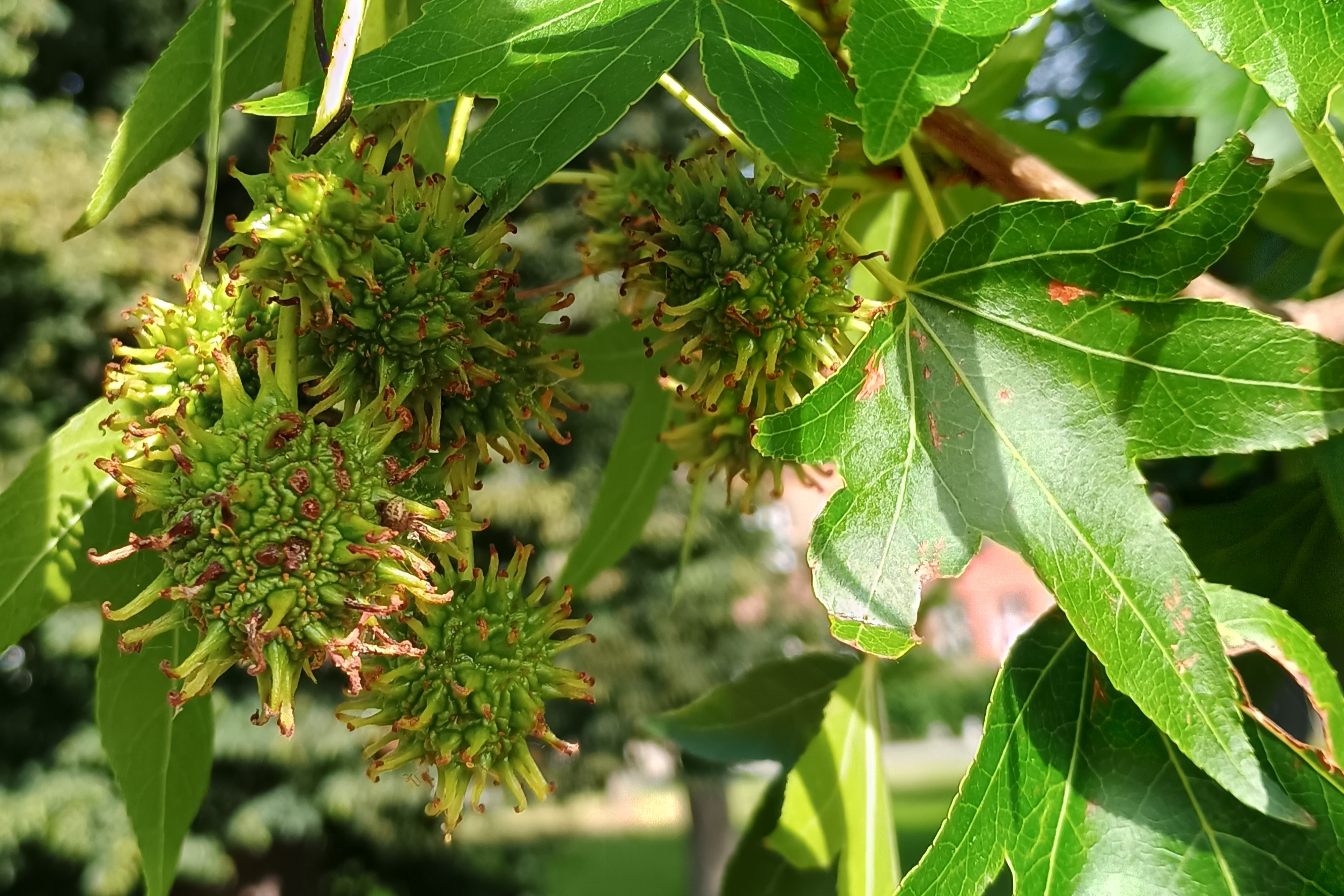
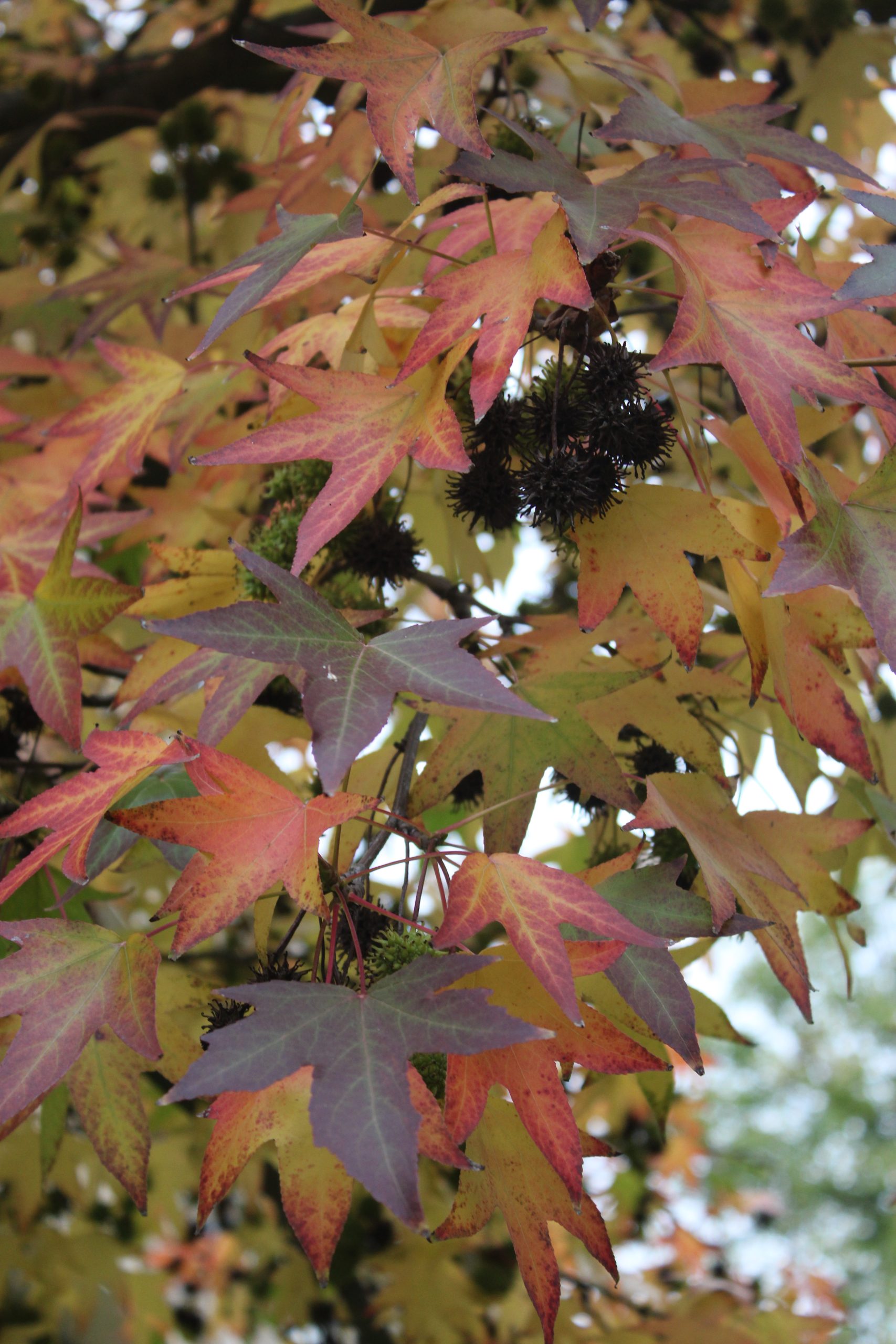
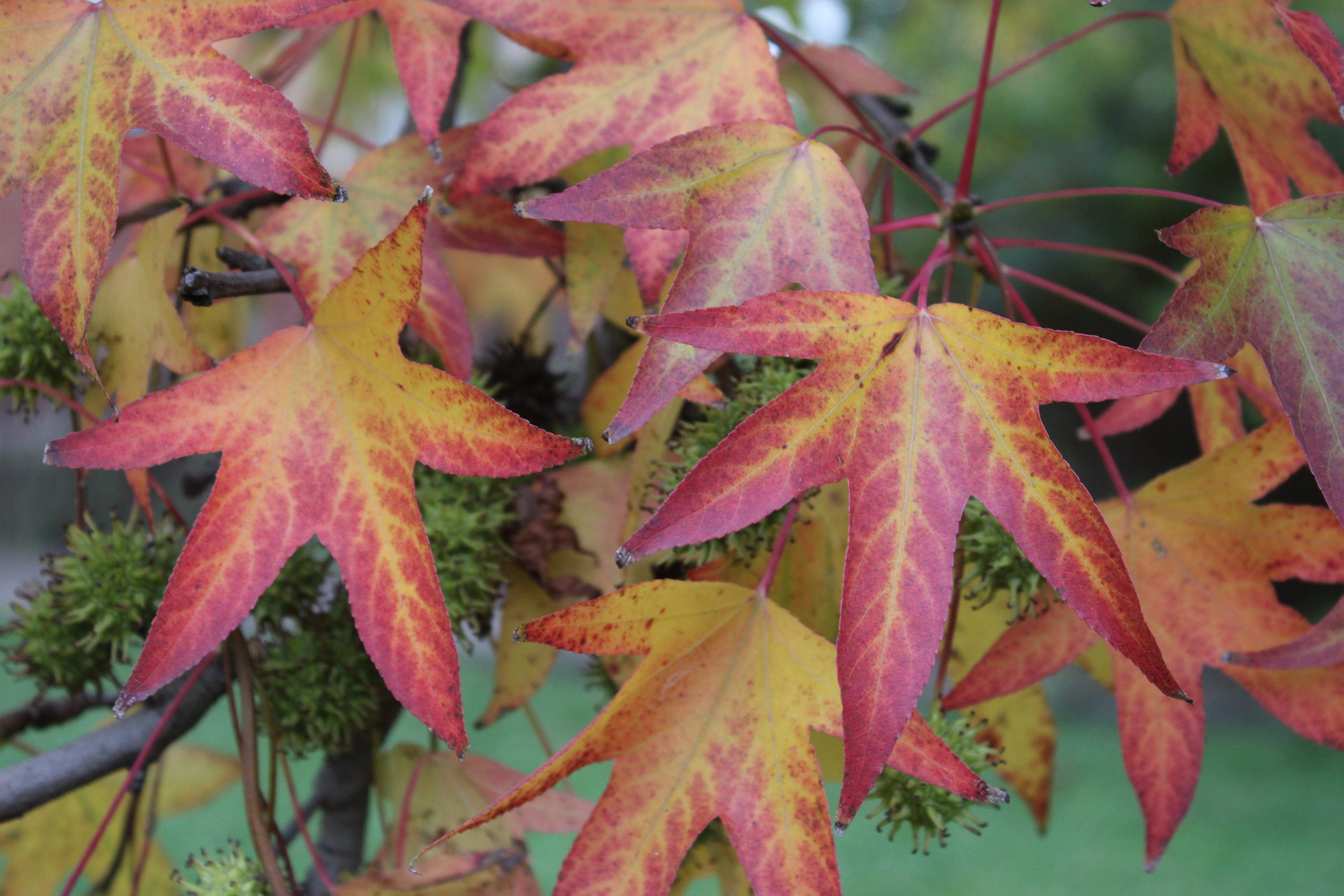
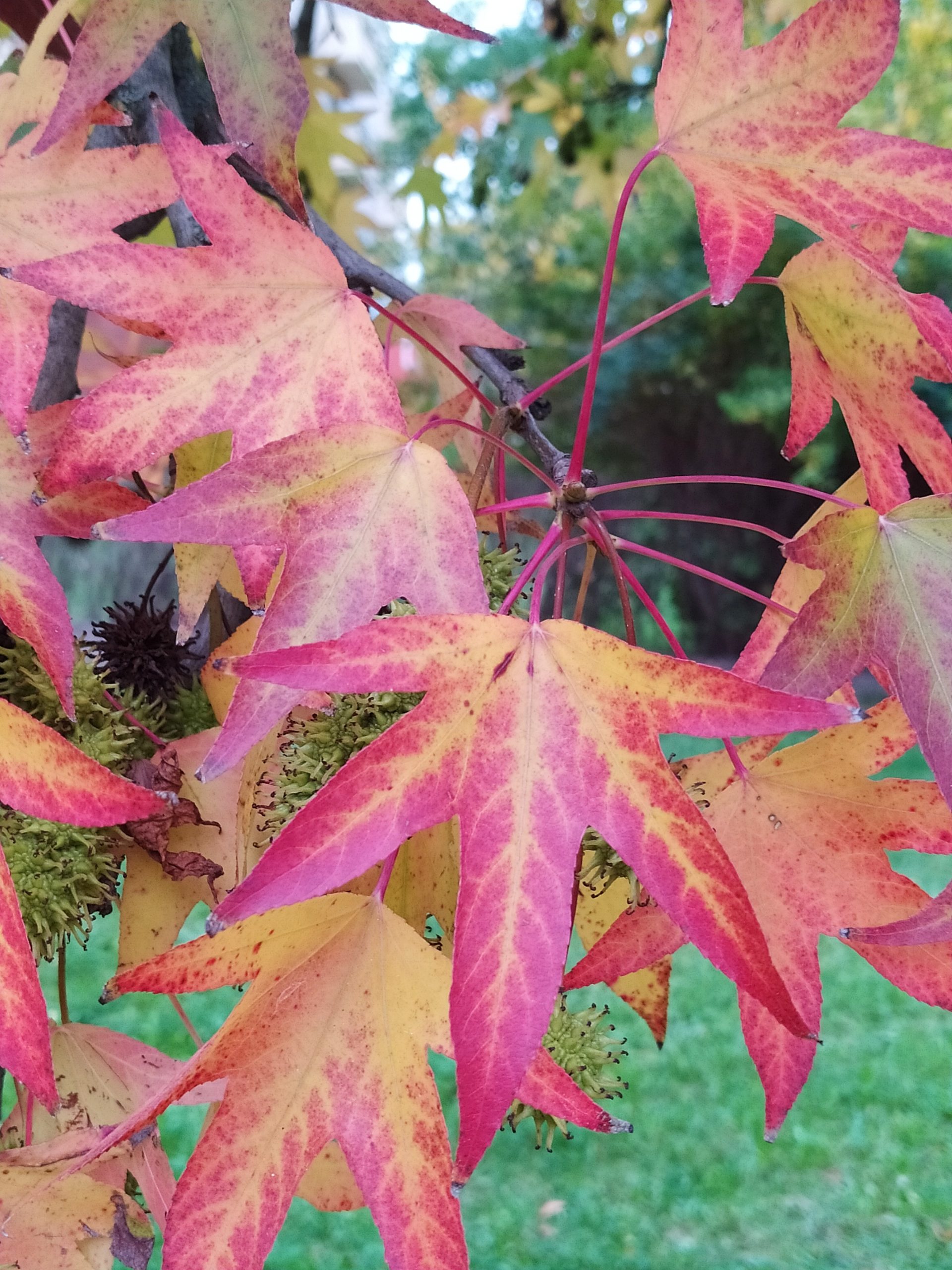
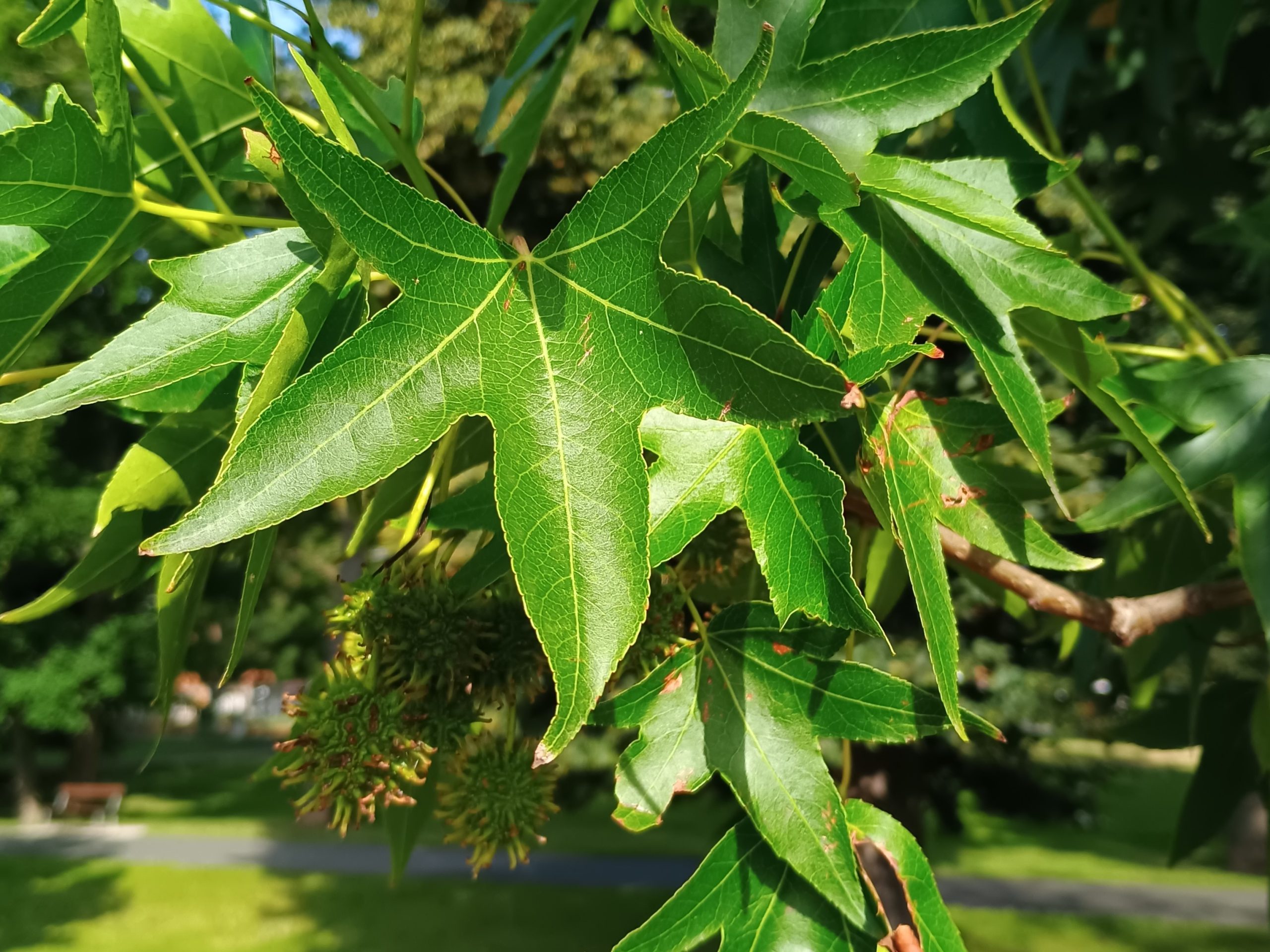
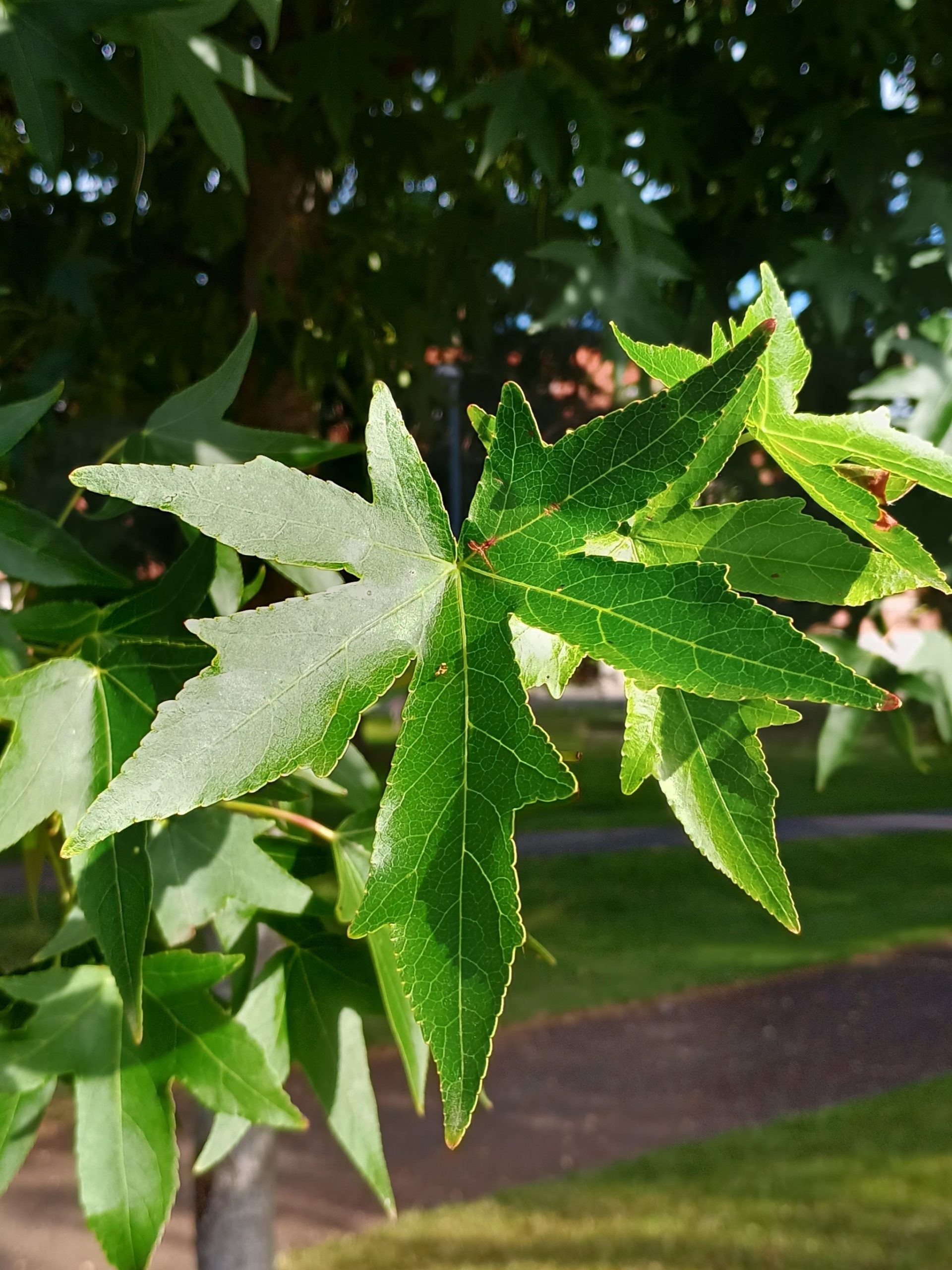
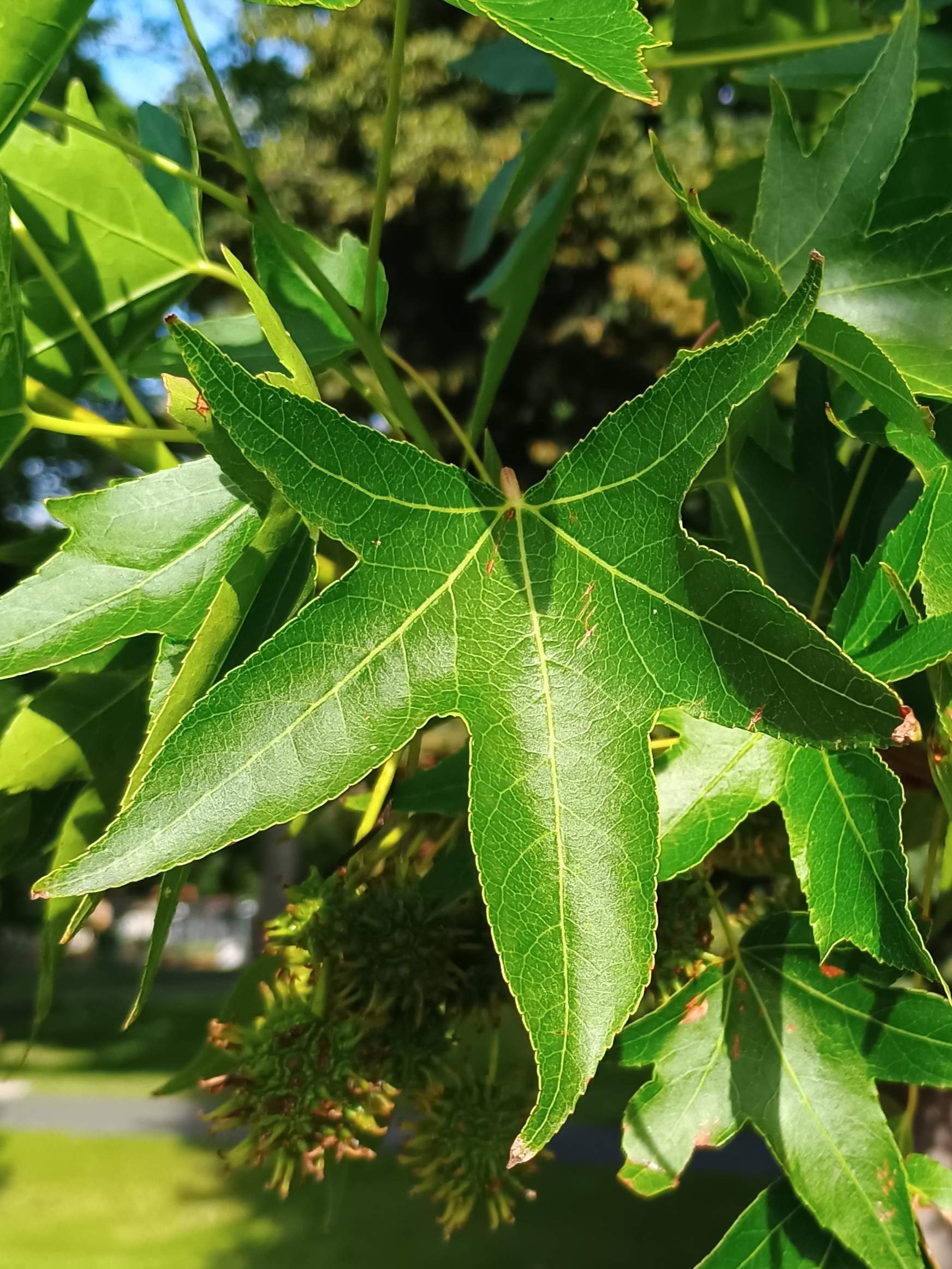
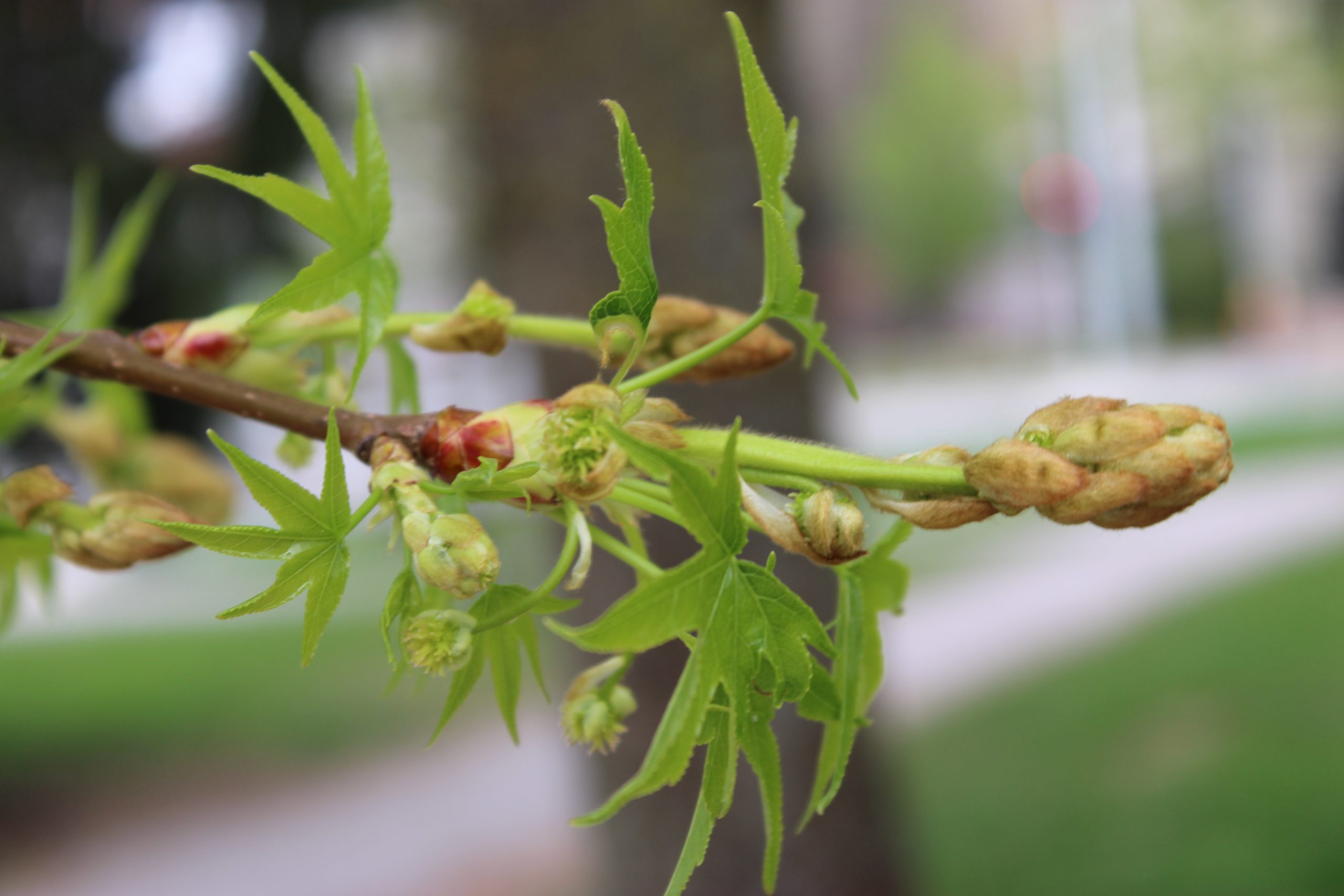
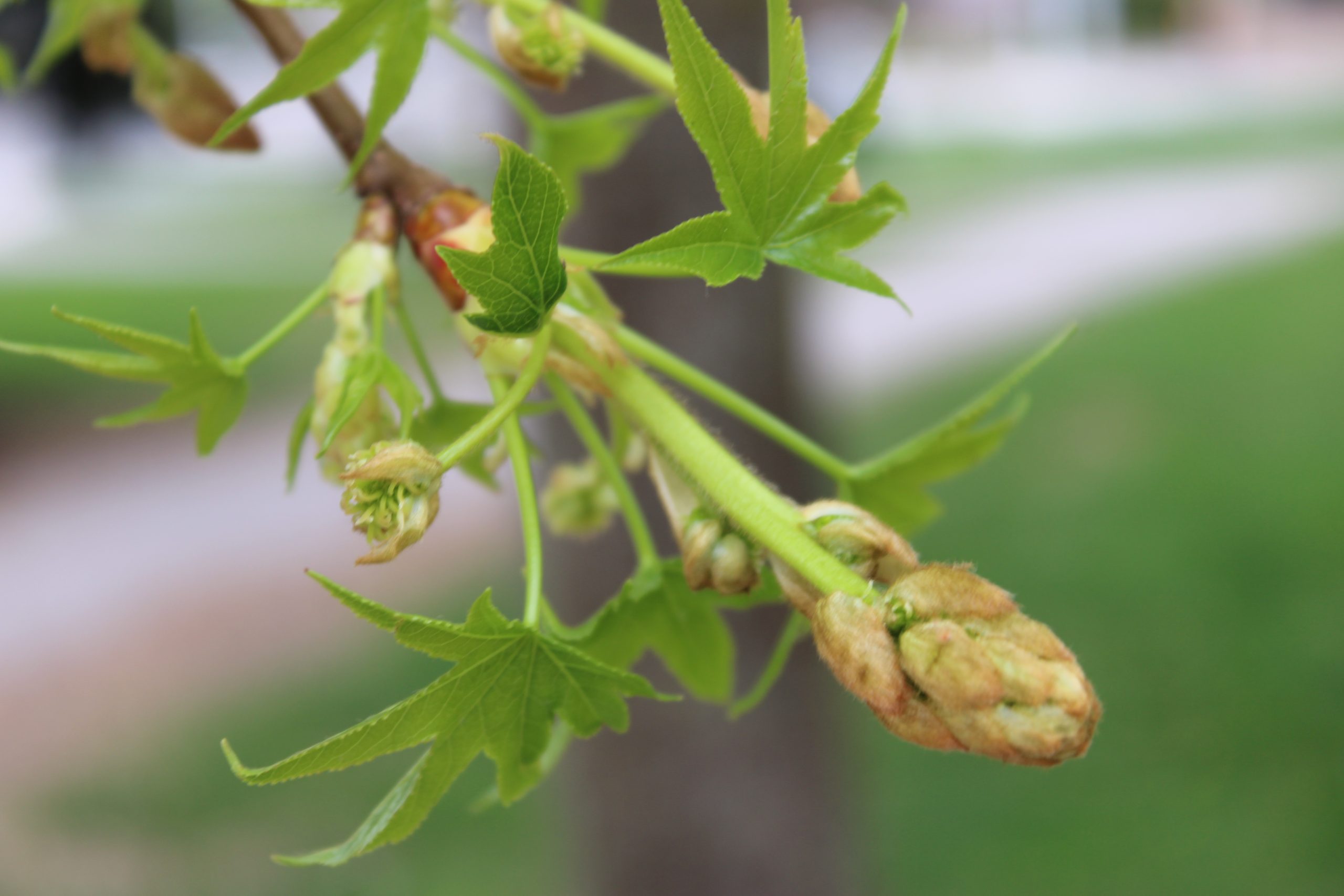
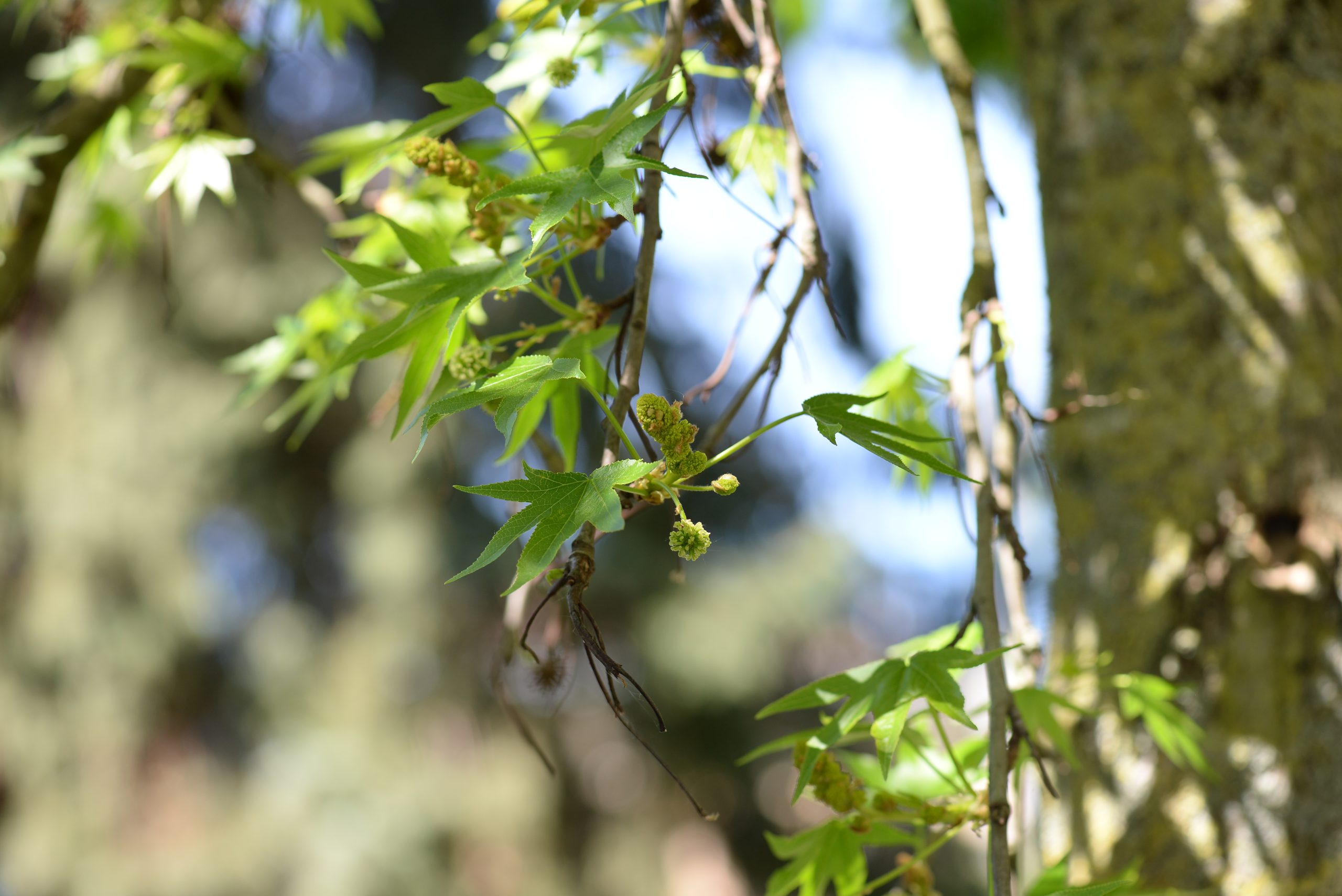
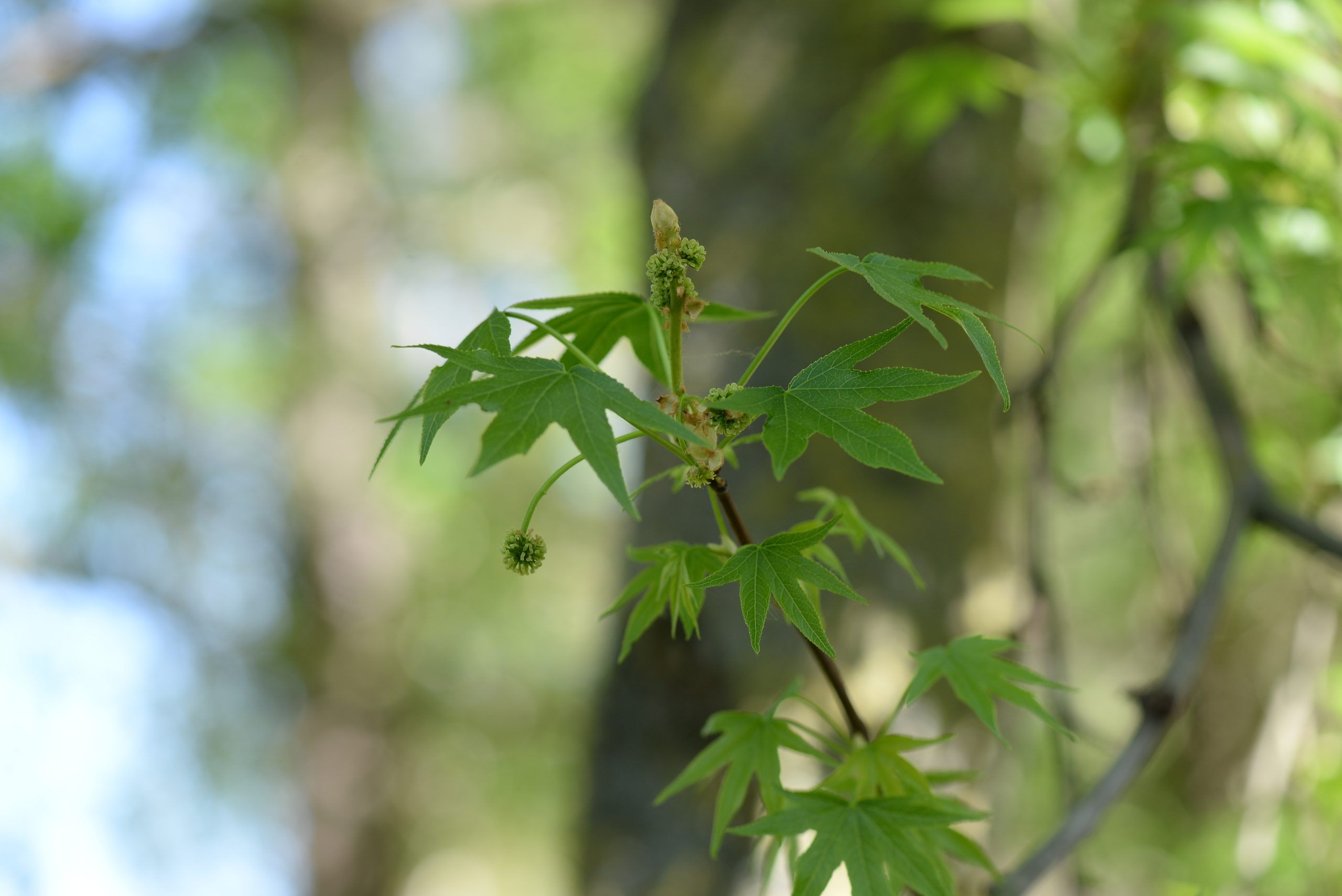
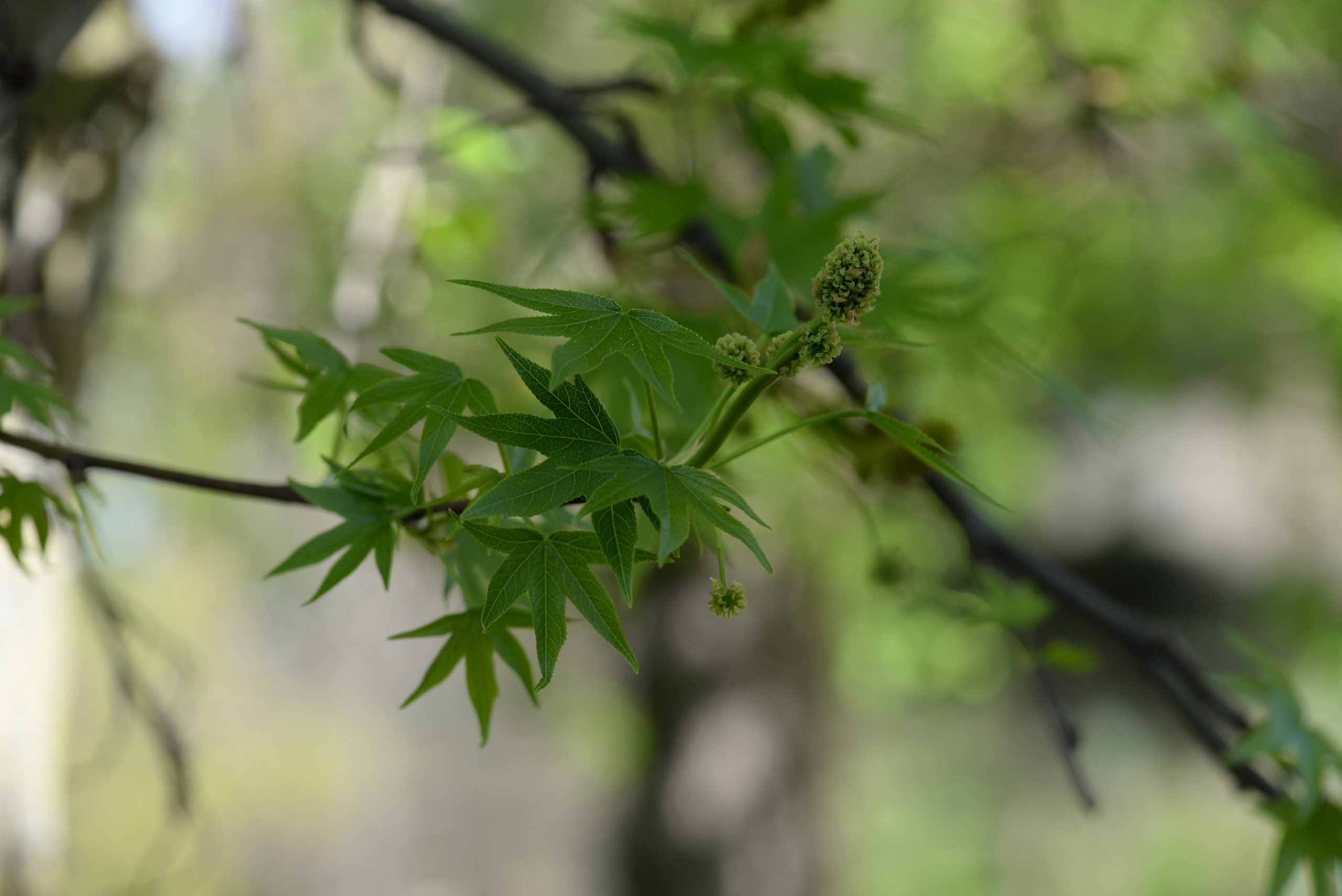
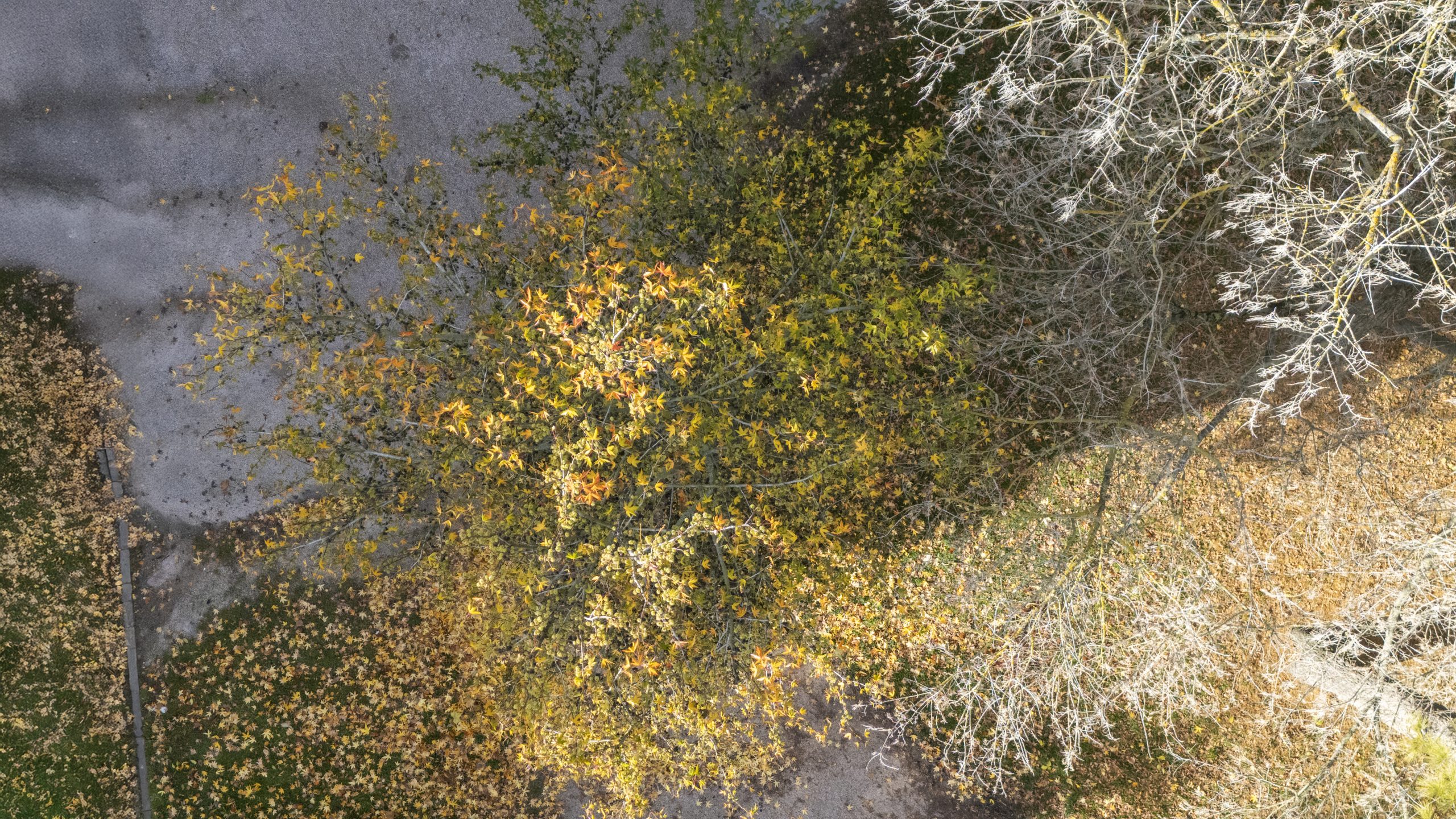
Leaf: The leaves grow alternately. They are divided into 3–7 pointed lobes with a serrated edge.
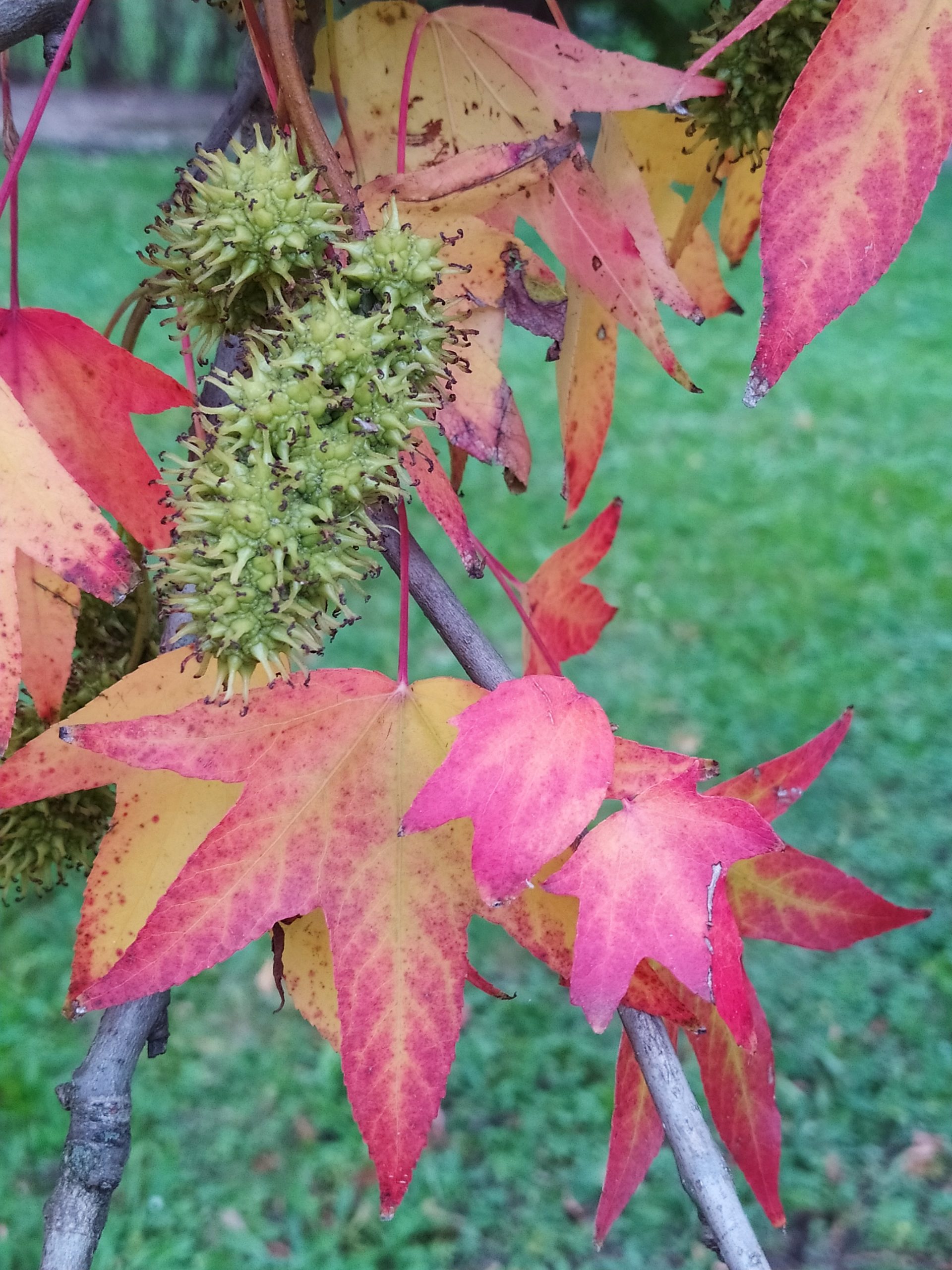
Bloom, fruit: The blossoms are unisexual, small, naked, greenish-yellow and arranged in spherical heads. The infructescence is spherical and composed of capsules. The seeds are 1–2 millimetres long, angular and they have wings.
Interesting fact: At the first sight, the tree could be classified (based on the shape of the leaves) as a maple or its cultivar. The main difference is the position of the individual leaves. The Sweet Gum has alternate leaves, while the maple has opposite leaves. These species also differ in their fruits and their arrangement.